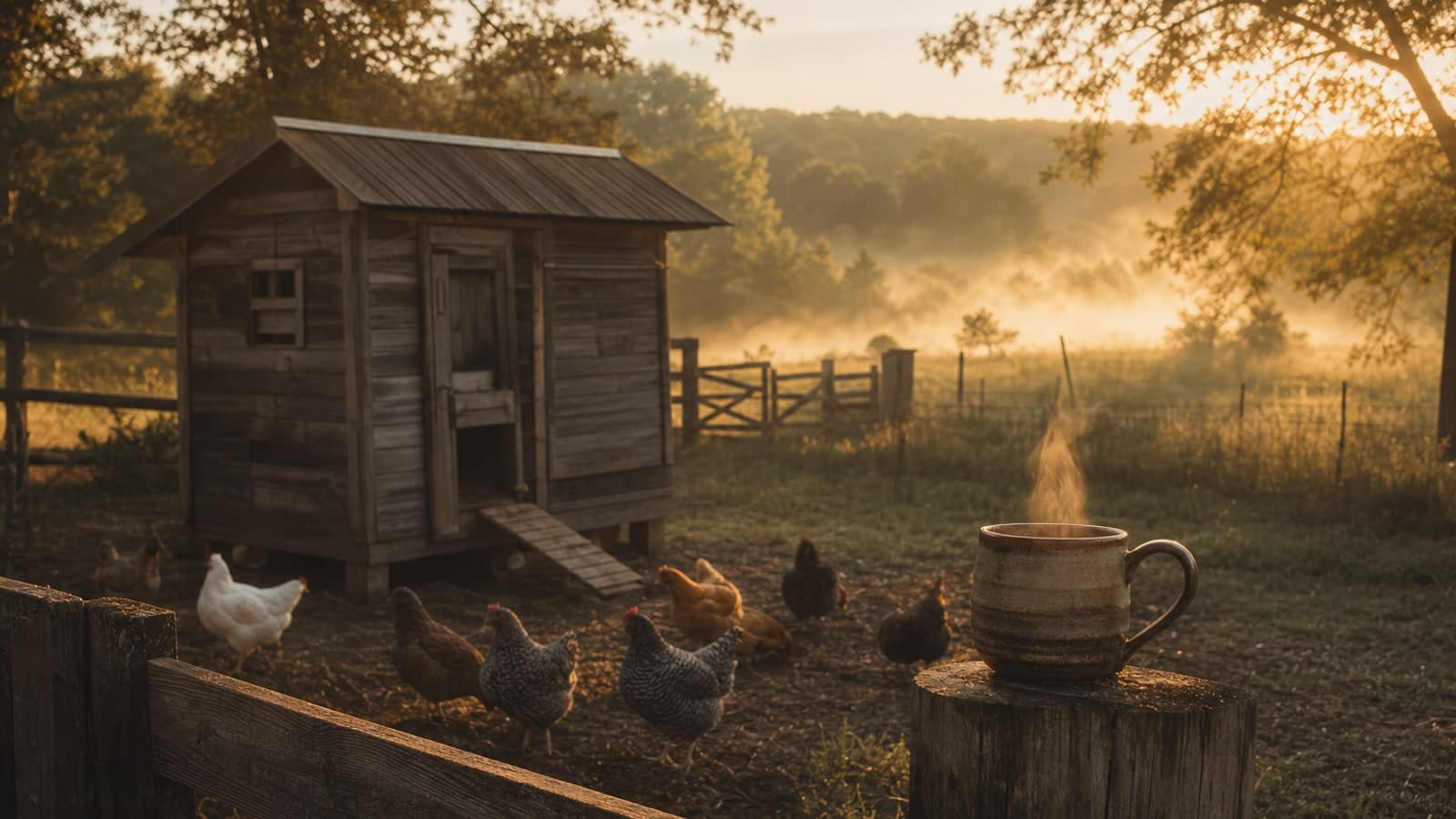
Chicken Coop Winter Prep and the Morning Coffee Round
September is when coop winterizing should start, not after the first hard freeze. Pair the work with a realistic morning coffee plan so the birds are ready and you still get a decent cup.
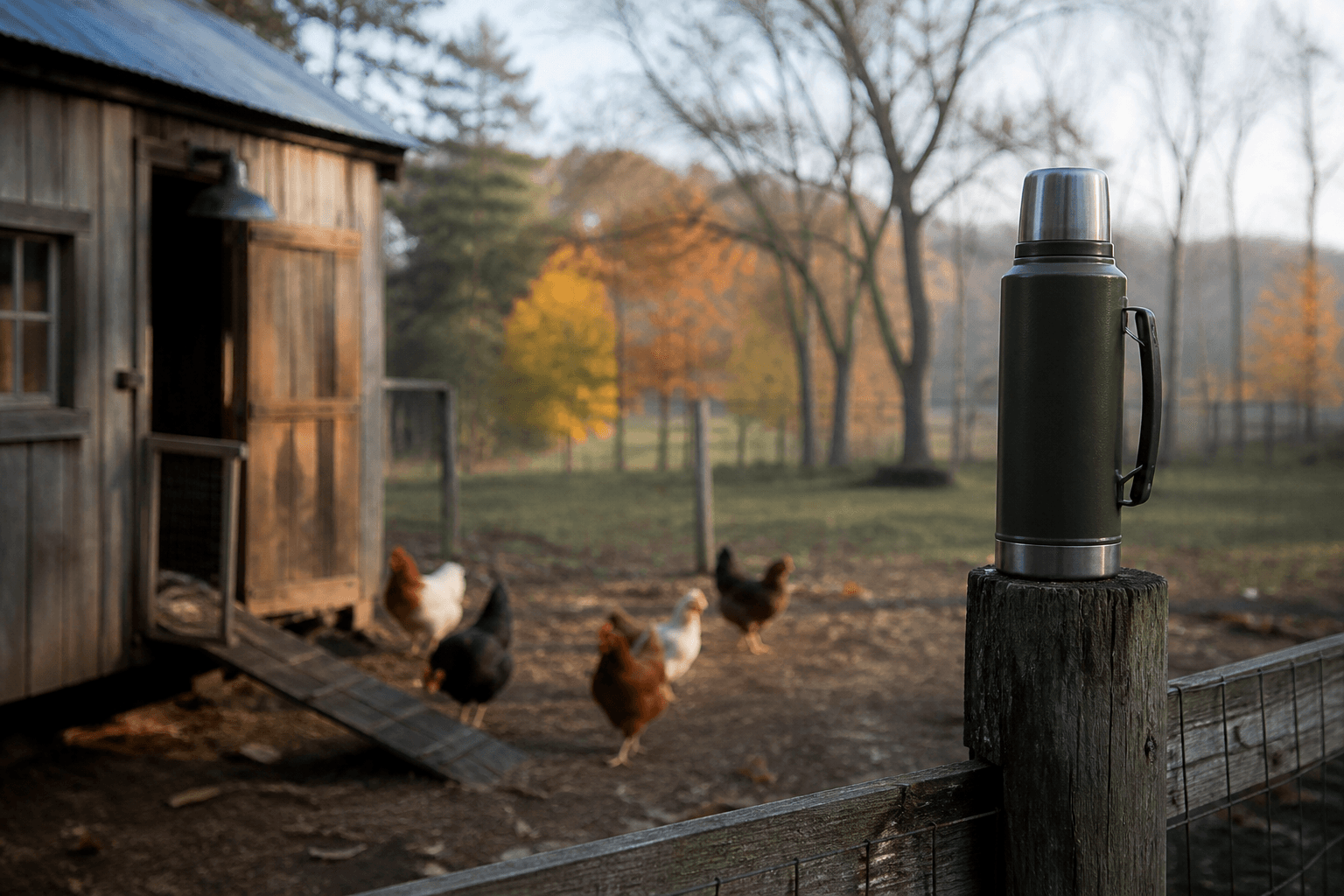
Quick answer: Use September's cooler mornings to inspect ventilation, draft sealing, roosts, water systems, bedding depth, and predator weaknesses before deep cold. Brew first, then work the coop in a planned circuit with a thermos. Do not wait for a crisis freeze to discover a cracked waterer or a north-wind gap over the roost.
Chicken chores already own a slice of every morning. In September, that slice should expand on purpose. Winterizing is easier when the ground is still workable, hardware stores still have stock, and you are not wearing three layers to drill a hole.
Coffee makes that expanded chore block sustainable. Without a plan, winterizing becomes a weekend panic project fueled by cold fingers and resentment.
Why September, Not November
Late fall surprises are expensive:
- Waterers freeze overnight before you have a heated base
- Drafts you ignored all summer become respiratory stress in wet cold
- Predator pressure rises as natural food thins
- Short days mean less daylight for repairs after work
September gives you rehearsal mornings. You can fix one system per day instead of everything in a freezing afternoon.
A Morning Circuit That Actually Gets Done
Cup first (5–10 minutes)
Brew at the house. Fill the thermos. This is non-negotiable if the coop work will take an hour. See the daily rhythm in chickens and the morning coffee routine, then expand it for seasonal projects.
Outside visual scan (5 minutes)
Before tools come out:
- Any digging at fence lines?
- Latches still sound?
- Birds moving normally?
- Condensation patterns on windows or walls from the night before?
One winterizing task per weekday
Pick a single job. Finish it. Do not start five.
| Day idea | Task |
|---|---|
| Monday | Draft check at roost height |
| Tuesday | Ventilation confirmation (moisture out, wind not on birds) |
| Wednesday | Water system test and backup plan |
| Thursday | Bedding depth and cleanout schedule |
| Friday | Predator hardware and pop-door integrity |
Weekend can handle larger builds: wind breaks, new covered run sections, heated waterer install.
Drafts vs Ventilation (People Mix These Up)
Chickens need fresh air. They do not need a wind tunnel on their faces while roosting.
Bad: gaps at roost level blowing directly on birds Good: high vents that let moist air out without creating a roost draft
On a cool morning, stand in the coop and feel for air movement at bird height. Use your hand, not vibes. Seal low drafts with hardware-appropriate materials. Keep upper ventilation open enough to reduce humidity that drives frostbite and ammonia problems later.
Water Systems Before the Freeze
Ask hard questions now:
- What freezes first in our coop setup?
- Do we have a heated base or heated waterer rated for outdoor use?
- What is the manual backup if electricity fails?
- Can I carry water without turning morning chores into a slip hazard?
Practice the backup on a cool morning this month. If the backup is miserable in September, it will be dangerous in January.
Bedding and Cleaning Cadence
Fall damp plus denser flock time indoors means ammonia can climb. Deep litter can work if managed. Neglect does not.
September actions:
- Assess current bedding depth
- Remove wet cakes around waterers
- Confirm you have enough dry bedding stocked before storms
- Decide cleanout dates on a calendar, not "when it smells"
Predator Pressure Rises With Lean Season
Cooler weather and longer nights change wildlife patterns. Re-check:
- Hardware cloth condition (not chicken wire as primary defense)
- Dig barriers
- Latch quality (raccoons open simple hooks)
- Automatic door timing as sunrise/sunset shifts
A thermos on the fence post does not replace a latch that works.
Coffee Logistics for Dirty Jobs
Coop work gets dusty and bedding-flecked. Keep coffee logistics clean:
- Thermos on a clean shelf or truck hood, not balanced on a poop board
- Wash hands before sipping if you have been in bedding chemicals or medications
- Accept that some mornings are sip-after-task mornings
Roasts that fit cool, physical coop mornings:
Health Watch List for Transitional Weather
Temperature swings stress birds. Watch for:
- Reduced appetite
- Labored breathing
- Huddling when they should be active
- Wet, dirty vent feathers from poor roost or litter conditions
Coffee will not diagnose poultry disease. A consistent morning observation habit will catch problems earlier than a rushed weekend glance.
Frequently Asked Questions
Do chickens need a heater in the coop?
Most breeds in many mid-Atlantic winters need draft control, dry bedding, and good feed more than a heat lamp. Heat lamps also add fire risk. Research your breed and climate, and prioritize moisture control.
How warm should the coop be?
Birds tolerate cold better than wet drafts. Focus on dry, ventilated, draft-smart housing rather than a target living-room temperature.
Can I winterize in October instead?
You can, until you cannot. One early freeze plus a supply-chain delay on heated waterers and you are hauling buckets in the dark. September is insurance.
Should coffee happen before opening the pop door?
If your birds are used to a fixed release time, keep that stable. Brew first at the house, then run the circuit. Do not make birds wait indefinitely while you perfect a pour-over.
What is the biggest September mistake?
Buying a heated waterer after the first ice sheet forms, then discovering your outlet setup is unsafe or insufficient.
Fuel the project mornings: Workhorse Blend or Beekeepers Roast. Shop all roasts here.