How to Brew French Press Coffee on the Homestead
The French press is the homestead default for good reason. No electricity, full body, four minutes. Here's the ratio, the steps, and the mistakes that ruin the cup.
Quick answer: Use a 1:15 ratio by weight (about 30g coffee to 450g water for a standard mug, or roughly 2 tablespoons per 6oz cup if you don't have a scale). Grind coarse, use water at about 200°F (just off the boil), steep 4 minutes, press slowly, and pour immediately. Don't leave coffee sitting in the press.
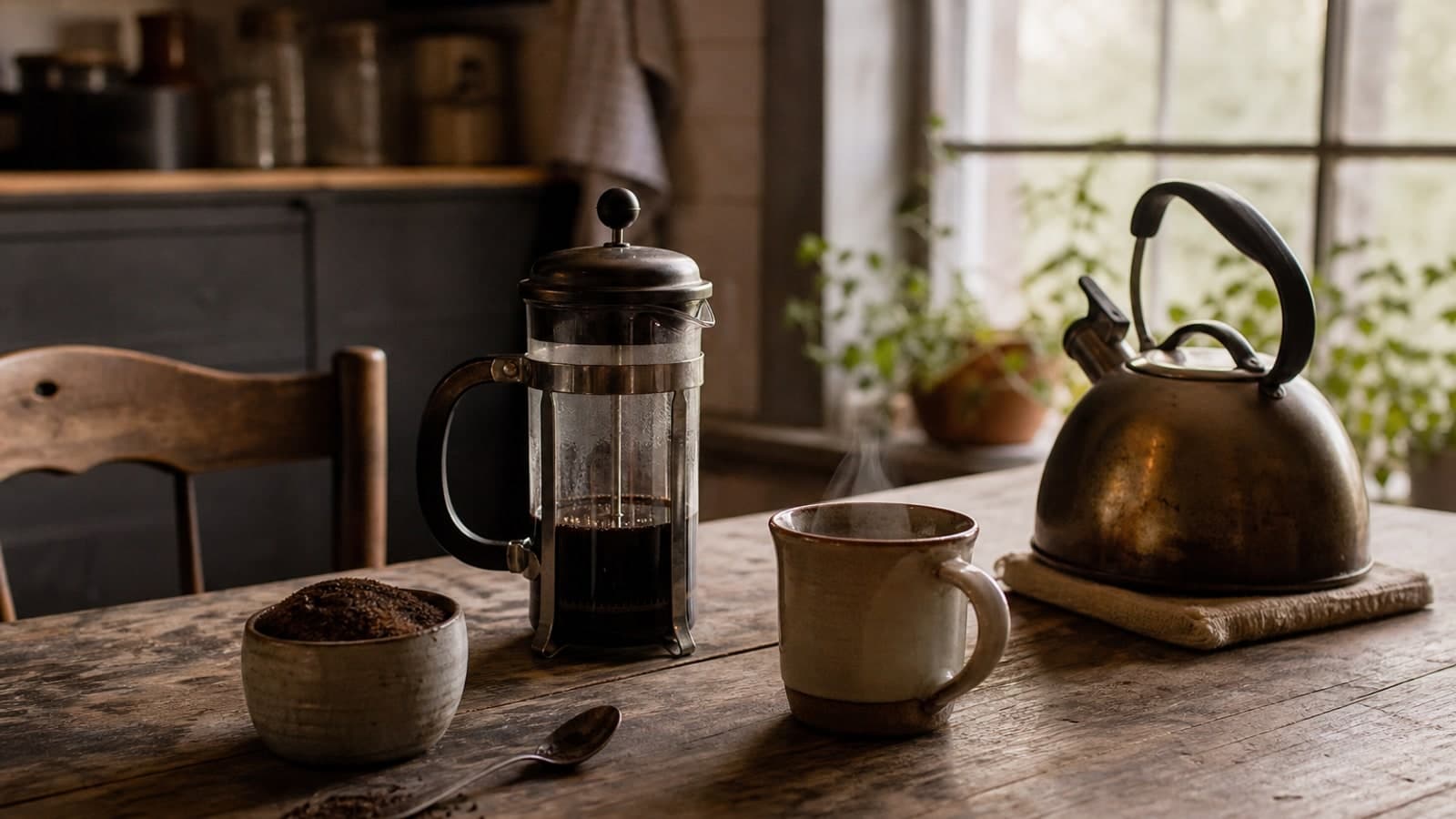
If there's one brewer that belongs on a homestead, it's the French press. No electricity after the kettle boils. No paper filters to run out of. Simple enough to use on a wood stove if you need to. And when you get the ratio and timing right, it makes a full-bodied cup that forgives a slightly groggy 5am.
This is the canonical guide. Grind matching lives in choosing your coffee grind. Filling a thermos for barn runs is in thermos coffee for chores. Here we cover the brew itself.
What You Need
- A French press (12oz for one mug, 34oz if you're brewing for two or filling a thermos)
- Kettle (electric or stovetop)
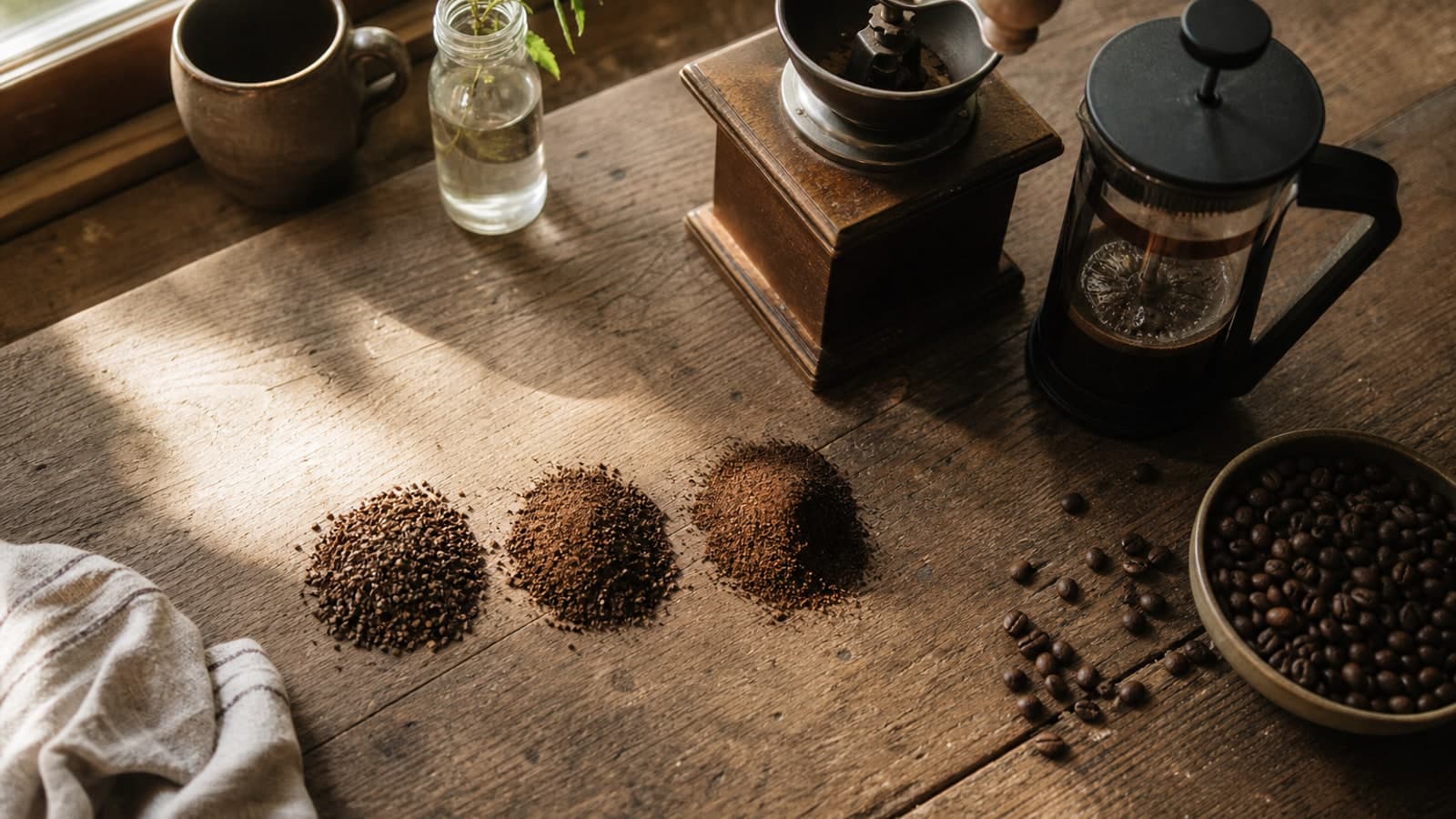
- Coarse-ground coffee or whole bean + burr grinder on the coarsest setting
- Timer (phone, watch, or kitchen timer)
- Optional: kitchen scale for consistent ratios
A decent press that doesn't drip when you pour is worth buying once. Bodum, Espro, and basic stainless models all work. Cheap presses often leak around the plunger and leave you with sludge in the cup.
The Basic Ratio
1:15: one part coffee to fifteen parts water by weight.
| Press size | Coffee | Water | Finished cups |
|---|---|---|---|
| Small (12oz / ~350ml) | 23g (~3 tbsp) | 350g (~12oz) | 1 mug |
| Large (34oz / ~1L) | 65g (~9 tbsp) | 1000g (~34oz) | 2–3 mugs |
No scale? Use roughly 2 level tablespoons of coarse ground coffee per 6oz of water. It's less precise than weighing but close enough for daily use.
Step by Step
- Heat water to a boil, then let it sit 30 seconds (target ~200°F). Boiling water straight from the kettle can scorch the grounds and taste harsh.
- Add coarse-ground coffee to the empty, dry press.
- Pour water over the grounds, filling to your target level. Stir gently with a spoon so all grounds are wet.
- Place the lid on the press with the plunger pulled up. Don't press yet.
- Start a 4-minute timer. Not 3, not 6. Four minutes is the sweet spot for full extraction without bitterness.
- Press slowly: steady pressure, about 15–20 seconds for the plunger to reach the bottom. Rushing creates turbulence and fine sediment in the cup.
- Pour immediately into your mug (or preheated thermos). Coffee left on the grounds keeps extracting and turns bitter within minutes.
Total active time: about 5 minutes from kettle to cup.
Common Mistakes
Grind too fine. Drip-ground coffee in a French press over-extracts and leaves sludge. You want coarse. See choosing your coffee grind.
Steeping too long. Past 4–5 minutes, bitterness climbs fast. Set a timer every time.
Leaving coffee in the press. The plunger doesn't stop extraction. Pour it all out, or decant into a thermos right away.
Water too hot or too cold. Just off the boil is right. Lukewarm water under-extracts and tastes flat.
Not preheating the press on cold mornings. A quick swirl of hot water in the empty press before you brew keeps the cup hotter longer.
Which Coffee to Use
French press rewards body and roast character. Medium-dark and dark roasts hold up especially well.
- Morning Blend: smooth medium roast for everyday cups
- Beekeepers Roast: medium-dark, low acid, strong mornings
- Homestead Dark: bold dark roast for long chore days and thermos travel
Product unavailable. Browse the shop.
Order whole bean and grind coarse at home, or choose Drip Grind only if you're also using a drip machine. For French press alone, whole bean + coarse grind is the better match.
Roast level is a separate decision. See how to choose a coffee roast level.
On the Homestead: Practical Notes
Grind the night before if whole bean would wake the house at 5am. Pre-measure into the press or a small jar.
Scale up for a thermos. Use the large press ratio and brew strong. A bit more coffee than you'd use for a single table mug. Full details in thermos coffee for chores.
Compost the grounds. French press grounds are already consolidated. Dump into the compost pail and rinse the press.
Frequently Asked Questions
Can I use drip-ground coffee in a French press?
You can, but it's not ideal. Drip grind is too fine for a 4-minute steep and usually produces a muddy, over-extracted cup. If drip grind is all you have, shorten the steep to 3 minutes and accept a bit more sediment.
Why does my French press coffee taste bitter?
Usually grind too fine, steep too long, or coffee left sitting on the grounds after pressing. Fix all three before blaming the beans.
Is French press better than drip?
Neither is objectively better. French press gives more body and oils in the cup; drip is hands-off and scales easily for a programmable 5am timer. For chore mornings, many homesteaders use both, French press when they're awake, drip when they want coffee waiting. See best coffee for early morning chores.