Coffee Storage on the Homestead: Keep It Fresh All Month
Buying coffee in bulk makes sense on the homestead. Storing it correctly is the part most people get wrong. Here's what actually works.
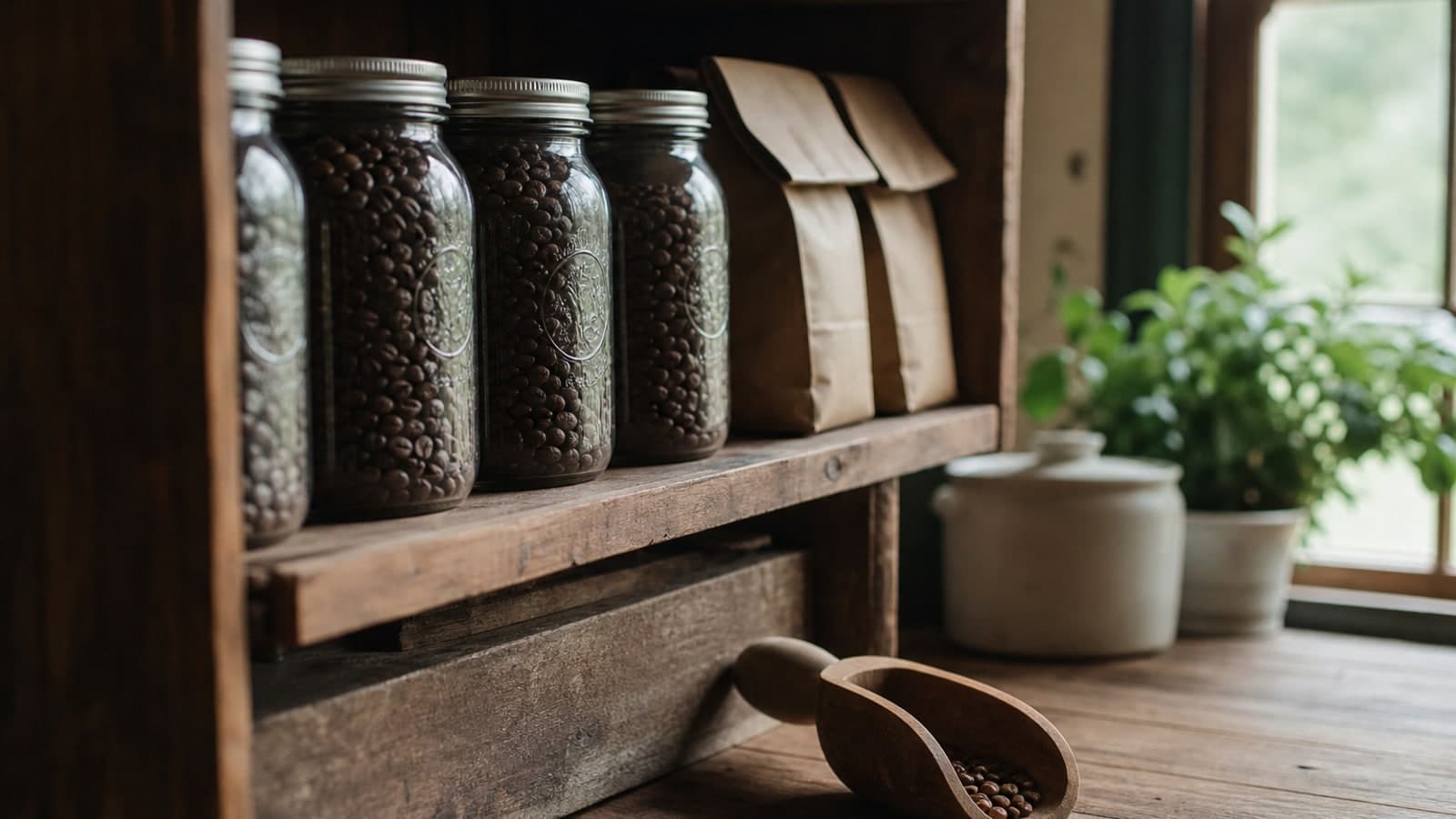
Quick answer: Store whole bean coffee in an airtight, opaque container at room temperature, away from heat sources. A ceramic canister or a dedicated coffee vault with a CO₂ valve is ideal. Whole beans stay fresh for 2–4 weeks after opening. Don't refrigerate. Freezing is acceptable for long-term storage only if done in vacuum-sealed, single-use portions.
On the homestead, you buy in bulk. Feed comes by the bag, canning supplies by the case, and coffee should be no different. A 2lb or 5lb order means fewer trips to the store and lower cost per cup. Note that 2lb and 5lb bags ship in standard black bags (not compostable); only 12oz bags use certified home-compostable packaging. Bulk buying only makes sense if you store it correctly. Coffee that sits in an open bag on the counter for three weeks before you get to it has already lost most of what made it worth buying.
The good news: proper coffee storage requires almost no special equipment. It requires understanding four things coffee hates.
Step by Step
- Buy a size you will finish within a few weeks (12oz, 2lb, or 5lb as your household needs).
- Open one bag at a time and transfer beans to an airtight, opaque canister.
- Keep the canister cool and dark, away from the stove and sunny windows.
- Do not refrigerate everyday beans; freeze only vacuum-sealed single-use portions for long storage.
- Grind just before brewing when you can, and finish an open bag within 2–4 weeks.
Shop fresh roast-to-order bags like Morning Blend so the storage clock starts at your door.
The Four Enemies of Fresh Coffee
1. Oxygen
Coffee beans are porous. Once roasted, they begin releasing CO₂ (a natural off-gassing process called degassing) while simultaneously absorbing oxygen from the surrounding air. That absorbed oxygen reacts with the aromatic compounds in the bean and causes oxidation, the same process that makes cut apples turn brown or butter go rancid.
The fix is simple: minimize air contact. Transfer coffee from its original bag to an airtight container after opening, and keep that container as full as possible. Less air space means less oxidation.
2. Light
Ultraviolet light degrades organic compounds. Coffee stored in a clear glass jar on a sunny windowsill will go stale in days. This is why good roasters package coffee in opaque, dark bags.
Store coffee away from windows and natural light. Opaque containers are better than clear ones.
3. Heat
Heat accelerates the chemical reactions that cause coffee to go stale. The kitchen counter near the stove, the shelf above the oven, the top of the refrigerator: all of these are warm spots that will shorten your coffee's life. A pantry shelf, cabinet, or kitchen drawer away from the stove is better.
Room temperature (65–75°F) is ideal. You don't need to refrigerate coffee to keep it fresh.
4. Moisture
Water causes coffee to clump, grow mold, and lose its soluble compounds through a process called hydrolysis. Never store coffee near the dishwasher, sink, or any other source of steam or humidity. Don't use a wet scoop.
The refrigerator is particularly bad for coffee because it creates a cycle of condensation: cold beans pulled out for a scoop absorb moisture from the warm kitchen air, then go back into the cold, then come back out again. This repeated condensation damages the beans faster than room temperature storage would.
Container Options, Ranked
1. Dedicated coffee canister with CO₂ valve (Best)
These containers have a one-way valve that allows CO₂ from the beans to escape while preventing oxygen from entering. Airscape, Fellow Atmos, and OXO airtight canisters all work well. The Fellow Atmos has a vacuum-pump lid that actively removes air. These are the gold standard if you're drinking 1–2 lbs per month.
2. Airtight ceramic or stainless canister (Very good)
A simple airtight lid without a valve still dramatically outperforms leaving coffee in its original bag. Ceramic and stainless steel are opaque and don't absorb odors. Keep it in a cool, dark cabinet.
3. The original resealable bag (Acceptable)
Quality roasters pack coffee in bags with a one-way valve and a resealable top. If you're finishing the bag within 1–2 weeks, this works fine. Press out as much air as possible before resealing. Don't leave it open on the counter.
4. Clear glass jar (Poor)
Airtight but not opaque. Fine if stored in a completely dark cabinet, but most people put jars on shelves. The light exposure negates the airtight benefit.
5. The original bag, open on the counter (Don't)
This is how most people store coffee. It's fine if you finish it in three days. Over two weeks, the flavor flatlines.
Freezing Coffee: What Actually Works
Freezing coffee is one of the most debated topics in specialty coffee. The nuanced answer is: freezing works under specific conditions, and most home storage situations don't meet those conditions.
When freezing works:
- You've bought a large quantity (3+ lbs) that you won't finish within a month
- You vacuum-seal the coffee in portion-sized bags (enough for one week each)
- Each bag goes from freezer directly to room-temperature storage without repeated freeze-thaw cycles
- You never return partially used portions to the freezer
When freezing fails:
- You freeze a whole bag and pull it out daily to scoop from
- You freeze in zip-lock bags with air remaining
- You thaw and refreeze repeatedly
The condensation problem is the critical failure point. A frozen bean pulled from a 0°F freezer into a 70°F kitchen will immediately collect moisture on its surface. Grind those beans immediately and brew; don't let them sit out to "come to room temperature."
For most homestead households drinking coffee at a normal rate, proper room-temperature storage in a good canister beats freezing for simplicity and consistency.
Bulk Buying Strategy for Farm Households
A 12oz bag for one daily coffee drinker lasts about 2–3 weeks. A couple drinking coffee together goes through a 12oz bag in 10–14 days. Two daily drinkers who also occasionally offer coffee to farm helpers or guests should plan on a 2lb order every 3–4 weeks.
Practical approach:
- Order 2lb or 5lb at a time when you drink through coffee quickly
- Store one bag in your everyday canister for immediate use
- Keep the remaining sealed bags in a cool, dark pantry
- Open the next bag only when the canister is nearly empty
Whole beans bought in bulk and stored properly retain full flavor for up to a month after opening. Pre-ground coffee goes stale significantly faster, within 1–2 weeks, because the increased surface area accelerates oxidation. If you're buying in bulk, buy whole bean and grind as you go.
How Long Coffee Actually Stays Fresh
| Form | Peak Flavor | Acceptable | Past Prime |
|---|---|---|---|
| Whole bean (sealed) | Up to 3 months from roast | 3–6 months | After 6 months |
| Whole bean (opened) | First 2 weeks | Up to 4 weeks | After 4 weeks |
| Pre-ground (sealed) | Up to 2 weeks from grind | 2–4 weeks | After 4 weeks |
| Pre-ground (opened) | First week | 1–2 weeks | After 2 weeks |
"Past prime" doesn't mean undrinkable; it means noticeably flatter, less aromatic, with diminished sweetness. If you've been drinking the same bag for a month and the coffee feels dull, storage isn't the only variable; it may simply be old.
Frequently Asked Questions
Can you store coffee in the refrigerator?
No. The refrigerator introduces moisture through condensation cycles, absorbs fridge odors into porous coffee beans, and doesn't provide a meaningful temperature benefit over room temperature storage. Keep coffee at room temperature in an airtight, opaque container.
Can you freeze coffee beans?
Yes, but only in vacuum-sealed, single-serving portions that you don't return to the freezer after opening. The main risk of freezing is moisture condensation when beans warm up. If you buy in large quantities and can portion and vacuum-seal properly, freezing works for long-term storage (up to 6 months).
How long does an open bag of coffee last?
Whole beans in an airtight container after opening: 2–4 weeks at peak flavor, acceptable through week 4. Pre-ground coffee: 1–2 weeks after opening. The original bag resealed on the counter: similar to airtight if the bag has a one-way valve; faster decline if not.
What is the best container for storing coffee?
An airtight canister made of ceramic, stainless steel, or UV-blocking material, stored in a cool dark location. Models with a CO₂ one-way valve (Airscape, Fellow Atmos) are the best option for freshness because they allow gas to escape without letting air in.
Does coffee go bad (is it unsafe to drink)?
Coffee doesn't spoil in a way that makes it unsafe to drink unless exposed to moisture (which can cause mold). Stale coffee is a quality issue, not a safety issue. Old coffee that's been stored dry simply tastes flat, bitter, or papery, not dangerous.
Buy fresh and store well. Morning Blend and Homestead Dark ship roasted to order in 12oz, 2lb, or 5lb bags.
Is whole bean or pre-ground better for storage on the homestead?
Whole bean, always. Ground coffee has much more surface area exposed to air and loses flavor 2–4x faster than whole beans. For a homestead that buys in bulk, a simple hand grinder or an inexpensive burr grinder will pay for itself quickly in fresher-tasting coffee.