Host a Simple Fall Coffee Tasting at Home
You do not need a cafe setup to taste coffee with intention. Here is a homestead-friendly tasting format for a September weekend: few coffees, clear notes, no pretension.
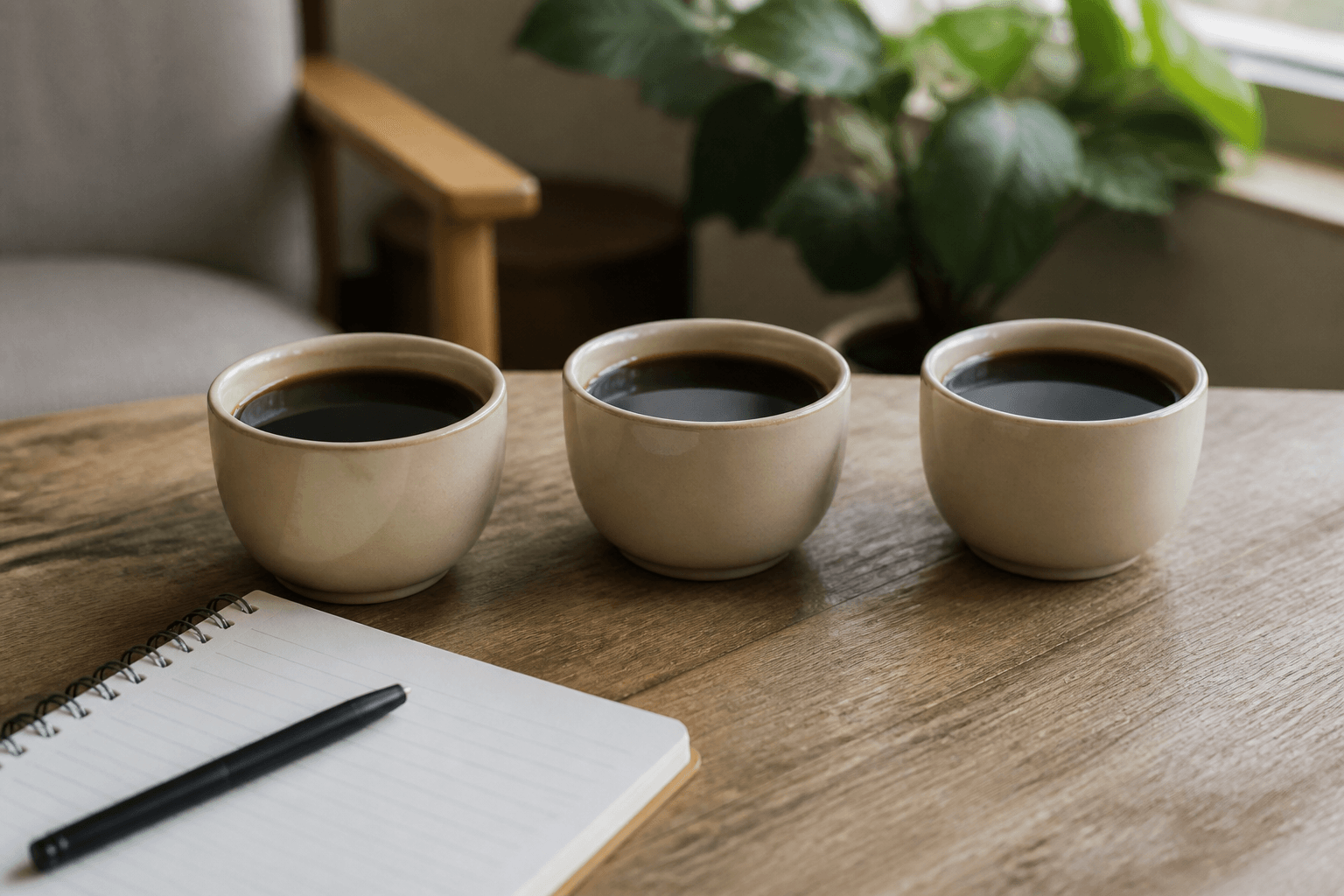
Quick answer: Taste two or three coffees side by side, brewed the same way, same ratio, same water. Keep notes short: aroma, sweetness, bitterness, finish. Spit or sip small amounts if you are tasting many cups. The point is comparison and preference, not performing sommelier vocabulary on your porch.
Fall weekends sometimes open a little space. Not spa-day space. Just enough to brew with attention before leaf piles and firewood reclaim the afternoon.
A home tasting is one of the highest-value ways to use that space. It teaches you what you actually like before you spend winter buying the wrong bags on habit.
This is a practical format, not a competition score sheet. For vocabulary basics, see how to taste coffee at home.
What You Need
- 2–3 coffees (not 8)
- One brew method you already trust
- Scale if possible
- Identical cups or jars
- Pen and paper
- Clean water
- Neutral palate (water nearby; skip brushing teeth with strong mint right before)
Optional: crackers, not a cinnamon roll buffet that wrecks tasting.
Choose Coffees With a Purpose
Good September flights:
- Medium blend vs medium-dark blend (everyday decision)
- Blend vs single origin (consistency vs character)
- Familiar house coffee vs a new bag (calibration of preference)
Avoid stacking five variables at once (different methods, different ratios, different milk additions). You will learn noise, not signal.
Useful background: single origin vs blends and fall roast levels.
The Brew Rules
Same method. French press for all, or pour-over for all.
Same ratio. Example: 1:16 by weight for all cups.
Same grind setting as a starting point (then accept that perfect dial-in per coffee is a later advanced step).
Same water. Do not brew one with kettle A leftover and another with freshly boiled water.
Same time. If press is 4:00, all are 4:00.
Label cups on the bottom if you want blind tasting. Blind tasting reduces brand loyalty bias and is oddly fun with a spouse or neighbor.
A 45-Minute Homestead Tasting Agenda
- 0–10 min: weigh, grind, boil, set cups
- 10–20 min: brew all coffees
- 20–25 min: smell each cup before sipping
- 25–40 min: sip, note, compare, cleanse with water
- 40–45 min: pick a house winner and a weekend winner
Then go stack wood or grade apples. Do not let tasting consume the only free morning you had.
What to Write Down (Keep It Human)
For each coffee, four lines max:
- Smell: cocoa / fruit / toast / hay / not much
- First sip: thin / sweet / sharp / heavy
- As it cools: better / worse / more bitter / more pleasant
- Verdict: weekday / weekend / not for me
If you want one advanced note, add finish length: short, medium, lingering.
Milk and Sugar Policy
First round black, even if you normally use cream. You need to know the coffee.
Second round, add your usual dairy to the contender cups only. Some coffees collapse with milk; some improve. That matters for real life. See coffee with farm cream.
Hosting Neighbors Without Making It Weird
If friends come over:
- Tell them it is casual
- Give them the four-line note sheet
- Provide water
- Do not correct their words
- End with a full normal pot of the winning coffee so everyone leaves satisfied
People remember warmth more than whether they said "bergamot" correctly.
Suggested Saltbox Flight
A clean three-cup September flight:
- Morning Blend (baseline medium)
- Beekeepers Roast (medium-dark contrast)
- Founders Reserve or Saltbox Reserve (attention cup)
Buy sizes you can finish fresh. Stale tasting coffee teaches the wrong lessons: roast dates.
Common Tasting Mistakes
Too many coffees. Palate fatigue is real.
Changing methods mid-flight. You are then tasting brewers, not beans.
Scorching dark roasts with boiling rage and blaming the roast.
Taking no notes. By Monday you will remember vibes, not facts.
Turning it into a spend-a-lot hobby overnight. Taste first, upgrade gear later.
Frequently Asked Questions
Is this the same as a professional cupping?
No. Professional cupping uses a specific protocol and scoring. Home tasting borrows the comparison idea and leaves the bureaucracy out.
Can I taste with a drip machine?
Yes. Brew separate batches if you can, or brew one after another with careful labeling. Press or pour-over is easier for tight side-by-side comparison.
What if everything tastes like "coffee"?
That is a fine starting point. Compare body and bitterness first. Nuance vocabulary comes with reps.
Should kids join?
Sip of cooled coffee is a family culture choice. Keep water and a non-caffeine drink available. Do not turn it into a caffeine dare.
How often should we do this?
Once a month in fall and winter is plenty for most households. More often if you enjoy it.
Build a two- or three-bag flight from the shop, then let the notes decide your October standing order.