Fall Garden Cleanup: Coffee, Compost, and Closing the Beds
September garden teardown is as important as spring planting. Here is a practical cleanup sequence, what to do with spent coffee grounds, and how to keep the morning cup in the workflow.
Quick answer: Work cool mornings: harvest remaining produce, pull spent plants, weed with intention, repair soil with compost, and protect beds for winter. Coffee grounds belong in a balanced compost system, not as a thick mulch against stems. Brew first, then clean beds in timed blocks so the project finishes before frost urgency arrives.
Spring gardens get the poetry. Fall cleanup gets the character. The beds that were generous in July can look chaotic by late September: tired tomato vines, bolted greens, weeds seeding for next year, tools scattered from "I will put that away later."
This is the month to close the loop. Coffee belongs in two places here: in your hand at the start, and in the compost thoughtfully at the end.
Why Cleanup Is Not Optional
Leaving diseased plants and weed seeds in place is how next summer becomes harder. Fall cleanup:
- Reduces overwintering pest and disease pressure
- Stops weeds from setting a seed bank
- Lets you see soil structure and drainage issues
- Creates space for cover crops or mulch
- Makes spring planting faster when time is scarce again
A Morning-First Cleanup Schedule
Brew and plan (10 minutes)
Hot cup. Notebook. List three beds max for the day. Over-scoping is how cleanup becomes shame.
Block 1: Harvest and decide (30–45 minutes)
- Pick what is still worth eating
- Separate compostable plants from trash (plastics, diseased material that should not be composted carelessly)
- Collect seeds only from healthy plants you actually want again
Break: water and coffee sip
Then Block 2.
Block 2: Pull and haul (45–60 minutes)
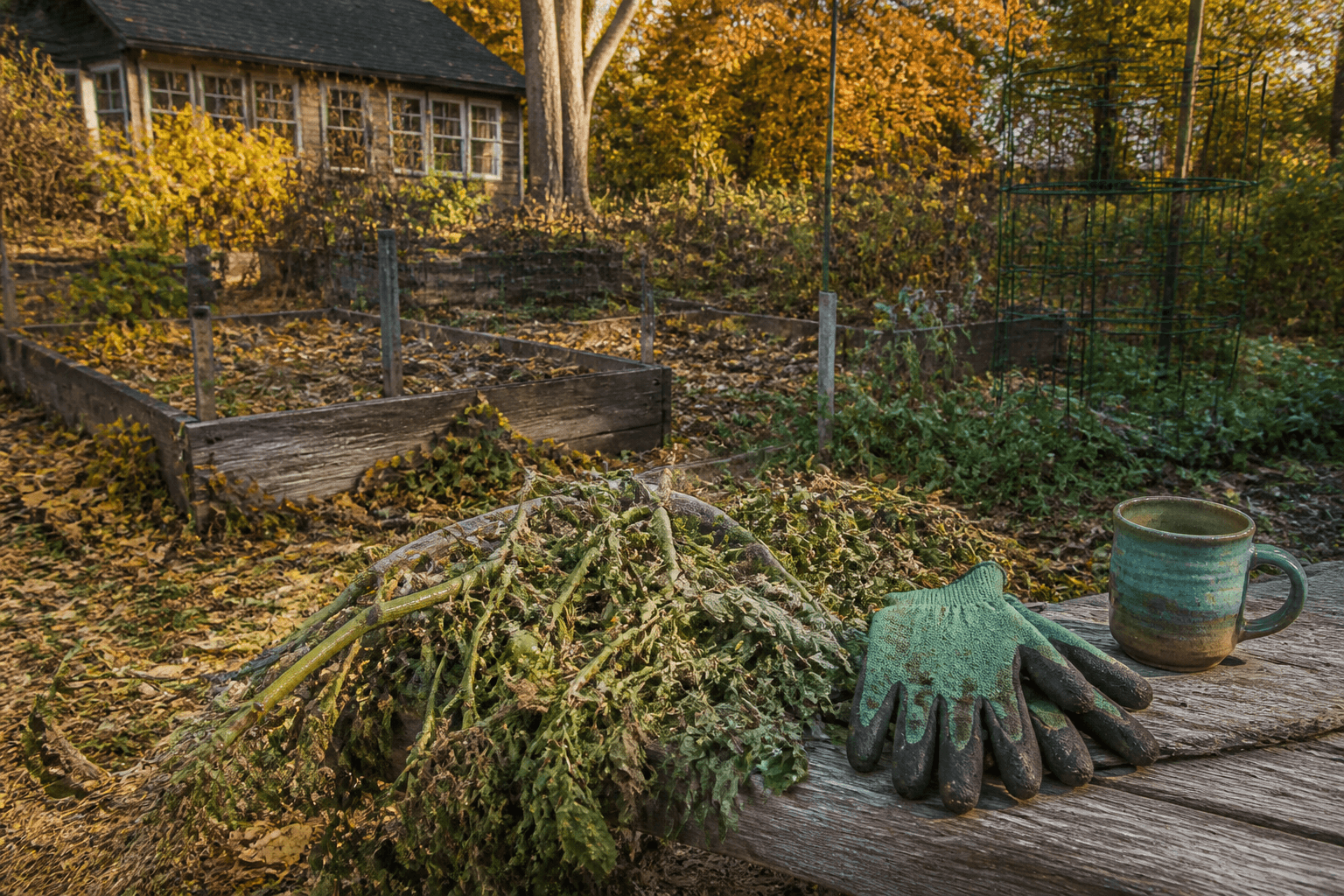
- Remove spent crops
- Dig out perennial weed roots when soil is workable
- Haul to compost or burn pile according to your system and local rules
Block 3: Soil care (30–45 minutes)
- Add finished compost
- Note low spots and crusting
- Plant cover crop if that is your method, or mulch exposed soil
Stop while you still have form. Tomorrow exists.
Coffee Grounds: Use Them With Restraint
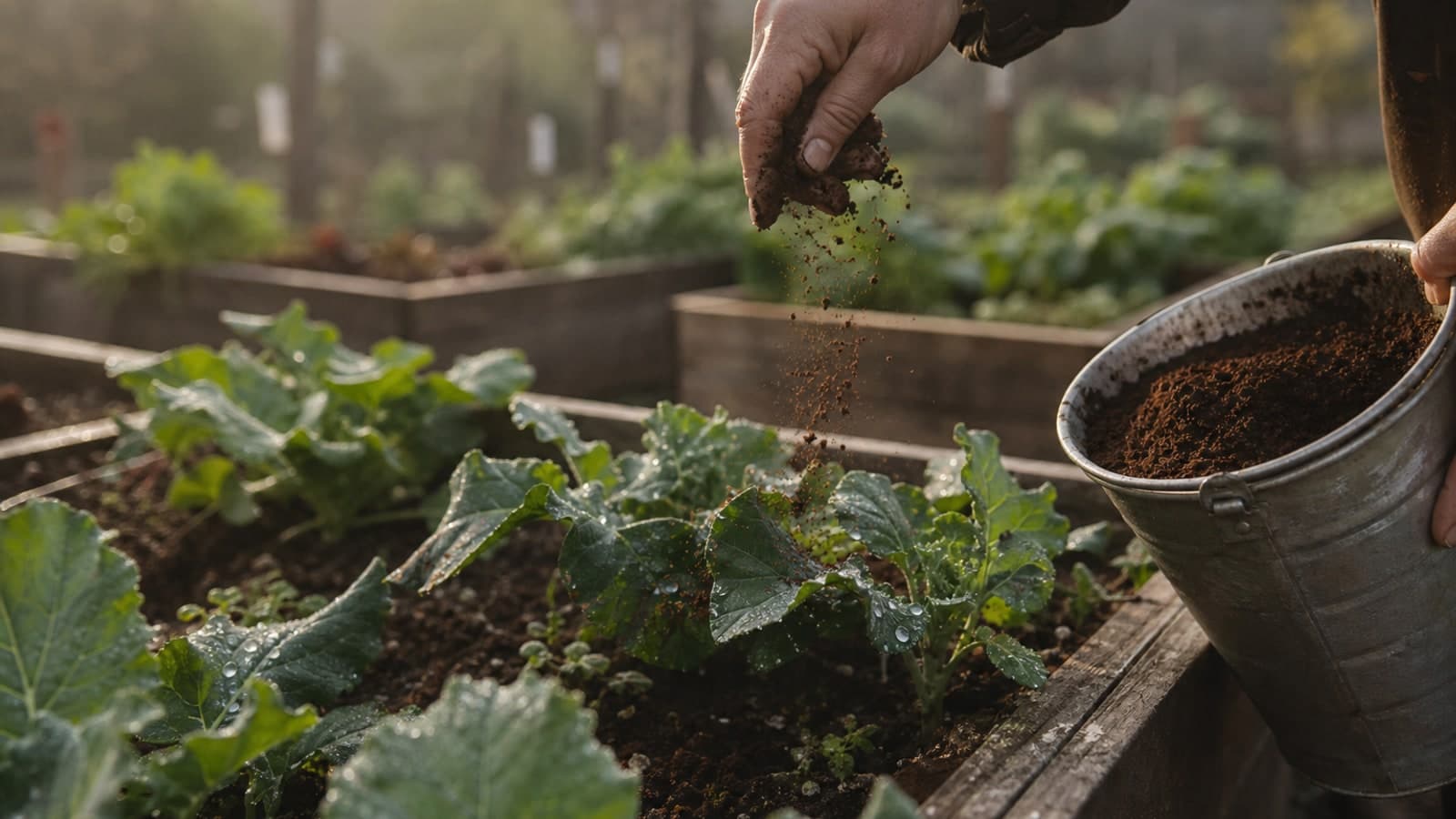
Spent grounds are a resource, not magic sprinkles.
Good:
- Mixed into compost with browns (leaves, cardboard, bedding)
- Thinly incorporated into soil as part of a broader amendment plan
- Added in amounts your compost can actually process
Bad:
- Thick wet mats against plant stems
- Dumping pounds of grounds in one spot
- Assuming grounds alone replace balanced fertility
Full guidance: coffee grounds on the homestead.
If you drank more iced coffee in summer, you may have more grounds volume than usual. That is fine. It still needs carbon balance in the pile.
Disease Common Sense
If plants had blight or severe fungal issues, know your local best practice for disposal. Do not automatically throw every problem plant into a cool, poorly managed compost heap and assume heat will save you. When unsure, bag and trash problem material rather than inoculating next year's beds.
Tools and Coffee Logistics
Garden cleanup is dirty. Keep the thermos on a clean bench. Wash hands before sipping if you used sprays or treated wood preservatives earlier in the season.
Useful roast energy for cool cleanup mornings:
- Morning Blend
- Beekeepers Roast
- Workhorse Blend for all-day bed teardown weekends
Connecting Harvest Memories to Cleanup Reality
The same beds that gave you tomato season mornings and garden harvest coffee deserve a proper ending. Cleanup is gratitude with gloves on.
If orchard work is happening the same week, alternate heavy days: orchard mornings. Your back is part of the homestead infrastructure.
Cover Crops vs Mulch (Pick With Intention)
Cover crops (clover, rye, etc.) protect and feed soil living systems through winter in many climates.
Mulch protects soil from erosion and temperature extremes when planting a cover is not practical.
Bare soil through winter rains is the option that asks for the most repair later.
Frequently Asked Questions
When is too late for fall cleanup?
Before the ground freezes solid is the practical answer. Earlier is kinder to you and the soil.
Should I till everything?
Not automatically. Disturbance has costs. Many homesteaders shift toward less inversion and more compost/mulch/cover crop. Match method to your soil and weeds.
Can I put coffee filters in compost?
Unbleached paper filters usually yes in modest amounts. Remove synthetic tabs or plastic-coated pieces.
How do I keep motivated for ugly jobs?
Small beds, visible before/after, and a good first cup. Do not romanticize it. Just schedule it.
What if I still have produce coming?
Clean around active plants. Full teardown can wait for those rows. Partial progress still matters.
Brew, then close a bed: Morning Blend or the full shop.