What to Do with Used Coffee Grounds on the Homestead
Don't throw them out. Used coffee grounds feed compost, deter some pests, and improve soil, when you use them correctly. Here's what works, what doesn't, and what to avoid in the garden.
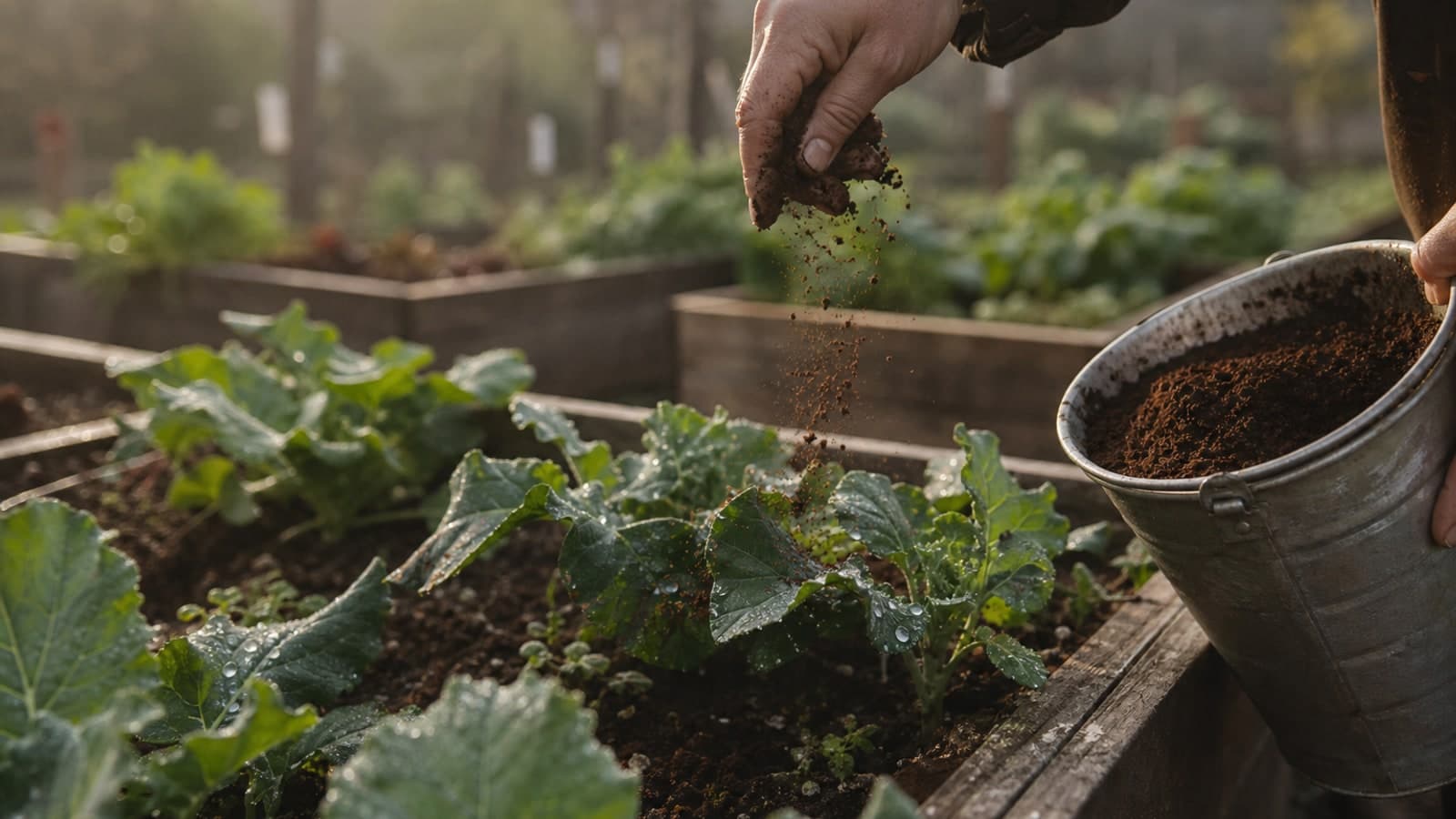
Quick answer: Add used coffee grounds to compost (up to 10–20% of compost volume), mix them into soil for acid-loving plants in moderation, or use a thin top-dressing around plants. Never as a thick mulch layer. They are not a nitrogen fertilizer on their own, they won't reliably repel slugs, and they should not be dumped in thick piles where they'll compact and mold.
A homestead that brews daily produces a steady stream of wet coffee grounds. Two cups a morning is roughly a pound of spent grounds per week. Over a year, that's more than 50 pounds of organic material that most people throw in the trash without thinking.
Coffee grounds are useful on a homestead. Compost, garden soil, occasional pest deterrence, but they're also one of the most misunderstood materials in the gardening world. Pinterest says they'll fix everything. Science says they're more modest than that.
Here's an honest guide to putting your morning's leftovers to work.
What Used Coffee Grounds Actually Contain
Spent grounds are not the same as fresh coffee. Brewing extracts most of the soluble acids and flavor compounds. What remains is mostly:
- Organic matter (fiber and cellulose)
- Small amounts of nitrogen (roughly 1–2% by weight. Less than many guides claim)
- Phosphorus and potassium in trace amounts
- Residual compounds from the bean (enough to matter for compost in large doses)
The pH of used grounds is often near neutral (around 6.5–6.8), not acidic. The acid in coffee is water-soluble; it mostly ends up in your cup. Don't count on spent grounds to acidify soil dramatically.
Best Use: Compost
Composting is the highest-value, lowest-risk use for coffee grounds on a homestead.
Why it works: Grounds add organic matter and feed microorganisms. They're considered a "green" compost ingredient (nitrogen-rich relative to dry browns like leaves and straw), though their nitrogen content is modest compared to kitchen scraps or manure.
How to add them:
- Mix grounds into the compost pile, don't dump them in a wet clump
- Balance with "brown" carbon sources: dried leaves, straw, shredded paper, wood chips
- Aim for grounds as no more than 10–20% of total compost volume
- Turn the pile regularly so grounds don't form anaerobic pockets
What to expect: Grounds break down in 3–6 months in an active pile. Finished compost containing coffee grounds is safe for vegetable gardens, flower beds, and around fruit trees.
Vermicomposting: Worms tolerate coffee grounds in small amounts mixed with bedding. A thin sprinkling per week works. Large doses can heat the bin or irritate worms because of residual compounds and antimicrobial effects.
In the Garden: Soil Amendment
Used grounds can be worked into soil, but moderation is the rule.
Good candidates: Blueberries, azaleas, rhododendrons, and other acid-preferring plants, though grounds alone won't replace proper soil acidification (elemental sulfur or peat alternatives are more reliable for large pH shifts).
How to apply:
- Mix no more than half an inch of grounds into the top 6 inches of soil
- Apply a few times per season, not weekly heavy doses
- Combine with compost rather than using raw grounds alone
Why not thick layers: Wet coffee grounds compact into a crust that sheds water and blocks air. Plants roots suffocate. Mold grows on the surface. A ring of grounds an inch deep around a plant is a common Pinterest mistake. Skip it.
Mulching: Proceed with Caution
A thin scatter of dried grounds mixed with other mulch material can work. A thick layer of wet grounds does not.
If you mulch with grounds:
- Let them dry on a tray for a day before spreading
- Mix with straw, wood chips, or leaf mulch. Never apply solo more than ½ inch deep
- Keep grounds away from plant stems to avoid moisture trapping and rot
Pest Control: What the Evidence Says
Slugs and snails: Some gardeners scatter grounds around plants and report fewer slugs; others see no difference. Don't depend on grounds as your primary slug strategy. Beer traps, copper tape, and hand-picking are more dependable.
Ants and cats: Scattered grounds sometimes discourage ants from specific paths and may discourage cats from digging in beds. Effects are temporary and inconsistent.
Fungus gnats on houseplants: A thin layer of dried grounds on houseplant soil is sometimes credited with reducing gnats. Drying the soil surface (letting the top inch dry between waterings) matters more.
Bottom line: grounds are a mild, free experiment, not a replacement for integrated pest management.
What Not to Do
Don't dump thick piles anywhere in the garden. They mat down, smell, and grow mold.
Don't use only coffee grounds as fertilizer. The N-P-K profile is too weak and too slow. Plants need balanced nutrition from compost, manure, or appropriate amendments.
Don't assume they'll acidify your soil. For meaningful pH change in alkaline soil, use tested amendments and retest soil pH annually.
Don't add large amounts to seedlings. Concentrated coffee grounds can suppress germination. Keep seedlings in sterile or compost-based starting mix.
Don't compost only coffee grounds. A pile of nothing but wet grounds goes anaerobic fast. Always mix with browns.
Homestead Workflow: Collecting Grounds Efficiently
A few habits that keep the process clean:
- Counter bin with a lid: stainless or ceramic container; empty into the compost bucket every 2–3 days
- Freeze in batches if you compost weekly. Prevents mold and fruit flies in summer
- Dry on a baking sheet if you want to store grounds for later garden use or to mix into mulch
- Paper filter and all: paper filters are compostable (unbleached preferred); break them up so they don't mat
If you use a French press, grounds are already consolidated. Dump directly into the compost pail and rinse the press.
How Much Is Too Much?
Rule of thumb for a household brewing 2–4 cups daily:
- Compost: All of it, balanced with browns. No problem in a typical homestead compost system
- Direct soil application: No more than a few cups per square yard per season
- Around a single plant: A handful mixed into soil, once or twice per growing season
When in doubt, put it in compost and let the pile do the work.
The Bigger Picture: Closing the Loop
Using coffee grounds on the homestead is a small act of stewardship. Less waste to the landfill, more organic matter returned to soil. It won't replace a compost system or fix poor soil alone. Combined with kitchen scraps, leaves, and animal bedding from the barn, it contributes to the nutrient cycle that healthy land depends on.
That's aligned with why many of us drink coffee slowly on a homestead in the first place: paying attention to what comes in and what goes out, and wasting less of both.
Frequently Asked Questions
Are coffee grounds good for tomatoes?
In moderation, mixed into compost or soil. Yes. Tomatoes benefit from organic matter. Don't mound thick fresh grounds around tomato plants; use finished compost that includes grounds instead.
Do coffee grounds attract rats or bears?
The smell can attract wildlife if grounds are piled thickly or mixed with food scraps in an open compost pile. Bury food scraps in the pile center, use a enclosed bin if bears are a concern in your area, and avoid leaving wet grounds on the surface overnight.
Can chickens eat coffee grounds?
No. Coffee grounds are not feed. Keep them out of chicken runs and feed areas. Compost them instead.
How long do coffee grounds take to decompose in compost?
Typically 3–6 months in an active, turned compost pile. Finer grounds break down faster when mixed well with browns.
Are coffee grounds acidic?
Brewed coffee is acidic; used grounds are near neutral (pH ~6.5–6.8). They won't significantly acidify alkaline soil on their own.
Can I put coffee grounds down the garbage disposal?
Not recommended. They accumulate in pipes and combine with grease to form clogs. Compost or trash them instead.
Do unused (fresh) coffee grounds work the same as used grounds?
Fresh grounds are more acidic and more antimicrobial than used grounds. Worse for worms and seedlings in concentration. Used grounds are safer for compost and garden. Don't dump fresh grounds in the garden to "use up" old beans; compost them sparingly.
Brew first, compost second. Fresh roast from Morning Blend or the shop means better grounds for the pile after breakfast.