What Fairtrade Coffee Certification Really Means
The Fairtrade label is everywhere. But what does it actually guarantee? Here's what you're supporting when you buy certified coffee, and what it doesn't cover.
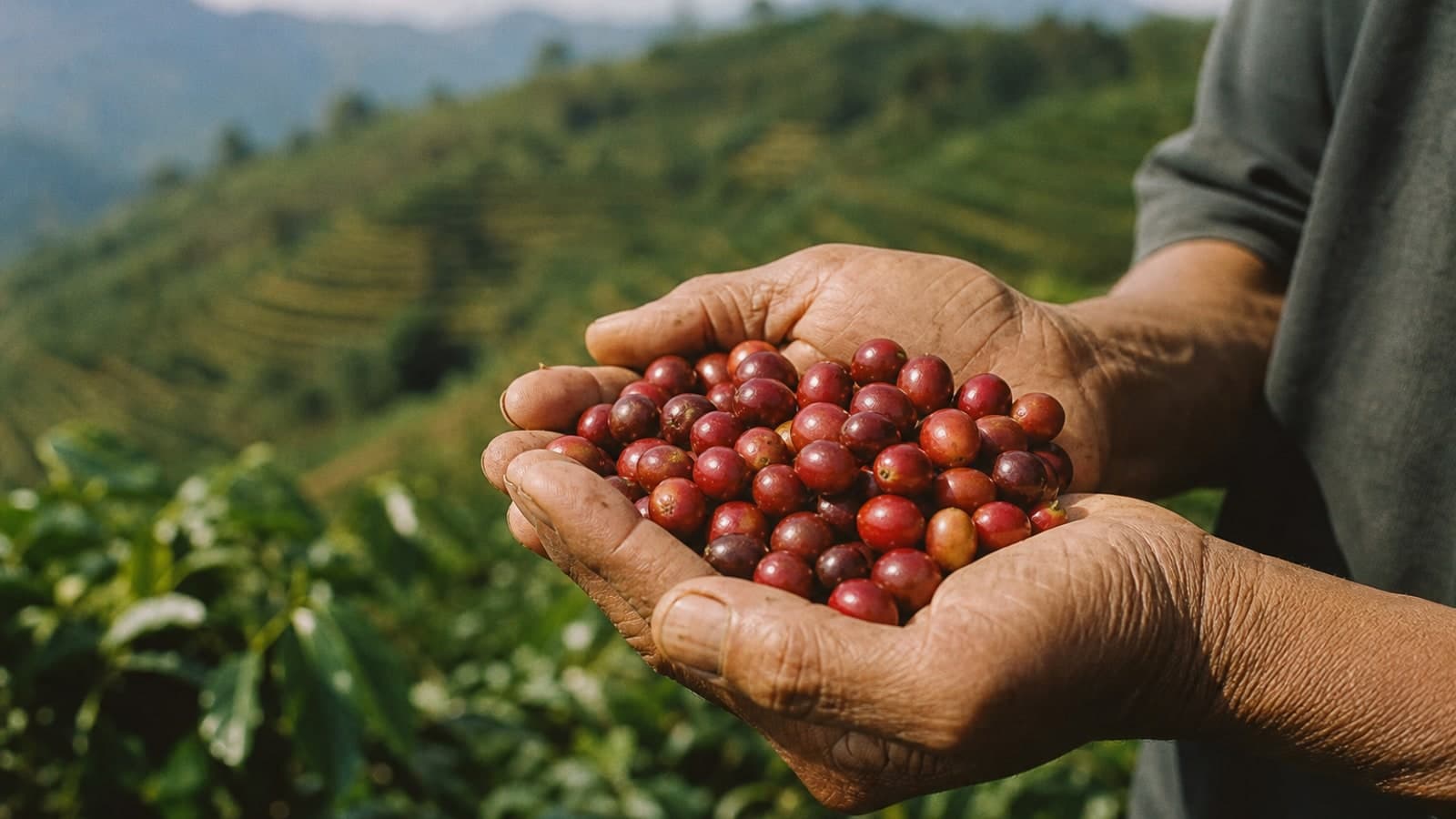
Quick answer: Fairtrade certification guarantees coffee farmers a minimum price floor ($1.40/lb for washed arabica as of 2026), plus a Fairtrade Premium of $0.20/lb that goes directly to the farming community for projects they choose: schools, health clinics, farm equipment. This article explains the standard in general, Saltbox does not display Fairtrade marks on our site unless we are enrolled and the specific product qualifies.
Walk the coffee aisle of any grocery store and the Fairtrade logo appears constantly. After enough repetition, logos become wallpaper. But if you're the kind of person who wants to understand what they're buying and why (and if you're reading this, you probably are), it's worth understanding what that logo actually guarantees.
The Problem Fairtrade Was Designed to Solve
Coffee prices on commodity markets are notoriously volatile. Between 1997 and 2002, world coffee prices dropped by nearly 70%, well below the cost of production for many small-scale farmers. This isn't unusual; price collapses happen cyclically, and when they do, farming families bear the full brunt.
Fairtrade was created in the early 1990s to create a floor: a minimum price farmers receive regardless of commodity market crashes. The idea is simple: certain prices are too low to sustain viable farming livelihoods, and the market sometimes goes there.
What Fairtrade Actually Guarantees
Minimum price: For washed arabica (the most common specialty variety), the Fairtrade minimum is $1.40 per pound. When market prices are above this floor, traders pay market price. When the market drops below it, they must still pay $1.40. This floor is adjusted periodically.
The Fairtrade Premium: On top of the price, buyers pay an additional $0.20/lb "Fairtrade Premium" that goes into a community fund controlled by the farmers themselves. The cooperative votes on how to use it. The choices are genuinely theirs. Common uses include:
- School construction and supplies
- Clean water systems
- Health clinics
- Farm equipment and training
- Reserve funds for bad harvests
Democratic cooperative structure: Fairtrade certification requires that farmers are organized into cooperatives with democratic governance. This means farmers collectively negotiate and receive payments, rather than dealing individually with powerful middlemen.
Independent auditing: Fairtrade International, which manages the standards, uses independent third-party auditors to verify compliance. This is more rigorous than many other certification programs.
What Fairtrade Doesn't Guarantee
It's worth being honest:
It doesn't guarantee taste. Fairtrade is an economic and governance standard. A poorly processed, mediocre coffee can be Fairtrade certified. Conversely, some of the world's best coffees are not Fairtrade; direct trade relationships at higher prices can be more beneficial for some farmers.
It doesn't cover all workers. The benefits primarily flow to smallholder farmer-owners in certified cooperatives. Plantation workers who are employees (not owners) are covered by different standards.
The minimum price hasn't always kept pace with costs. The $1.40/lb floor was set years ago, and input costs (fertilizer, labor, fuel) have risen significantly since. Some critics argue the floor needs to be raised substantially.
How It Fits Into How Coffee Is Sourced
Many specialty roasters. Including our partner, Temecula Coffee Roasters. Work with certified cooperatives and direct relationships as part of a broader sourcing picture. Fairtrade is one industry standard among several; it is not a guarantee of taste, and not every coffee uses it.
For us, honest sourcing means being clear about what a label does and does not promise. We think you deserve that transparency.
The Bottom Line
When a coffee is Fairtrade certified and labeled as such on the bag, it means the farmers who grew those beans received at least a fair floor price, plus a community investment premium they controlled, under a program audited by a third party. Saltbox does not display Fairtrade marks on this website unless Saltbox is enrolled in the program and the specific product qualifies.
Is it perfect? No system is. But it's one of the most transparent and independently verified standards in global food sourcing. For a homesteader who values knowing where things come from, that matters. Learn more about how we work with Temecula Coffee Roasters and our about story.
Frequently Asked Questions
Does Fairtrade guarantee better taste?
No. Fairtrade is an economic and governance standard. Specialty grade and careful roasting determine cup quality.
Does Saltbox display Fairtrade marks?
Only if Saltbox is enrolled in the program and the specific product qualifies. We do not put logos on the site for certifications we do not hold.
Is Fairtrade the same as specialty coffee?
No. Specialty refers to cup quality (typically 80+ points). Fairtrade refers to trade terms. See what is specialty coffee.
Taste the roast-to-order difference in Morning Blend or explore the shop.