How I Start My Morning on a Small Farm
The alarm goes off at 4:45. The animals don't care what time it is. Here's the exact sequence that makes the early mornings on our small farm work.
Quick answer: Coffee comes before chores, 4:45am alarm, French press steeping by 4:47, five quiet minutes with the mug, then goats, chickens, and the rest of the farm by 5:30.
The alarm goes off at 4:45am.
Not because there's a productivity quote about early rising. Not because a podcast said successful people wake up before the sun. The alarm goes off at 4:45am because the goats need to be milked by 5:30, and the chickens should be let out before the heat builds, and if you don't get your coffee in before any of that, the first hour of the day belongs entirely to the animals and nothing to you.
So: 4:45am. Coffee first. Then the farm.
The Sequence
4:45. Alarm. Don't snooze.
Snoozing on a farm morning is a trap. The five extra minutes don't add anything; they just make you feel rushed while you're doing chores. Get up, put your feet on the floor, go to the kitchen.
4:47. Start the kettle, start the French press.
The grinder is already loaded from the night before. I grind at night because I don't want to wake anyone else at this hour, and because the only decision I want to make before 5am is how much to fill the mug.
Kettle takes about 3 minutes to boil. Coffee steeps for 4 minutes. By 4:55 there's a full press waiting.
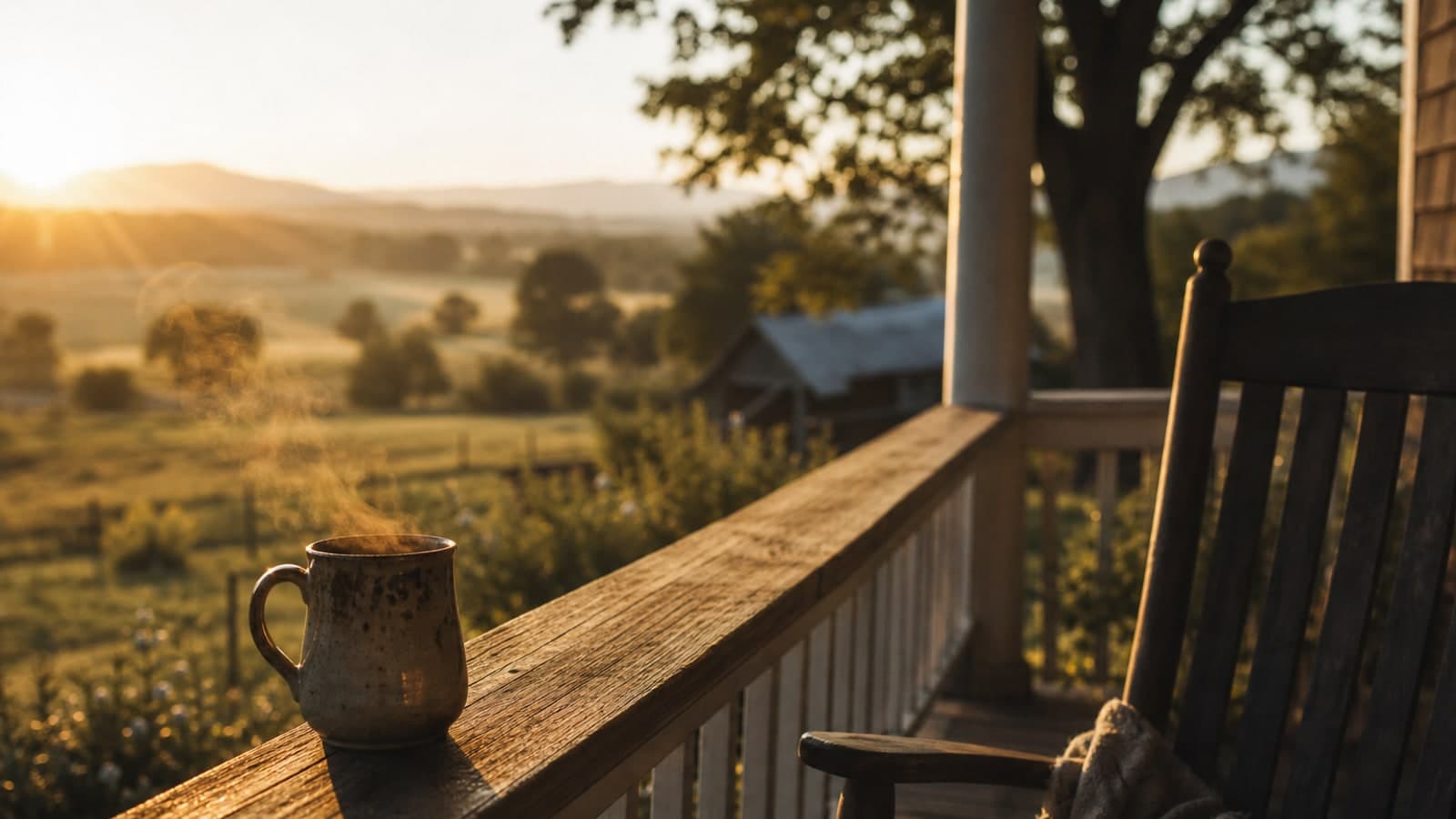
4:55. Pour the first cup. Sit. Don't look at your phone.
This is the non-negotiable part. Not the French press, not the specific roast, not the temperature of the water. The non-negotiable is sitting with the coffee for a few minutes before the day starts asking for things.
Five minutes of sitting in the quiet (kitchen light on, rest of the house dark, mug warm in your hands) is a more effective morning practice than any amount of journaling or meditation advice I've read. The farm day is long and physical. You need to show up to it with something left in reserve. This is where that reserve gets built.
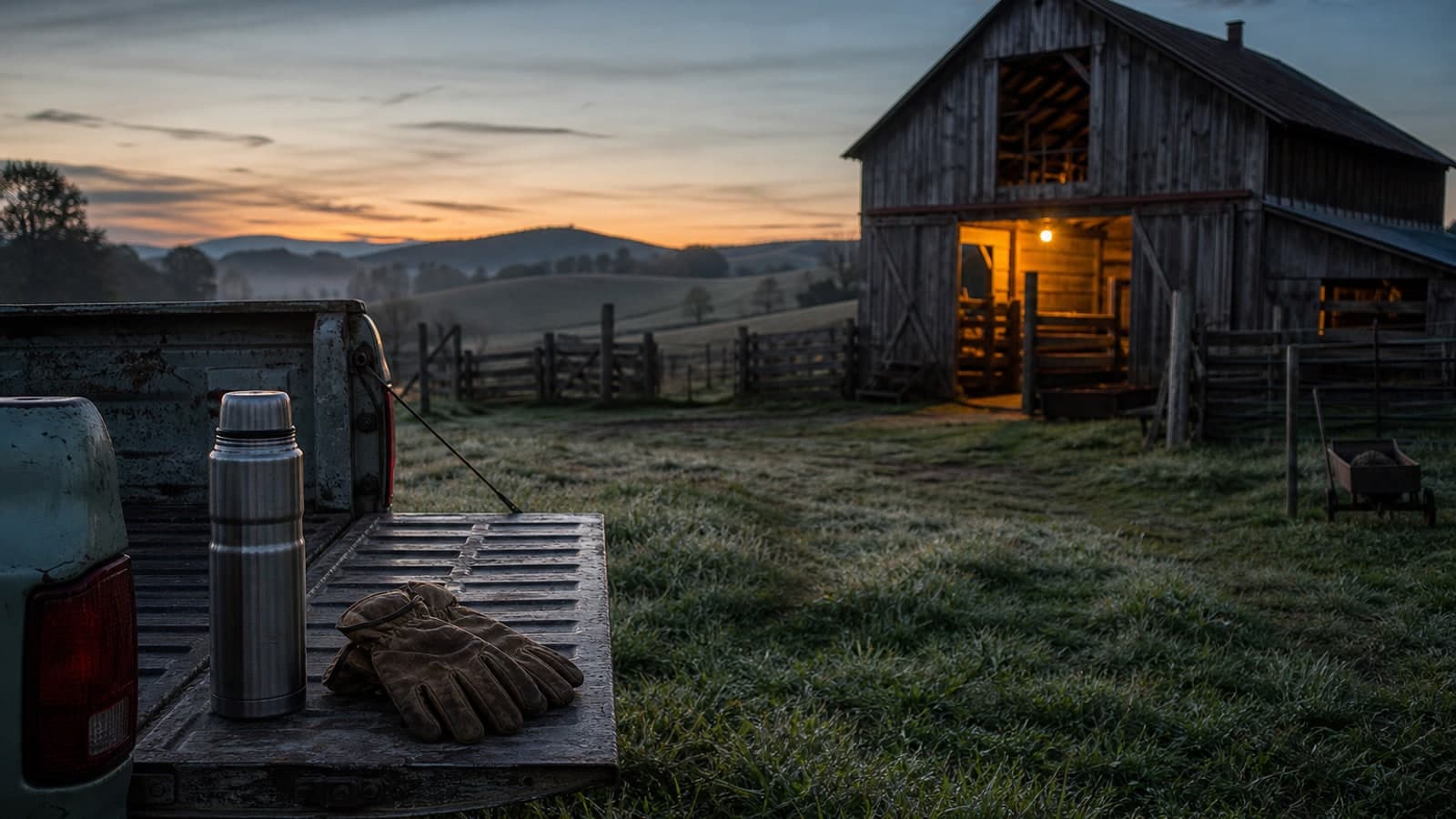
5:05. Boots and layers. Second cup goes in the thermos.
Fill the thermos with the rest of the press. It'll stay hot through the first full round of chores. A good insulated thermos means you can sip between tasks without running back to the house.
5:15. Barn.
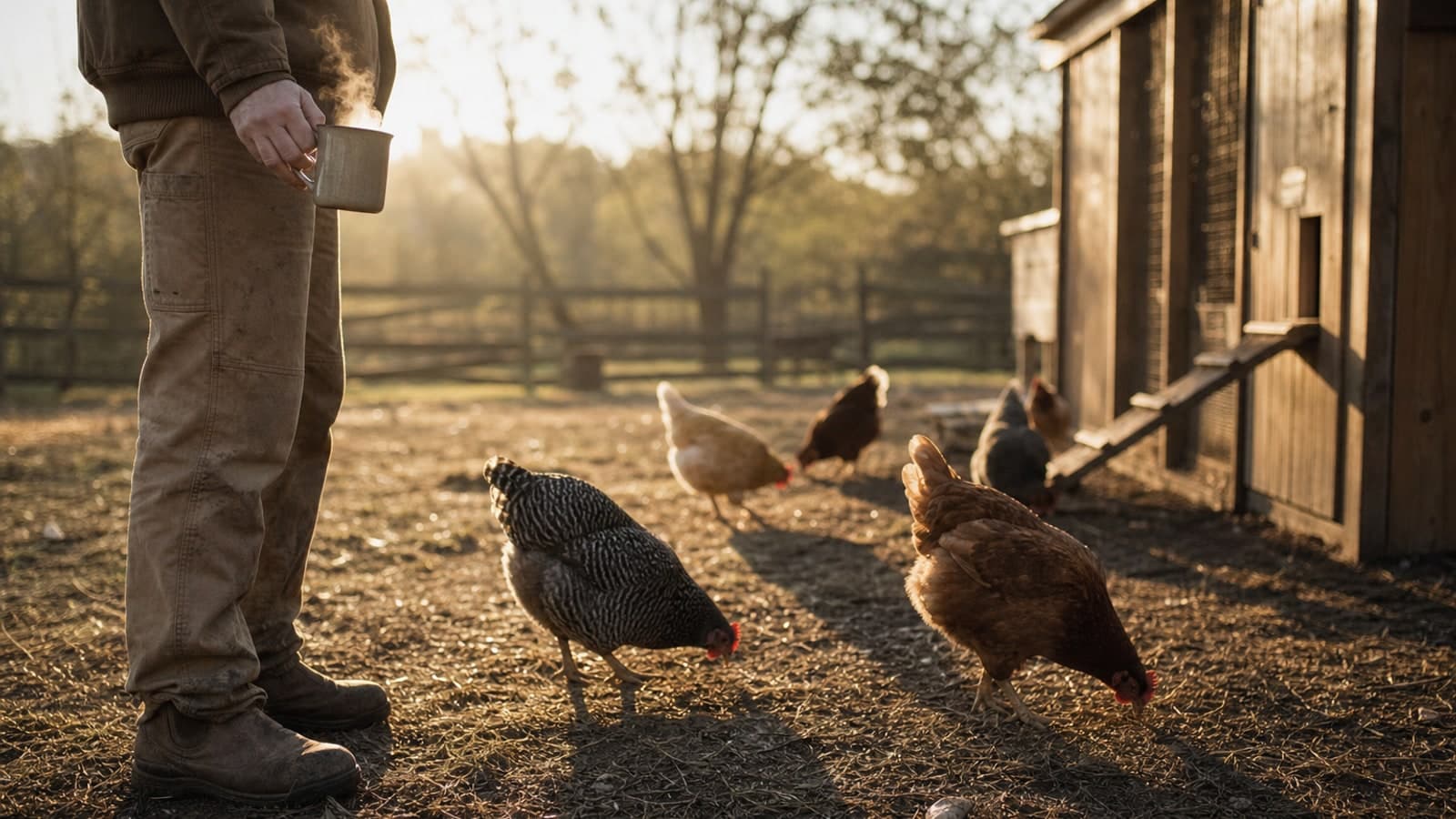
First the goats (feeding, milking, fresh water). Then chickens (open the coop, check water, collect any overnight eggs). Then a check of the garden perimeter if it's a season where that matters. The first chore round takes about 45–60 minutes depending on what comes up.
6:15. Back inside. Third cup. Breakfast.
This one gets made properly. The morning rush is over, the animals are settled, and there's a window before the day's actual work starts. This is the cup I take my time with.
Why Coffee First
There's a version of this routine where you go straight to the animals and have coffee when you come back in. I've tried it. It doesn't work as well.
The coffee-first approach isn't about chemistry before chores, it's about having a deliberate, quiet moment that belongs to you before the demands of the farm take over. Chore mornings where I skip that moment feel reactive from the start. Something always goes sideways, like a fence that needs fixing or an animal that's off, and without that five-minute buffer, I'm already behind before I've been outside.
Farmers with decades more experience than me have told me variations on this: protect the first few minutes. The rest of the day will not protect itself.
Tools That Actually Matter
A reliable kettle. Electric kettles that hold temperature are convenient, but a basic stovetop kettle works just as well and doesn't break. I've used the same stainless stovetop kettle for years.
A French press that doesn't drip. The cheap ones drip when you pour. Buy a decent one once: Bodum, Espro, or even a basic stainless model from a kitchen shop. It will outlast several cheap versions.
A 16–20oz insulated thermos. Stanley and Yeti both make good ones. Preheat the thermos by filling it with boiling water while the press steeps, then dump it and fill with coffee before heading out. An extra 30 seconds that buys you hot coffee at 6am.
A timer. I set a 4-minute timer on my watch when I start the French press steep. This sounds fussy but it eliminates one decision at 4:47am and produces a consistently good cup.
On Consistency
Small farm mornings teach you the value of consistency faster than almost anything else. When the same tasks happen in the same order every day, you stop spending mental energy on sequencing. The routine becomes automatic, which frees up attention for the things that actually need it: the unexpected gate problem, the weather change, the animal that seems off this morning.
The coffee routine is the anchor at the beginning of that sequence. It signals to everything else: we're starting now, in this order, at this pace. The farm responds to consistency. So do the people working it.
Frequently Asked Questions
What time should you wake up on a small farm?
It depends on your animals. Dairy animals (cows, goats) with a set milking schedule dictate your earliest required wake-up. Chickens are more flexible: they need to be let out after dawn and closed in at dusk, but they don't demand a specific early hour the way milking animals do. Most small-scale homesteaders with mixed livestock find themselves waking between 5am and 6am year-round.
How do you get through long farm mornings?
A solid breakfast after the first chore round, regular water intake throughout the morning, and enough rest the night before. Coffee is part of the routine, not a substitute for food or sleep. A 5am alarm works better when you went to bed at a reasonable hour.
Does the morning routine change by season?
Significantly. Winter mornings mean extra layers, frozen water buckets, and often shorter daylight for working. Summer mornings mean starting even earlier to beat the heat, and the chore list expands during growing season. The coffee ritual stays constant; the sequence around it flexes with the season.
What coffee is best for a small farm morning routine?
A medium-dark or dark roast brewed strong in a French press. You want something that travels well in a thermos and holds its character at slightly below peak temperature. Delicate light roasts taste thin after 20 minutes in a thermos. Our guide to the best chore coffee goes into the full reasoning. Start with Homestead Dark or Beekeepers Roast.
How do you handle mornings when things go wrong?
Something goes wrong on a farm with notable regularity. The response that works is having a clear, short list of what absolutely must happen each morning (milking, water, feed) and accepting that everything else is flexible. Getting upset about the unexpected is a waste of energy that the day will need later. Coffee before going outside helps with this more than it should.