How to Stock Coffee for Winter Without Going Stale
Buying too much coffee for winter is a freshness trap. Here is how to estimate weekly use, choose bag sizes, store beans correctly, and schedule reorders through the cold months.
Quick answer: Estimate ounces per week, buy only what you will finish near peak freshness, store whole bean airtight in a cool dark place, and reorder on a rhythm instead of panic-buying giant bags. Freezing can work for well-sealed portions if you understand the rules. Stale bulk coffee is not a savings plan.
Late September tempts people into winter preparedness mode: firewood, pantry staples, freezer inventory, and somehow a five-pound sack of coffee "so we do not run out."
Running out is inconvenient. Drinking October coffee in January because it went flat in a pantry bin is also inconvenient, just quieter.
This is a practical stocking plan for homestead households that drink coffee daily and care whether it tastes alive.
Step 1: Measure Real Consumption
For one week, track:
- Household coffee drinkers
- Mugs per person per day
- Brew method waste (extra pot dumped, etc.)
Rough conversion many households use: about 10–12g coffee per small mug, more for large mugs and strong thermos brewing. Weigh if you can. Guessing high is how you over-buy.
Example:
- 2 drinkers
- 2 mugs each morning
- ~12g per mug
- = ~48g/day
- × 7 = ~336g/week (~12oz)
That household may thrive on a 12oz bag per week or a 2lb bag every two to three weeks, depending on strength and guests.
Step 2: Match Bag Size to Freshness Windows
Peak windows vary, but a working specialty heuristic for whole bean is measured in weeks after roast, not months. Details: why roast date matters.
| Household pace | Safer buy |
|---|---|
| 1 mostly-solo drinker | 12oz more often |
| Couple, daily drip | 12oz weekly or 2lb on a short cadence |
| Large family / thermos army | 2lb more often; be honest about finish dates |
| Rare "maybe we need 5lb" | Only if storage discipline is excellent |
Packaging context for sizes: compostable bags explained.
Step 3: Storage Rules That Prevent Quiet Staling
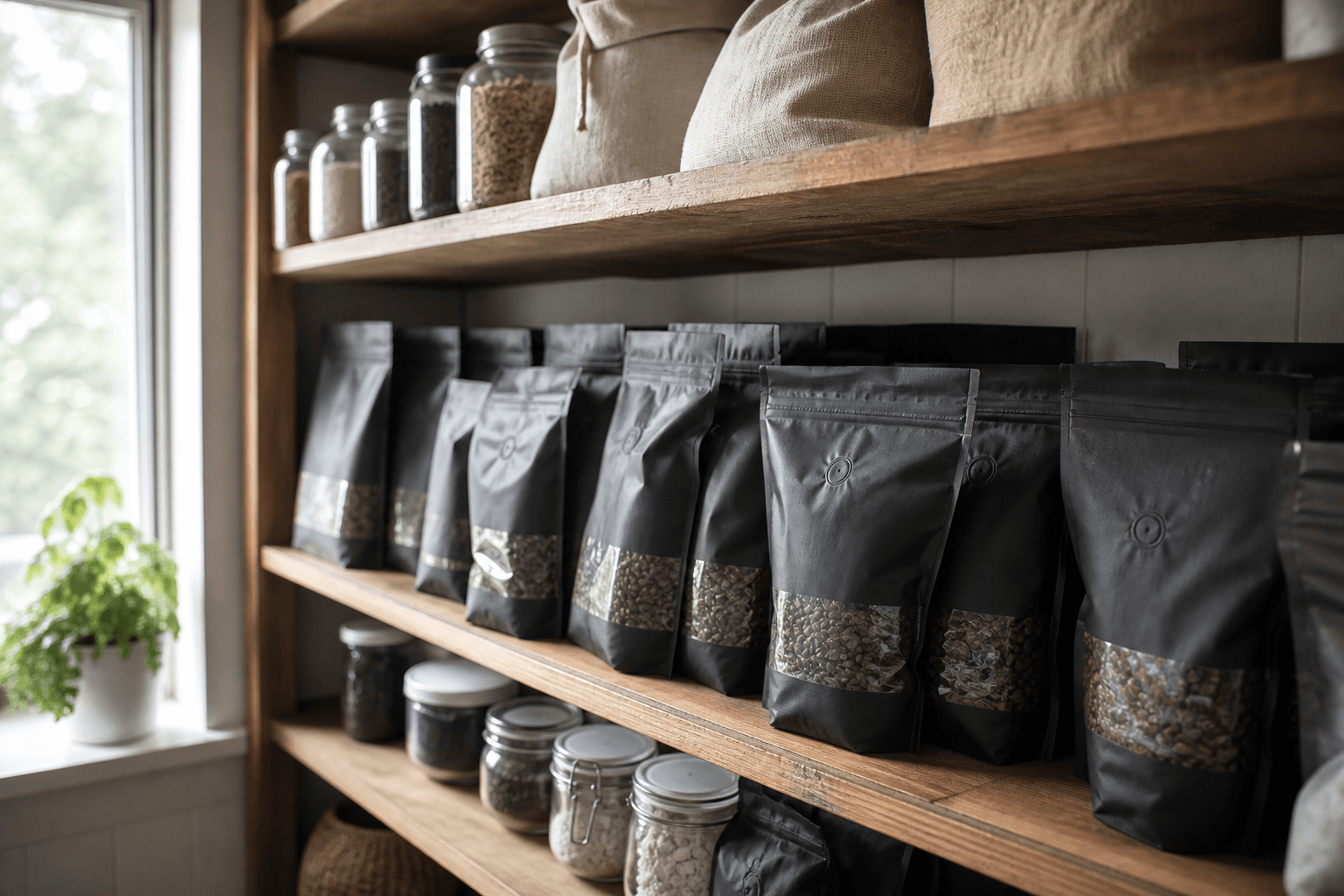
Store whole bean, sealed, cool, dark, away from the stove and sunlight.
Do:
- Keep beans in a bag with a working valve or transfer to a true airtight container
- Minimize time in a open hopper if your grinder holds a week of beans
- Buy whole bean unless convenience absolutely requires pre-ground
Do not:
- Leave beans in a hot truck
- Store next to the wood stove
- Refrigerate bags in a way that creates condensation cycles
- Open five bags at once "for variety"
Deep dive: coffee storage on the homestead.
Step 4: Freezing Without Folklore
Freezing can help if you portion correctly.
Better practice:
- Divide into airtight portions you will finish quickly after thaw
- Freeze promptly
- Thaw sealed to avoid moisture
- Do not refreeze repeatedly
Worse practice:
- Giant open bag in the freezer absorbing food odors
- Daily open-close frost cycles on the same beans
Freezing is a tool for extending supply edges, not a substitute for a sane order rhythm.
Step 5: Build a Reorder Rhythm in September
Put recurring reminders on the calendar:
- Inventory check every Sunday night
- Reorder when you open the last bag you consider "fresh enough"
- Keep one backup bag, not five
If you host Thanksgiving and Christmas heavily, plan a temporary uptick. Do not invent a permanent 3× consumption identity based on two holidays.
Step 6: Separate Everyday Coffee From Special Coffee
Winter stocking fails when every bag is an expensive experimental single origin.
House coffee: the blend you can brew half-awake
Weekend coffee: one rotating interesting bag
Decaf: enough for evenings without a panic drive
Suggested house anchors:
Budget Math Without Cheapening the Cup
Price per ounce only matters alongside cups enjoyed.
Stale cheap coffee that gets poured out is more expensive than fresh coffee you finish. Roast-to-order models help because the clock starts closer to your door: that is part of the Saltbox approach with Temecula Coffee Roasters.
Travel, Storms, and Backup
Winter storms happen. A backup bag is wise. A pantry museum of forgotten beans is not.
If power outages are common, keep a non-electric brew path ready: coffee when power is out.
Frequently Asked Questions
How many bags should I keep on hand?
Enough for 1–3 weeks depending on delivery timing and storms, not a full season.
Is a 5lb bag ever smart?
Yes for high-volume households with airtight portioning and fast use. No for most couples who want peak flavor.
Should I stock flavored holiday coffee?
Only if you will drink it. Otherwise it occupies space and stales like anything else.
What about grinding ahead for the whole week?
Flavor drops. Grind daily if you can, or grind the night before for early alarms into a sealed jar.
Can I mix the last of two bags?
You can for weekday pragmatism. Do not do it during a tasting you want to learn from.
Stock less, drink fresher. Start a sensible house bag in the shop.