Brewing Coffee with Well Water: A Homestead Guide
Hard well water, iron, sulfur, and softeners all change how coffee tastes. Here's how to diagnose your water, fix common problems, and brew a better cup from the tap on your land.
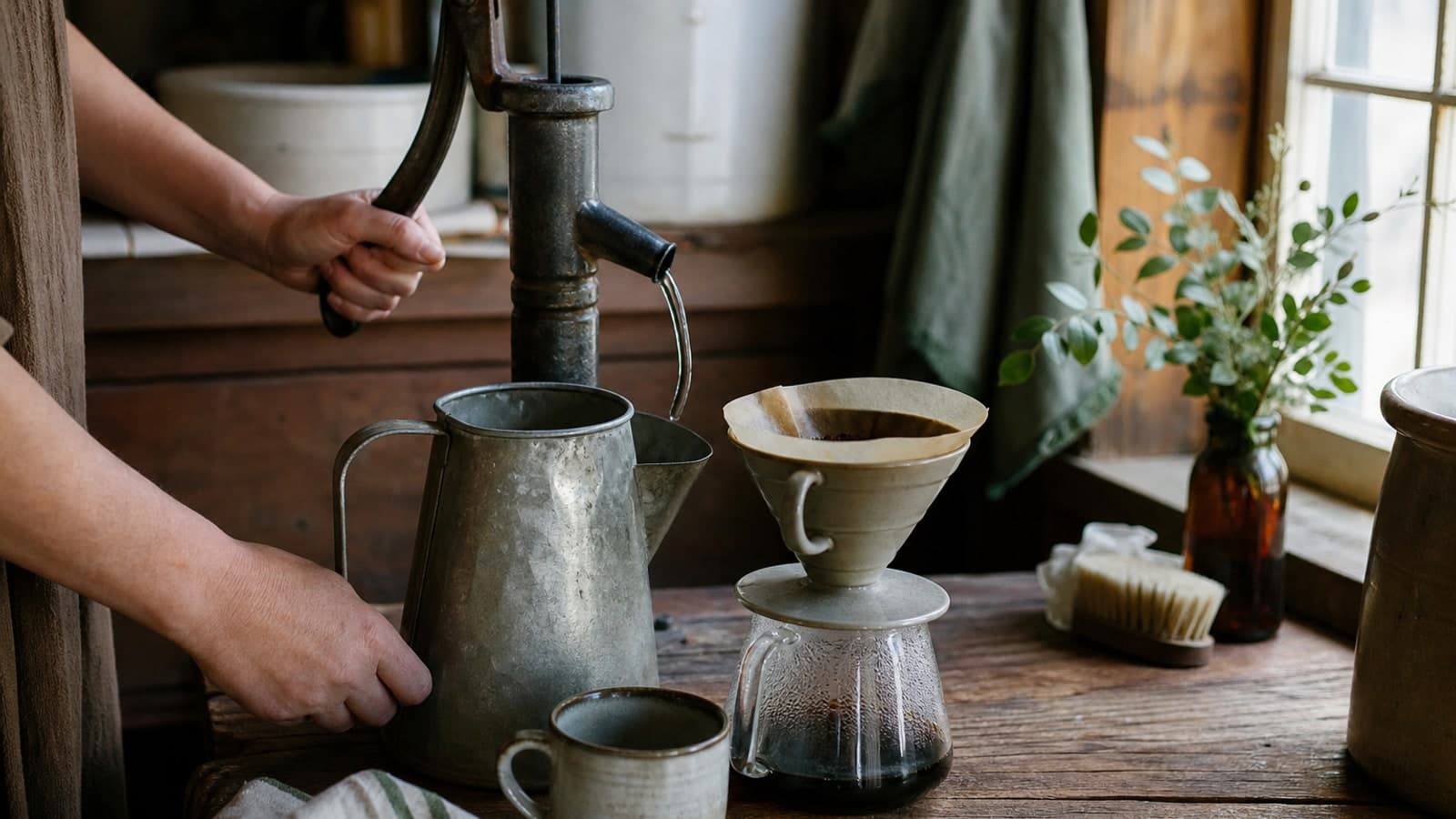
Quick answer: Great coffee needs water with moderate hardness (50–150 ppm as CaCO₃), low chlorine, and neutral to slightly alkaline pH (6.5–7.5). Well water that's very hard, high in iron, or run through a salt softener often makes coffee taste flat, metallic, or soapy. Test your water, filter chlorine and sediment at minimum, and use bottled or remineralized water for brewing if hardness or iron is extreme.
City water comes with a annual quality report. Well water comes with whatever your aquifer and plumbing decided. On a homestead, the water from your kitchen tap is one of the biggest hidden variables in your morning cup, and one of the least discussed.
You can buy excellent beans, grind them fresh, and nail your ratio. If your water fights the coffee, the cup will still disappoint. Here's how to understand what your well is doing to your brew.
Why Water Matters More Than Most People Think
Coffee is roughly 98% water. The minerals dissolved in that water pull flavor compounds from the grounds during extraction. Too few minerals and the cup tastes thin and sour. Too many, or the wrong kinds, and you get harsh, chalky, or metallic notes that no amount of better beans will fix.
The Specialty Coffee Association recommends water with:
- Total dissolved solids (TDS): 75–250 mg/L (ideal around 150)
- Hardness: 50–175 ppm as calcium carbonate
- pH: 6.5–7.5
- No chlorine or chloramine (common in municipal systems; less common in wells but possible if you're on a treated community well)
Your well might hit none of these targets. That's normal. The fix starts with knowing what you have.
Common Well Water Problems and What They Do to Coffee
Hard water (high calcium and magnesium)
Hard water is common in limestone and agricultural regions across Virginia, the mid-Atlantic, and much of rural America. High calcium binds with coffee acids and can produce a chalky, flat cup with muted sweetness. Espresso and pour-over methods show this most clearly because they're sensitive to mineral balance.
Signs: White scale on kettle heating elements, soap that lathers poorly, coffee that tastes dull despite good beans.
Iron and manganese
Iron in well water is widespread where groundwater passes through iron-bearing rock or where old galvanized pipes corrode. Even low levels can add a metallic taste. Coffee's dark color hides visual rust staining but not flavor.
Signs: Reddish or brown stains in sinks and toilets, metallic smell when you run the tap, coffee that tastes like pennies.
Hydrogen sulfide ("rotten egg" smell)
Some wells produce sulfur compounds that smell bad cold and can leave a faint off-flavor in hot beverages. Not every sulfurous well affects coffee noticeably, but strong cases ruin delicate cups.
Salt-based water softeners
Softeners swap calcium and magnesium for sodium. The result is water that's kinder to pipes and laundry but often too soft for coffee: extraction suffers, and the cup can taste flat or slightly soapy. Many homesteaders on softeners wonder why their coffee improved on vacation; the water was the variable.
Sediment and bacteria
Sand, silt, and biofilm in older well systems affect clarity and can carry off-flavors. A whole-house sediment filter helps appliances; a dedicated drinking-water filter at the kitchen tap helps your cup.
Step by Step
- Test your water with home strips for hardness, pH, and iron (or use a county panel).
- Brew a side-by-side cup with tap water and bottled spring water using the same coffee and method.
- Filter at the tap with a carbon block for sediment and smell as a minimum upgrade.
- Bypass softeners for brewing if you have a salt softener; use moderately hard filtered water for coffee.
- Use bottled or remineralized water for brewing when hardness or iron is extreme, until the well is treated.
- Descale gear monthly on hard water so scale does not compound water problems.
How to Test Your Well Water
You don't need a lab for a useful first pass.
1. Home test strips or kits ($15–40): Measure hardness, pH, iron, and sometimes chlorine. Available at hardware stores or online. Good enough to decide if you have a problem.
2. County health department or extension office: Many counties offer affordable well water testing panels that include bacteria, nitrates, and minerals.
3. Professional lab panel: If coffee taste is a persistent issue and basic tests look fine, a full mineral analysis ($50–100) tells you exactly what's in your water.
Write down results and brew the same coffee with your tap water and with a bottle of spring water side by side. The difference is often immediate.
Fixes That Actually Work
At minimum: filter chlorine and sediment
Even on a well, a carbon block filter at the kitchen tap removes sediment, improves smell, and catches occasional treatment chemicals if your water passes through a community system first. This is the cheapest upgrade with the broadest benefit.
For hard water: don't soften everything for coffee
If you have a whole-house softener, consider a bypass faucet or a separate cold line to the kitchen that draws unsoftened water through a carbon filter. Many serious home brewers brew with moderately hard water and reserve softened water for showers and laundry only.
For very hard or iron-heavy water: use adjusted water for brewing
Options ranked by effort:
- Bottled spring water for brewing only (practical for one or two cups daily; check the label for TDS around 100–200 mg/L)
- Remineralized distilled or RO water: reverse-osmosis systems strip everything; add a remineralization packet or product designed for coffee (Third Wave Water, Lotus, or DIY magnesium/calcium recipes) to hit the SCA window
- Dedicated under-sink RO + remineralization for households that want a permanent fix
Distilled or pure RO water alone brews thin, over-extracted coffee. You need some minerals back in.
For iron: treat the source
Point-of-use carbon filters help slightly; iron often needs a dedicated iron filter or aeration system on the well. If iron is high, fixing coffee taste means fixing the water supply, not just the brew method.
Brewing Adjustments While You Fix the Water
Water quality is the right long-term fix, but these tweaks help in the meantime:
Grind slightly coarser if your water is very hard. Slows extraction and reduces chalky bitterness.
Shorten brew time slightly for French press and immersion methods in hard-water areas.
Use a darker roast: medium-dark and dark roasts mask some mineral harshness better than light roasts on difficult water.
Don't blame the beans first: if a coffee tastes great at a friend's house and flat at yours, water is the leading suspect.
Well Water and Equipment Life
Hard water scales electric kettles, espresso machines, and drip brewers. Descale regularly with a citric-acid or vinegar solution (manufacturer-approved for your device). Scale buildup slows heating, clogs small passages, and eventually ruins equipment.
On a homestead where you might run the same kettle for a decade, a $30 kitchen carbon filter and occasional descaling saves real money.
A Simple Homestead Brewing Water Setup
For many rural households, this is the sweet spot:
- Sediment + carbon filter on the cold kitchen line
- Bypass softener for the brewing tap if you use a salt softener
- Annual water test for bacteria, nitrates, and hardness
- Bottle of spring water in the pantry for comparison testing when a cup tastes off
You don't need laboratory-perfect water. You need water that doesn't fight the coffee, and enough awareness to know when your well is the problem.
Frequently Asked Questions
Can I use well water for coffee without filtering?
Often yes, if tests show low iron, moderate hardness, and no bacteria issues. Many homesteaders brew excellent coffee straight from a good well. Filter at minimum if you notice sediment, smell, or inconsistent taste.
Does hard water make coffee bitter?
Hard water can make coffee taste chalky, flat, or harsh rather than cleanly bitter. The minerals change which compounds extract and how acids read on your palate.
Is softened water bad for coffee?
Salt-softened water is often too low in calcium and magnesium for ideal extraction. Coffee brewed with softened water frequently tastes flat or slightly soapy compared to moderately hard water.
Is bottled water better for coffee than well water?
It depends on the bottle. Spring water with TDS around 100–200 mg/L often brews well. Distilled water brews poorly unless remineralized. Compare your well water side by side before switching permanently.
What pH should water be for coffee?
Ideally 6.5–7.5. Very acidic or very alkaline water shifts extraction. Most well water falls in a workable range; extreme pH is worth correcting.
Will a Brita filter fix well water for coffee?
Pitcher filters improve chlorine taste and some sediment. They do little for hardness, iron, or sulfur. Helpful as a first step, not a complete solution for difficult well water.
Does boiling well water improve it for coffee?
Boiling kills bacteria but concentrates minerals through evaporation. It doesn't remove hardness or iron. Use boiling for safety if needed; don't expect it to fix flavor problems.
Once your water is dialed in, taste the difference with Morning Blend or browse the shop.