Pour-Over for a Quiet Weekend Morning
Pour-over isn't for 5am chore rushes, it's for the morning you have ten minutes and want to taste what's in the cup. Ratio, bloom, and pours explained.
Quick answer: Use medium grind, a 1:16 ratio (about 25g coffee to 400g water for one mug), bloom 30–45 seconds with just enough water to wet the grounds, then slow spiral pours until you hit target weight in 3–4 minutes total. Fresh water just off the boil (~200°F). This is a weekend method. Save French press for chore mornings.
Pour-over rewards attention. That's exactly why it doesn't belong in the 5am barn rush, and why it's worth keeping in the rotation for the slow morning on the porch, when you actually want to notice the cup.
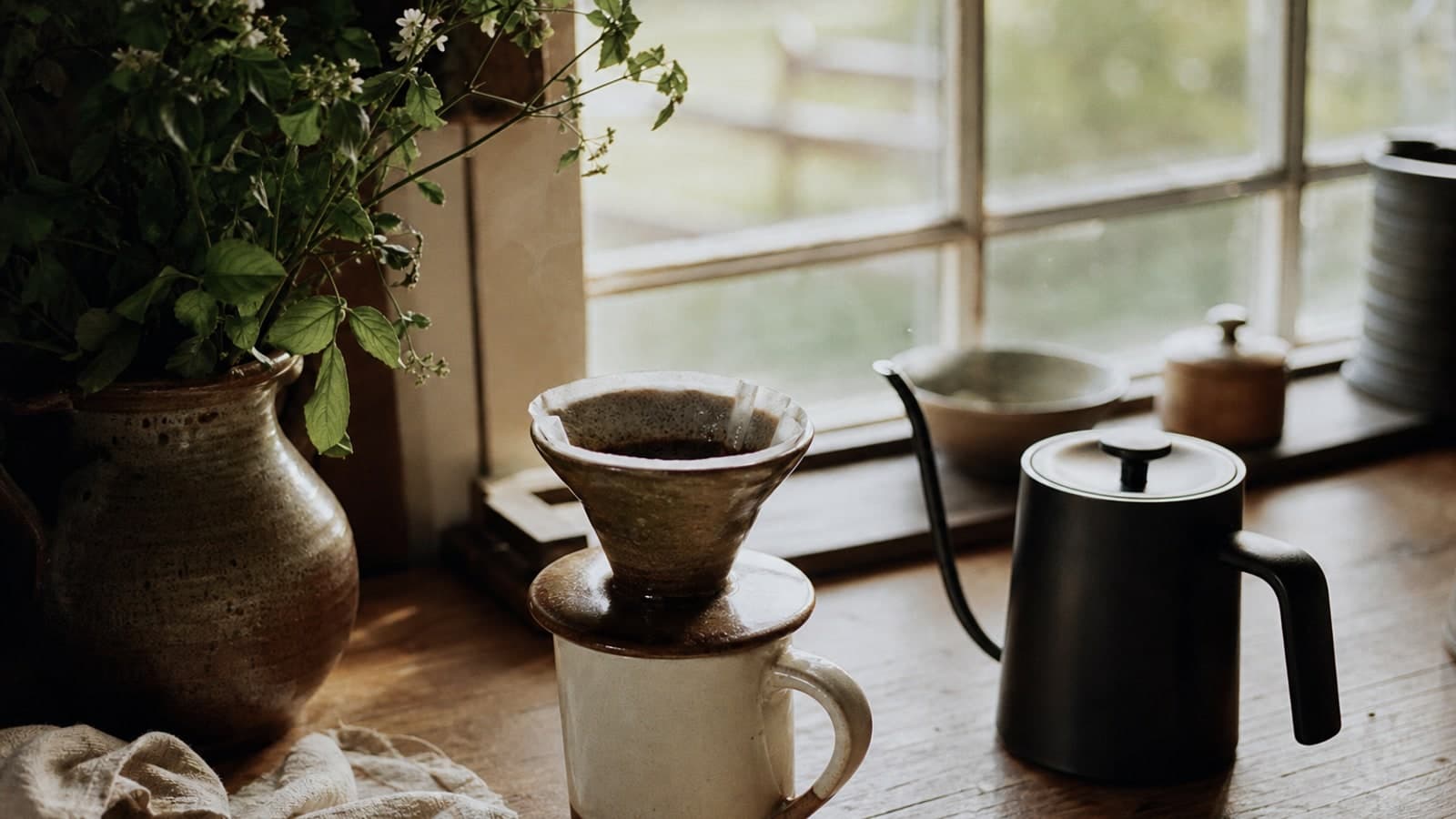
The method is simple: hot water, ground coffee, a filter, and gravity. What separates a bright, clean cup from a flat one is grind, ratio, and pour control. No expensive setup required. A plastic V60, paper filters, and a kettle you already own will do.
When Pour-Over vs. French Press
| Pour-over | French press | |
|---|---|---|
| Time | 3–4 min active pouring | 4 min steep, less attention |
| Cup character | Clean, bright, nuanced | Full-bodied, more oils |
| Best for | Weekend ritual, single origins | Weekday chores, thermos |
| Grind | Medium | Coarse |
For weekday automation, see how to brew drip coffee at home. For the homestead default, see how to brew French press coffee.
What You Need
- Pour-over dripper (V60, Chemex, Kalita Wave, or Melitta cone)
- Paper filters sized to the dripper
- Kettle (gooseneck helps but isn't mandatory. Pour slowly from any spout)
- Scale (strongly recommended for consistent ratio)
- Timer
- Medium-ground coffee or whole bean + burr grinder
A gooseneck kettle gives finer pour control for $30–80. If you're testing the method, use what you have and upgrade only if you stick with it.
The Basic Ratio
1:16: one part coffee to sixteen parts water.
For one mug (~12oz finished):
- 25g medium-ground coffee
- 400g water (~14oz)
For two mugs, double both. The ratio scales linearly.
Step by Step
- Heat water to a boil, rest 30 seconds (~200°F).
- Rinse the paper filter in the dripper with hot water (removes paper taste, preheats the dripper and mug). Discard rinse water.
- Add medium-ground coffee to the filter, level the bed.
- Tare the scale with dripper and mug underneath.
- Bloom: Pour 2x the coffee weight in water (50g water for 25g coffee) slowly over the grounds. Start timer. Wait 30–45 seconds: you'll see the bed swell and release CO₂ (fresh coffee blooms more).
- First pour: Add water in slow circles from center outward, avoiding the filter walls. Pour to about 60% of total water (240g of 400g).
- Second pour: When the water level drops slightly, pour the rest in the same spiral pattern until you hit 400g total.
- Let drain. Total brew time from first pour to last drip should land 3–4 minutes. Finishing faster usually means grind is too coarse; slower means too fine.
- Remove dripper and drink. No rush. This is the point.
Gear Without the Price Tag
You don't need a $200 setup:
- Plastic V60 02: inexpensive, forgiving, widely available
- Melitta cone: even simpler, fits on a mug
- Chemex: larger batches, thicker filters, very clean cup
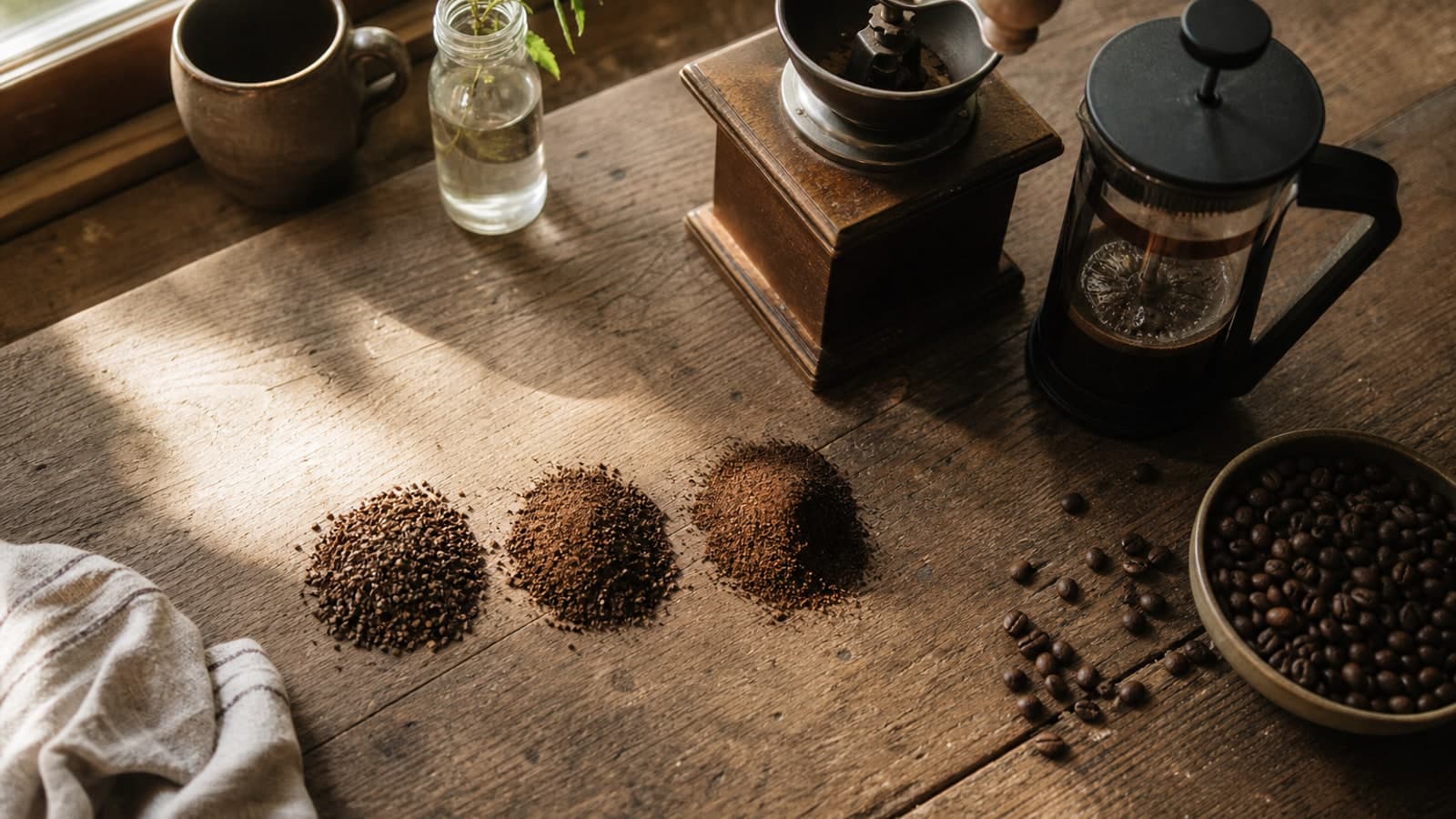
- Hand grinder: if you buy whole bean; medium setting for pour-over
Match grind to method: choosing your coffee grind.
Which Coffee to Use
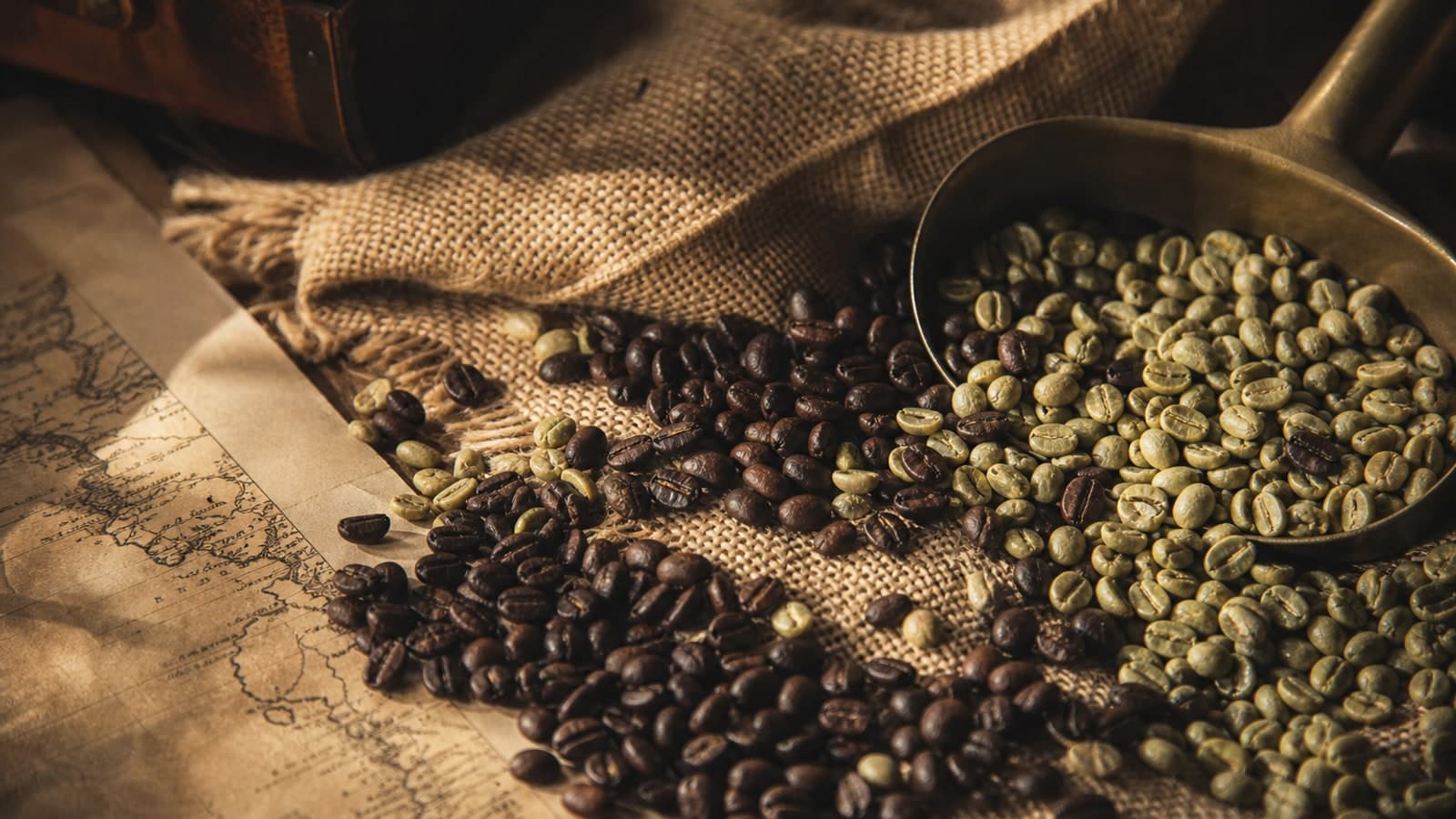
Pour-over is where single origins show their character. Fruit, florals, and origin-specific sweetness come through more clearly than in immersion brewing.
Browse single-origin coffees for weekend experiments. Morning Blend works well if you prefer a balanced, everyday cup without chasing origin notes.
Lighter and medium roasts often shine here. Very dark roasts can taste one-dimensional in pour-over. Save Homestead Dark for French press or drip if you want roast-heavy character.
See single-origin vs. blends for when each makes sense.
Tie It to the Ritual
Pour-over pairs naturally with the morning cup ritual. The ten minutes before the day asks for anything. It's not productivity coffee. It's the coffee you make because the porch is quiet and the light is good.
Frequently Asked Questions
Do I need a gooseneck kettle?
Helpful, not required. Pour slowly and in small bursts from any kettle. Gooseneck control matters more as you refine technique.
Why is my pour-over sour?
Usually under-extraction: grind too coarse, water too cool, or total brew time under 3 minutes. Grind a notch finer or pour a bit slower.
Why is it bitter?
Over-extraction: grind too fine, water too hot, or brew time dragging past 4–5 minutes. Coarsen slightly or reduce total pour volume.
Can I make pour-over for two people?
Yes. Use a larger dripper (V60 02 or Chemex) and scale the 1:16 ratio. A 50g dose and 800g water makes two mugs comfortably.
Is pour-over better than drip machine coffee?
Different, not better. Pour-over gives you control and clarity; drip gives you automation. Use both for different mornings.