The Best Farm Stays in Virginia for a Real Homestead Experience
Virginia's agricultural landscape spans mountains, valleys, and coastal plains. The farm stays that are worth your time go beyond the aesthetic and put you in the middle of a working operation.
Quick answer: Look for working farms with real chores, farm-produced breakfast, and hosts who live on the property, Virginia's 43,000+ farms span Shenandoah Valley, Blue Ridge, Piedmont, and the Eastern Shore for diverse agritourism.
Virginia has more farms than most people expect. Over 43,000 of them, according to the USDA, working roughly 7.8 million acres across a geography that runs from the Blue Ridge Mountains to the Chesapeake Bay and down into the Piedmont plateau. That variety (grain farms in the valley, dairy operations in the foothills, produce farms on the coastal plain, cattle ranches in the Alleghenies) makes it one of the most interesting states in the country for agritourism.
The farm stays worth seeking out in Virginia aren't the ones with a renovated barn and a curated Instagram aesthetic. They're the operations where the animals need feeding before you wake up, where the breakfast table has eggs from that morning, and where a conversation with the farmer over coffee will tell you more about sustainable agriculture than any book.
Here's a region-by-region look at what makes Virginia special for farm travel, what to look for in a real farm stay, and what the experience actually looks like when you find the right one.
Why Virginia Is Exceptional for Agritourism
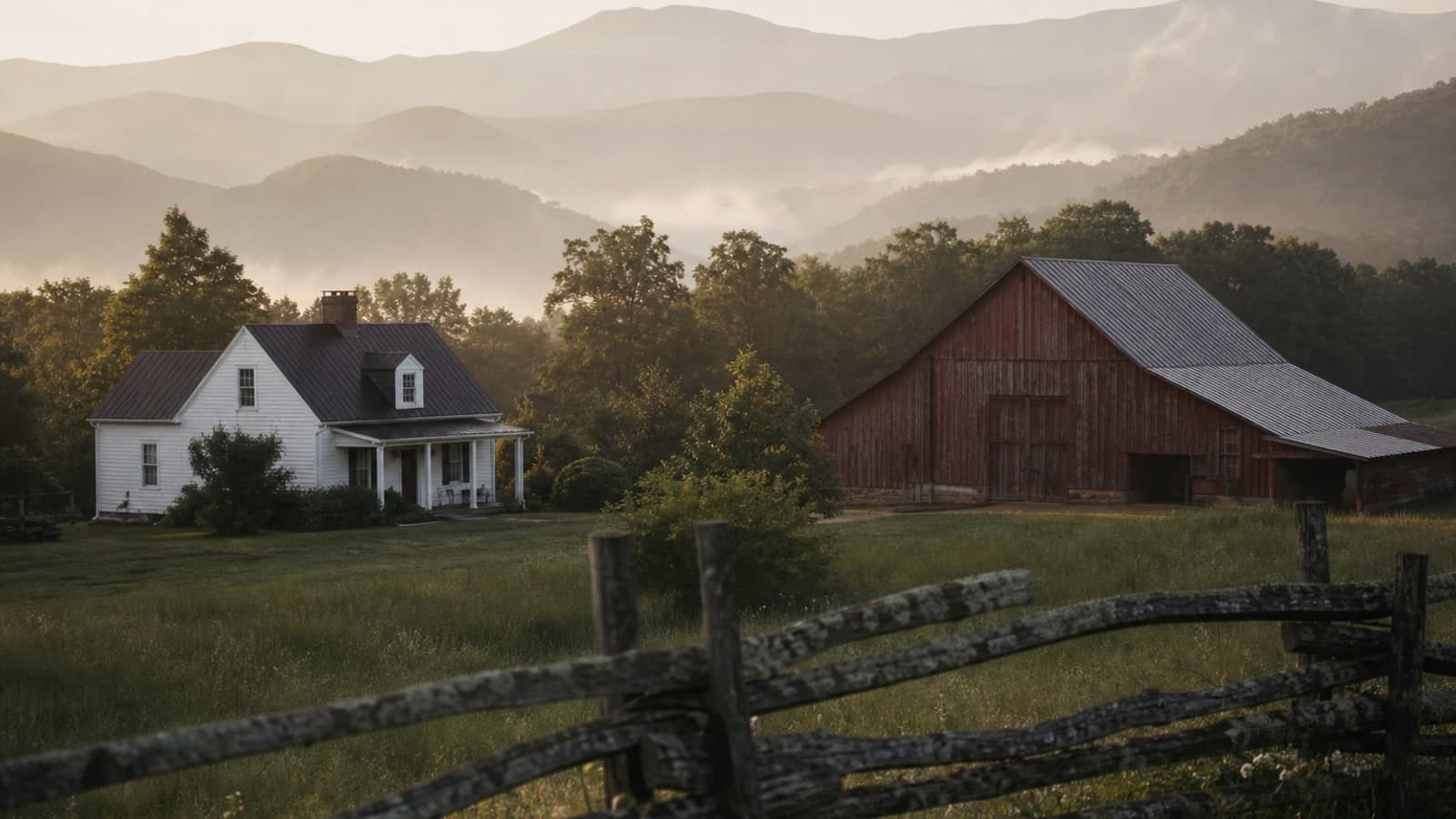
Geographic diversity. The Shenandoah Valley is one of the most fertile agricultural regions on the East Coast, a broad limestone valley flanked by two mountain ranges, historically the breadbasket of the Confederacy and still producing grains, apples, dairy, and cattle at scale. The Blue Ridge foothills support vineyards, orchards, and smaller diversified homesteads. The Eastern Shore, separated from the mainland by the Chesapeake Bay, has some of the most productive farmland in the region for truck crops and aquaculture. You can experience completely different types of farming within a few hours' drive.
Year-round farming seasons. Unlike New England, Virginia's climate supports extended growing seasons. Spring lamb and kidding operations begin in February and March. Summer farm stays coincide with peak market garden season. Fall brings apple harvest, cattle moves, and the transition to root crops. Even winter has active operations: hoop house growing, livestock feeding routines, and farm infrastructure work.
Small farm density. The average Virginia farm is 178 acres, large enough to be a real operation, small enough to be family-run and accessible to guests. Many of Virginia's most interesting farm stays are 20–80 acre diversified homesteads, not commodity operations, which means you're spending time with people who made deliberate choices about what and how to raise.
What Separates a Real Farm Stay from a Themed B&B
This distinction matters and is easy to miss in online listings.
A themed B&B may be located on rural land, may have barn-wood accents and mason jar decor, and may serve farm-fresh eggs at breakfast. But the hosts may not be active farmers, the animals (if any) may exist for aesthetics rather than production, and the experience is essentially a rustic hotel.
A real farm stay puts you in close proximity to a working agricultural operation. This means:
- Functional livestock. Animals that are there for production, not decoration. Dairy goats or cows that need milking, laying hens that produce the eggs on the table, meat animals at various stages of raising.
- A real schedule. Chores happen whether you're awake or not. A good farm stay invites you to participate in morning feeding, collecting eggs, and helping with the milk, not just observe.
- Farm-produced food. Breakfast (at minimum) that uses ingredients from the property. Eggs, produce, preserved goods, dairy.
- Farmer access. The people who run the operation are available for conversation, willing to answer questions, and interested in sharing what they've learned.
When you're evaluating a farm stay listing, look for specific language: milk, milking, laying hens, market garden, CSA, chore participation. Vague words like "farm atmosphere" and "country setting" without specifics usually indicate the former category.
Farm Stay Regions in Virginia
Shenandoah Valley
The valley runs roughly northeast to southwest between the Blue Ridge to the east and the Allegheny Mountains to the west, anchored by Harrisonburg in the north and Staunton to the south.
What you'll find: Dairy operations, apple orchards, beef cattle, sheep, diversified vegetable farms. Rockingham County, centered on Harrisonburg, is one of Virginia's most agriculturally productive counties. Several Mennonite and Amish farming communities operate in the valley, and some offer farm experiences, so call ahead rather than showing up.
Best for: People interested in traditional mixed farming, historical agricultural landscapes, and the largest scale of Virginia farming. Also excellent hiking access (Shenandoah National Park borders the valley) if you want to combine farm time with outdoor recreation.
What a morning looks like: Shenandoah Valley dairy farm mornings start early. If you're staying at a working dairy, expect a 5am milking, a barn full of activity by 5:30, and a breakfast with genuinely fresh milk and eggs by 7. The valley mornings are cool even in summer, and the light across the mountains at 6am is something that's hard to forget.
Blue Ridge Foothills (Piedmont)
The foothills east of the Blue Ridge, running through Nelson, Albemarle, Madison, and Rappahannock counties, support a mix of small diversified homesteads, vineyards, and specialty livestock farms.
What you'll find: Goat dairies, small-scale cattle and sheep operations, heritage pork producers, and some of Virginia's best vineyards. The terrain is rolling, wooded in places, and the farms tend toward the smaller diversified model, typically 10–80 acres with multiple enterprises.
Best for: Guests who want a true homestead experience rather than a large commercial farm. The foothills farms are typically run by families who made a deliberate transition to agricultural life and are often the most interested in sharing the reasoning behind their choices. A good conversation over coffee about why they left their careers to keep goats is not unusual.
What a morning looks like: Smaller and quieter than the valley. The goat barn at 5:30am, a garden walk before the heat builds, breakfast that might include fresh chèvre made yesterday from the morning's milk. The intimacy of a smaller operation means the farmer is usually right there with you.
Eastern Shore
Accomack and Northampton counties occupy Virginia's eastern peninsula between the Chesapeake Bay and the Atlantic Ocean. The Eastern Shore has a distinct agricultural character: largely flat, influenced by water on both sides, with a long history of truck farming (produce grown for urban markets) and waterman culture.
What you'll find: Vegetable farms, sweet potato operations, aquaculture (oysters, clams), and some cattle and poultry. The Chesapeake Bay Foundation and various conservation organizations work actively in this region, so farms here often have a strong sustainability orientation.
Best for: Guests interested in coastal farming, produce-focused operations, or a combination of farm and water experiences. The Eastern Shore is accessible but feels genuinely remote, with a slower pace than either the valley or the foothills and a completely different landscape.
What a morning looks like: An Eastern Shore farm morning might involve checking oyster cages before the sun is fully up, then a breakfast with produce pulled from the garden the day before. It's a different agricultural world from the mountain farms: quieter, flatter, with the smell of salt water in the air.
What to Expect from a Virginia Farm Stay
The mornings are the point. Whatever time you usually wake up, a farm stay will likely require earlier. Animals operate on their schedule, not yours. The farms that offer the richest experience are also the ones where the activity peaks before 8am. If you're not a morning person, a farm stay will either change that or frustrate you.
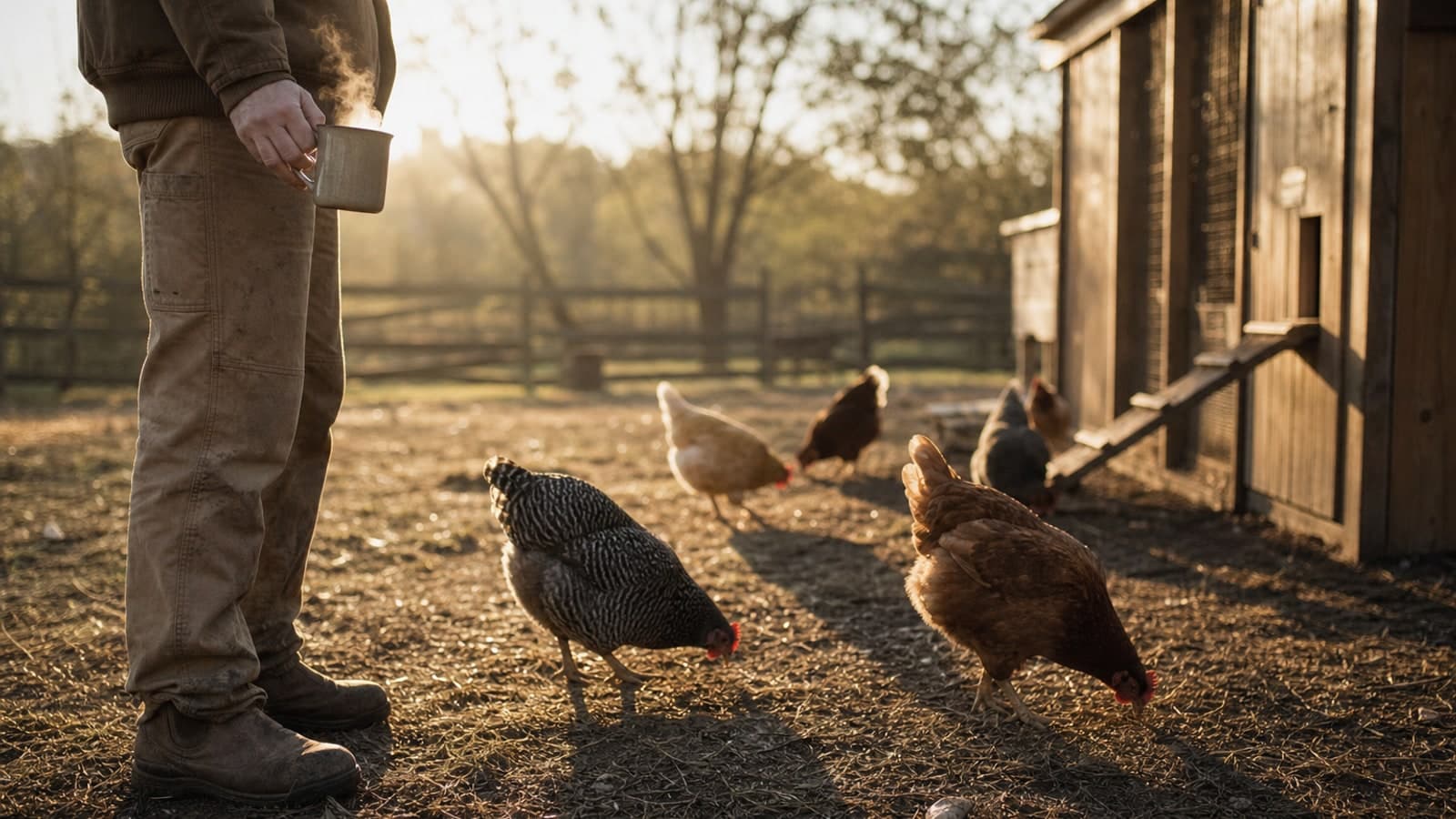
Participate if invited. Most farm hosts are delighted to have guests help with morning chores. Collecting eggs, feeding pigs, helping hold the lead rope while someone checks a hoof: these small participations are why you're there. Ask how you can help. Take the offer seriously.
The breakfast table is important. On the best farm stays, breakfast is made from what the farm produces, and it's eaten with the host family. These meals are where you learn the most: about the operation, the history, what's hard about farming, what's rewarding. Don't rush it.
Bring clothes that can get dirty. Barn clothes versus everything else is a real distinction. Boots you're comfortable getting manure on, pants you're not worried about, a layer for cold barn mornings.
A Note on the Coffee
This is something we notice when traveling to farm stays: the coffee is often an afterthought. A generic grocery store brand, a drip machine from 2005, a creamer in an unrefrigerated pump container.
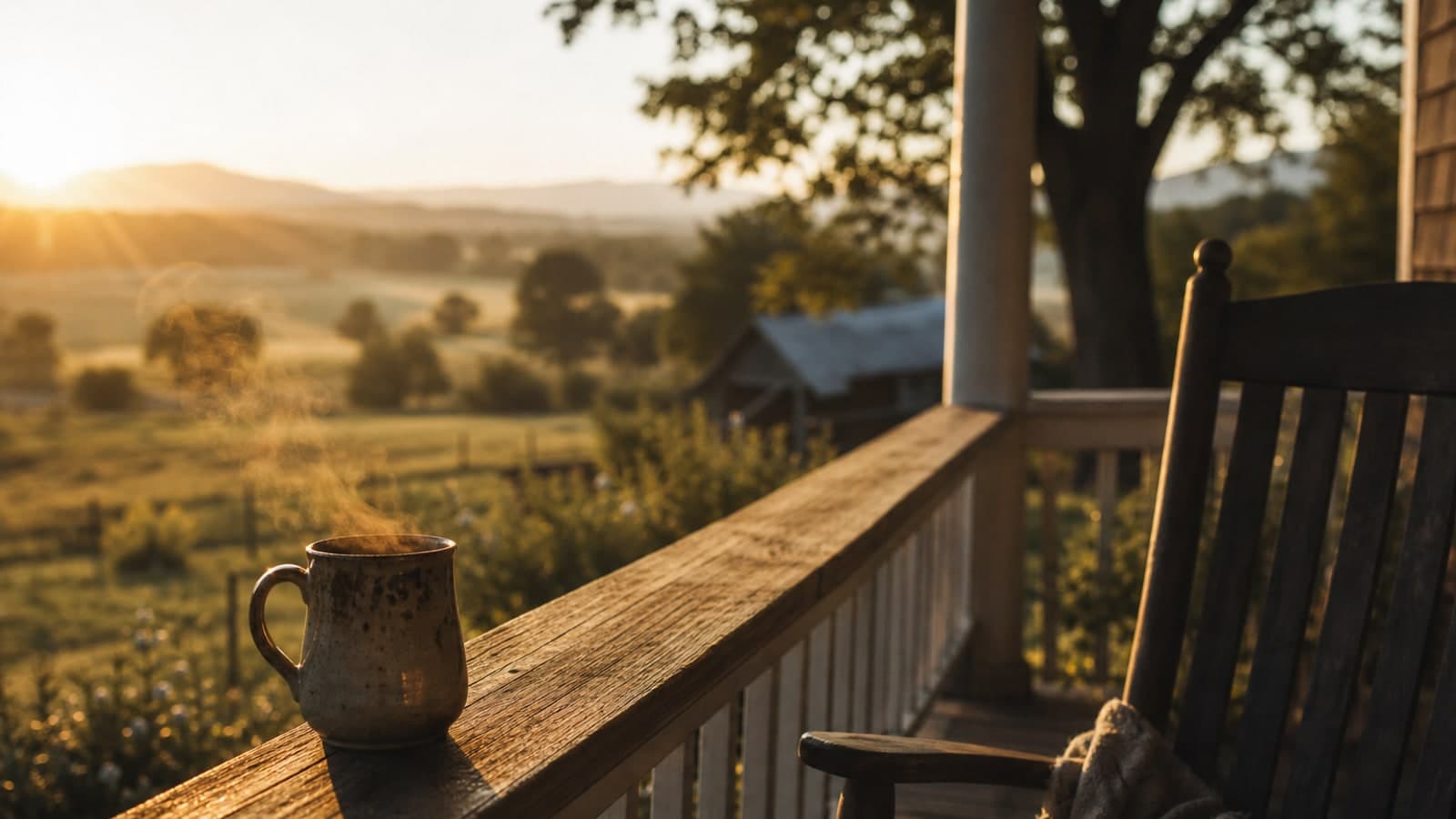
It's a small thing in context, but when you're waking up at 5am to milk goats or collect eggs, a genuinely good cup of coffee is part of what makes that morning feel chosen rather than endured. The best farm hosts we've encountered treat the morning coffee with the same intention as the breakfast eggs: something sourced with care and prepared well.
If you're visiting a farm stay and they ask what you'd like, suggesting you bring your own beans is not an imposition. Bring a bag of something good. It's a small addition to a rich experience.
Frequently Asked Questions
What is agritourism?
Agritourism refers to visitor activities conducted on working farms or agricultural operations. It includes farm stays, U-pick operations, farm tours, cooking classes using farm produce, and educational programs. Virginia has a defined Agritourism Act that provides liability protections for farm operators offering these experiences, which has encouraged the sector's growth across the state.
Are farm stays in Virginia family-friendly?
Many are, particularly for families with children who have limited exposure to agricultural life. Kids respond strongly to feeding animals, collecting eggs, and seeing where food comes from. Confirm with each host whether children of specific ages are appropriate for their operation, as some livestock farms with large animals may have age restrictions for participation in certain activities.
What should I pack for a farm stay in Virginia?
Essentials: Rubber boots or old boots you're comfortable getting dirty, worn work clothes (one set specifically for barn/farm activity), layers (farm mornings are cool even in summer), and a good rain jacket (weather changes fast in the mountains). Optional: A French press and a bag of good coffee if you want to ensure the morning cup meets your standards.
What is the best time of year to visit a Virginia farm?
Spring (April–May) for lambing, kidding, and the garden awakening. Summer (June–August) for peak produce, farm stand activity, and long outdoor days. Fall (September–October) for apple harvest, fall plantings, and the most dramatic mountain scenery. Each season offers something distinct; winter is quieter but offers the most unfiltered view of what farm life actually requires.
How do you find and book genuine Virginia farm stays?
Start with Virginia Tourism Corporation's agritourism listings at virginia.org, the Virginia Agritourism website maintained by the Virginia Department of Agriculture, and Harvest Hosts (membership-based program connecting travelers with farms). Airbnb and VRBO listings in rural Virginia regions are often genuine farm stays, so read descriptions carefully for operational language. Virginia Cooperative Extension offices in specific counties can sometimes recommend working farms that host guests.
Pack a thermos and Morning Blend or Homestead Dark so the farm-stay morning cup matches the land you came to see. Browse the shop.
What is the average cost of a farm stay in Virginia?
Working farm stays with breakfast and chore participation typically range from $120–$250 per night for two people. More remote or highly amenitized properties (private cottages, full board) run higher. The experience tends to be better at farm stays in the $150–$200 range than at the most expensive options, which often trend toward the B&B aesthetic rather than genuine farm immersion.