Goat Chores Before Sunrise: What the First Hour Looks Like
Goats don't care what time it is. They care that you show up. Here's what the pre-sunrise morning looks like when you keep dairy goats on a small homestead.
Quick answer: Dairy goats need milking on a fixed schedule. Coffee first at 5am, then barn chores: hay, water, milking stand, and cleanup before the rest of the homestead wakes up.
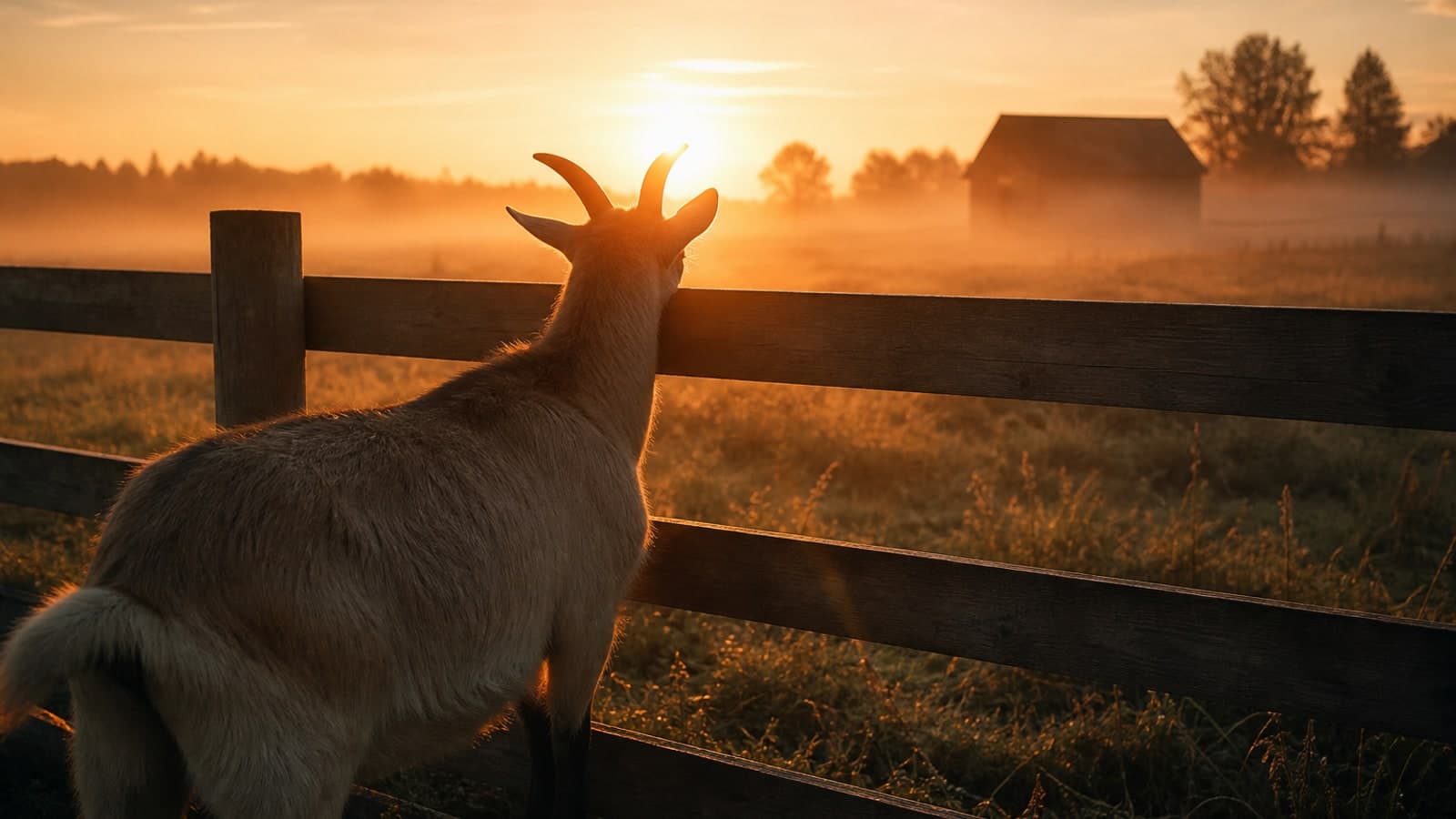
At 5am the barn is dark except for the single bulb over the milking stand. The goats hear your boots on the gravel before you've touched the latch. By the time the door opens they're already complaining, a low, persistent bleat that says you're late regardless of the actual time.
This is goat keeping. There is no sleeping in. There is no "roughly morning." There is a schedule the goats enforce with their biology, and you learn fairly quickly to work with it rather than against it.
Here's what that first hour looks like on our homestead, and what we've learned about making it sustainable over years of doing it.
Why Goats Dictate the Schedule
Dairy goats need to be milked on a consistent schedule, typically twice a day: once in the early morning, once in the early evening. The gap between milkings should be as close to 12 hours as your schedule allows. Inconsistency causes milk production to drop, can lead to mastitis (a painful and potentially serious udder infection), and stresses the animal.
The early morning session is non-negotiable. Once your does are in milk, you have a hard commitment: you will be in that barn by a specific time, seven days a week, regardless of weather, season, or whether you stayed up too late the night before.
This sounds like a burden. In practice, after a few weeks, it becomes the structure that the rest of the day hangs on. There is something clarifying about a responsibility that cannot be deferred.
The Pre-Sunrise Chore Sequence
Step 1: Coffee in the House (5 minutes)
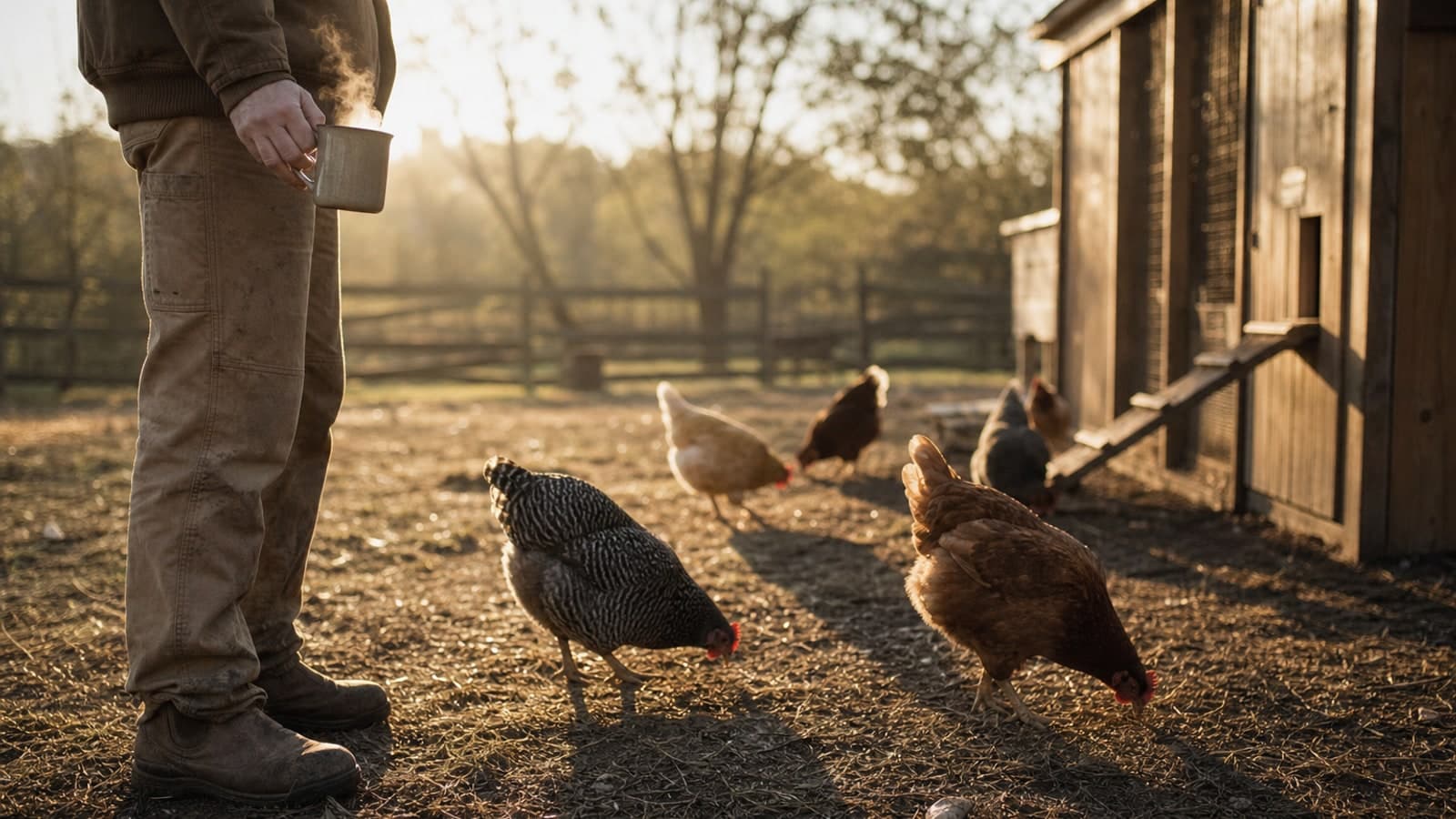
The thermos goes in my hand before I go out the door. Hot, strong coffee in a good insulated thermos is the one non-negotiable I've added to this routine that genuinely improves everything else. The barn is cold in the mornings (even Virginia summers have cool early hours), and having something warm to sip between tasks makes the work feel less like an imposition and more like a rhythm.
Step 2: Feed Grain on the Milking Stand (2 minutes)
Before the does come to the stand, I put their morning grain ration in the bowl. This serves two purposes: it gives them an incentive to get on the stand willingly, and it gives them something to focus on during milking. A goat with her head down eating grain is a calmer milking animal than one standing empty and impatient.
Step 3: First Doe on the Stand (15–20 minutes per animal)
We milk two Nubian does. Each one takes 10–15 minutes depending on where they are in their lactation cycle. The routine is the same each morning:
- Check the udder: look and feel for any heat, hardness, or asymmetry that might indicate the beginning of mastitis
- Strip the first few squirts from each teat into a strip cup, checking for clumps, discoloration, or anything unusual
- Milk fully: consistent, rhythmic stripping until the udder is empty
- Post-dip each teat with an iodine-based teat dip to prevent bacterial entry after the teat canal is open
- Release the doe, move the grain, bring the second one up
Step 4: Fresh Water and Morning Feed (10 minutes)
After milking, everyone gets fresh water. We have automatic nipple waterers but still check and refill daily, as goats are finicky about water quality and a waterer with any debris gets refused. Hay is put out in the hay feeders. Any supplements (kelp, loose minerals) are checked and topped off.
Step 5: Quick Health Check on the Rest of the Herd (5 minutes)
Any does not in milk, any kids, any animals that were near the end or beginning of lactation: a brief visual scan. Are they eating? Moving normally? Any signs of limping, respiratory issues, or unusual behavior? This takes a few minutes and catches problems early.
Step 6: Milk Handling (5 minutes in the milk room)
Fresh raw milk goes directly from the barn to the house for processing. We strain it through a dairy filter into a stainless steel pot and chill it immediately. The window from milking to chilling should be as short as possible for best quality and safety.
The whole sequence from door to door runs about 45–50 minutes on a normal morning. With a problem (a doe that doesn't want to get on the stand, a kid that got into something, a fence issue noticed during chores), it can run 90 minutes or more.
The Coffee-Barn Connection
There's a specific pleasure in carrying a thermos of good coffee into a cold barn before sunrise. The work is physical and repetitive in the best way, and your hands know what to do. The coffee in between tasks provides the small punctuation of warmth and pause that keeps the rhythm pleasant.
After years of cheap gas station coffee on farm mornings, switching to good specialty coffee, beans we actually care about and roasted by people who care about sourcing, changed the texture of those early hours. It sounds like a small thing. On a daily basis it isn't.
A medium-dark roast brewed strong the night before and stored in a good thermos means the coffee in the barn at 5:15am is still hot, still good. That's worth something.
What Years of Goat Keeping Has Taught
The routine is the thing. Goats are routine animals. Any disruption to the milking schedule, whether a late morning, a different order, or a different person, produces a stress response in the herd. Consistency is not optional. Build your morning around the goats' needs and they will produce better, stay healthier, and be easier to handle.
Learn to read the udder. Mastitis caught early is manageable. Mastitis caught after it's severe is a serious animal welfare problem and potentially loses the animal's production permanently. Spend the two minutes each morning actually checking. A slight asymmetry or warmth you caught on Tuesday might be nothing, or it might be the beginning of something you can treat now instead of next week.
Two does is a real commitment. One doe in milk means one milking session. Two means twice the time, twice the attention. Before adding animals, be honest about whether the schedule is sustainable seven days a week, including during hay season, canning season, and when you get a cold.
Kids change everything. When does kid in the spring, the milk management changes entirely for the first weeks. Kids nurse, which affects your milking volume and schedule. This is beautiful and completely disrupting. Plan for it.
Frequently Asked Questions
How often do you milk dairy goats?
Twice daily, typically 10–12 hours apart. Common schedules are 5am/5pm or 6am/6pm. Once daily milking is possible later in a doe's lactation and with some breeds but generally reduces total milk production. For maximum yield and udder health, twice daily is standard.
What time should you feed goats in the morning?
Goats should receive their morning feeding at a consistent time each day, typically at the same time as their morning milking. For homesteads milking at 5–6am, feeding happens as part of that same chore round. Inconsistent feeding times cause digestive stress in ruminants.
Are goats high-maintenance compared to other homestead animals?
More than chickens, less than cattle. The milking schedule makes dairy goats a higher daily commitment than any non-dairy animal. They are also escape artists, require good fencing, and can be highly vocal. The payoff (fresh raw milk, cheese, soap-making potential) is significant, but the time commitment is real. If you can't commit to twice-daily milking seven days a week, consider meat goats or wait until you can.
What are signs of mastitis in goats?
Early signs: udder asymmetry (one half noticeably harder or larger than the other), unusual warmth in the udder, clumps or discoloration in the strip test before milking. Advanced signs: visibly swollen udder, pain response when the udder is touched, reduced milk production, fever, and lethargy in the animal. Catch it early. Call your vet; it's treatable with antibiotics when caught fast.
How many goats should a beginner homesteader start with?
Two, typically. The reason is that goats are herd animals and become stressed and vocal when kept alone; a single goat will scream and escape. Two provides companionship. Starting with two also gives you a manageable learning curve before expanding. Two Nubian or Nigerian Dwarf does is a common, practical starting point.
Can you take a vacation if you keep dairy goats?
Yes, but it requires planning. You need a reliable, trained farm-sitter who can milk correctly and identify problems. Some homesteaders dry off their does (gradually stop milking at the end of lactation) around travel times, which gives flexibility. Daily farm-sitting for milking animals is a specialized ask, so find your backup person before you need them.
Fill the barn thermos with Beekeepers Roast or Homestead Dark before the first milking. See the shop.