How to Clean Coffee Equipment on the Homestead
Oily buildup and old grounds make good coffee taste flat. Here's a simple cleaning routine for grinders, presses, drip machines, and kettles without fancy products.
Quick answer: Rinse brew gear after every use. Deep-clean weekly with hot water and a soft brush. Descale kettles and drip machines monthly if you have hard water. Never use soap inside a burr grinder; brush out grounds and run a small amount of stale beans through to purge oils.
Homestead mornings do not leave much room for fussy maintenance. But coffee equipment that never gets cleaned will eventually make every cup taste stale, oily, or vaguely like yesterday's brew.
The good news: a short routine after breakfast keeps gear in good shape without commercial cleaning kits.
Step by Step
- Dump and rinse after every brew (press, pour-over, drip basket, carafe).
- Brush the grinder chute daily; do not rinse burrs with water unless the maker allows it.
- Deep-clean weekly: soak the French press filter in hot water with a tablespoon of baking soda for 15 minutes, then brush and rinse.
- Descale the drip machine weekly or monthly: run half water and half white vinegar (or citric acid), then two plain water cycles.
- Boil the kettle with equal parts water and vinegar, sit 20 minutes, rinse thoroughly.
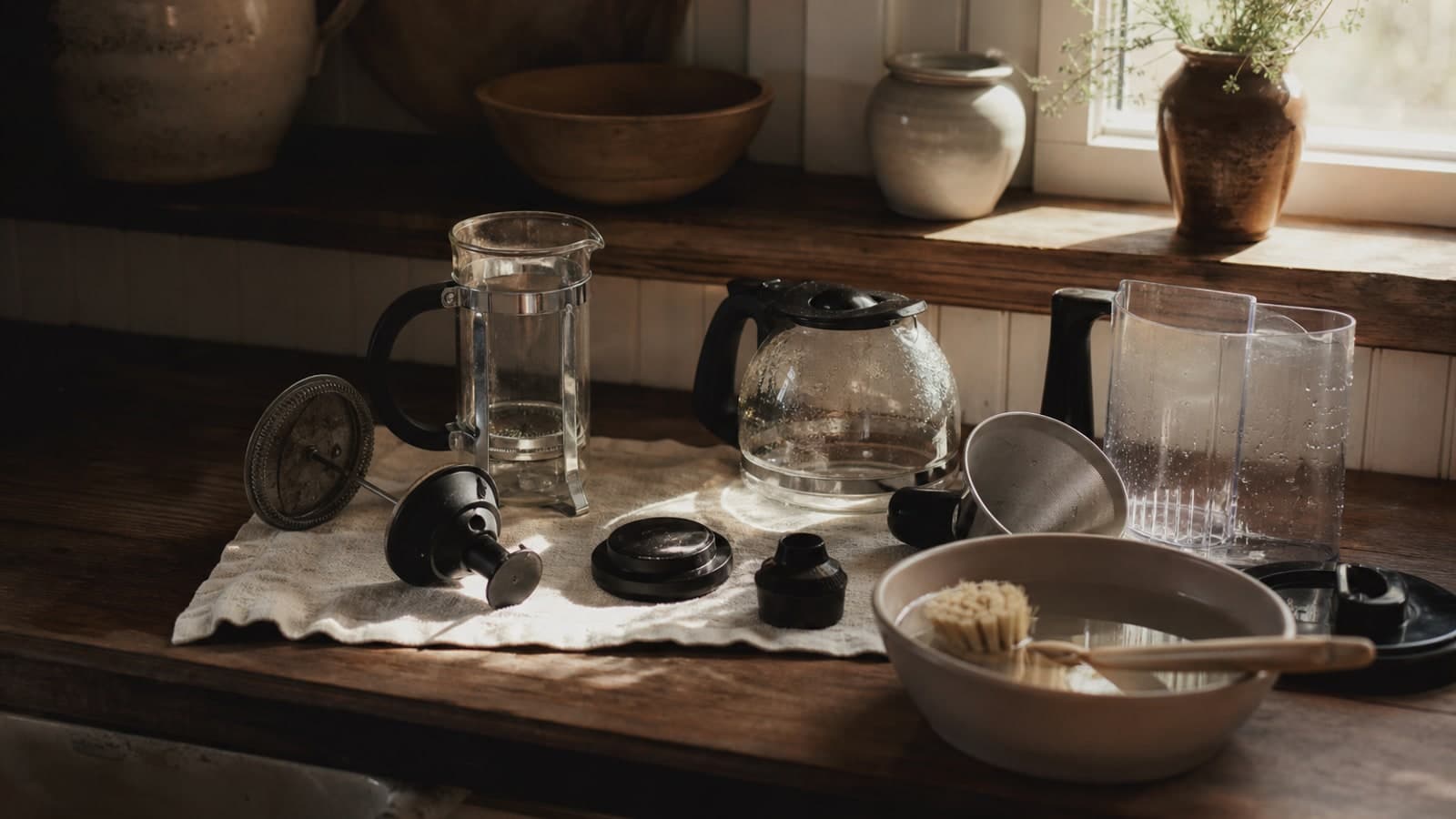
- Air-dry parts disassembled so moisture does not grow mold in closed gear.
See brewing with well water if scale builds up fast.
Daily (After Every Brew)
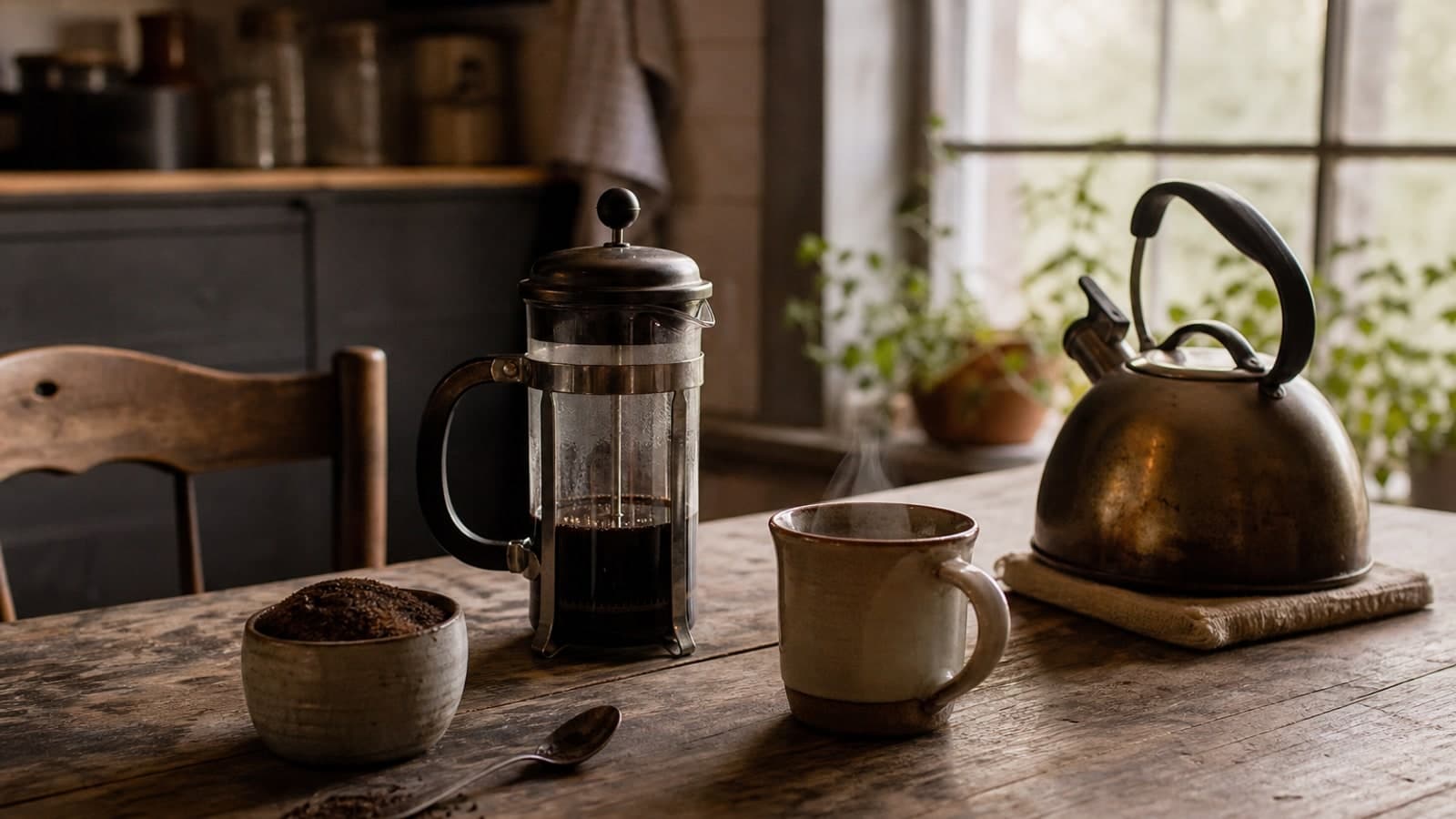
French press: disassemble, dump grounds to compost, rinse all parts with hot water. Leave the plunger apart to dry.
Pour-over / AeroPress: rinse immediately. Coffee oils dry fast and become stubborn.
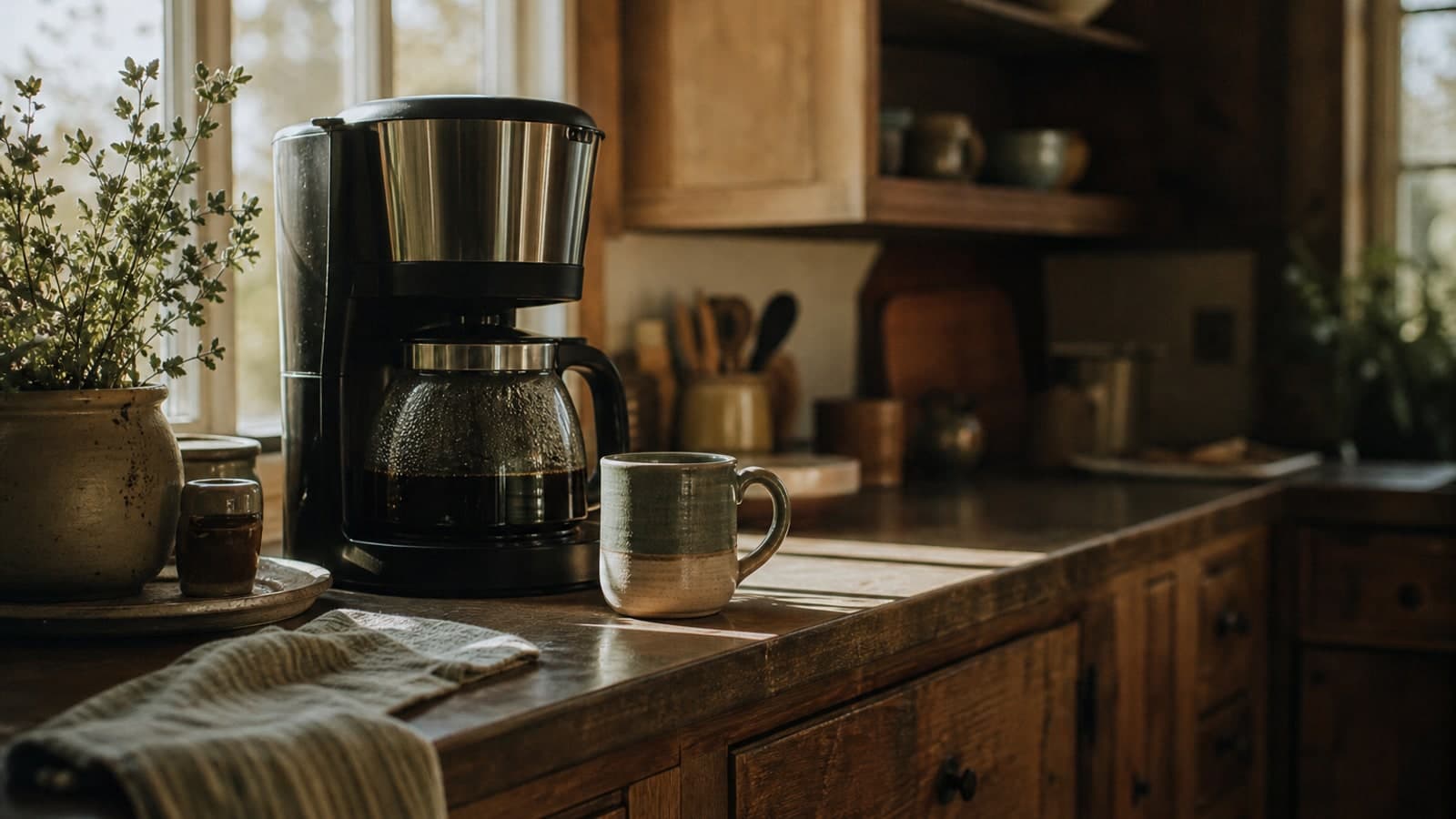
Drip machine carafe and basket: rinse. Wipe the shower head area if you see brown film.
Burr grinder: knock out loose grounds, wipe the exit chute. Do not rinse burrs with water unless the manufacturer says you can.
Weekly Deep Clean
- French press filter: soak in hot water with a tablespoon of baking soda for 15 minutes, brush gently, rinse well.
- Drip machine: run a cycle with half water, half white vinegar (or citric acid solution), then two plain water cycles. See brewing with well water if scale builds up fast.
- Moka pot: disassemble fully, scrub the funnel and gasket area where oils collect.
- Kettle: boil equal parts water and vinegar, let sit 20 minutes, rinse thoroughly.
Monthly (Hard Water Homesteads)
If you are on a well with calcium buildup, descale kettles and drip machines monthly. White film on the inside of a kettle is your signal.
Signs you are overdue:
- Slower drip brew times
- White flakes in the cup
- Bitter or flat taste despite fresh beans
What Not to Do
- Do not put a burr grinder in the dishwasher. Motors and burrs hate it.
- Do not use scented soap on brewers. Residue lingers.
- Do not store wet equipment assembled. Mold grows in closed damp spaces.
Keep Coffee Tasting Fresh
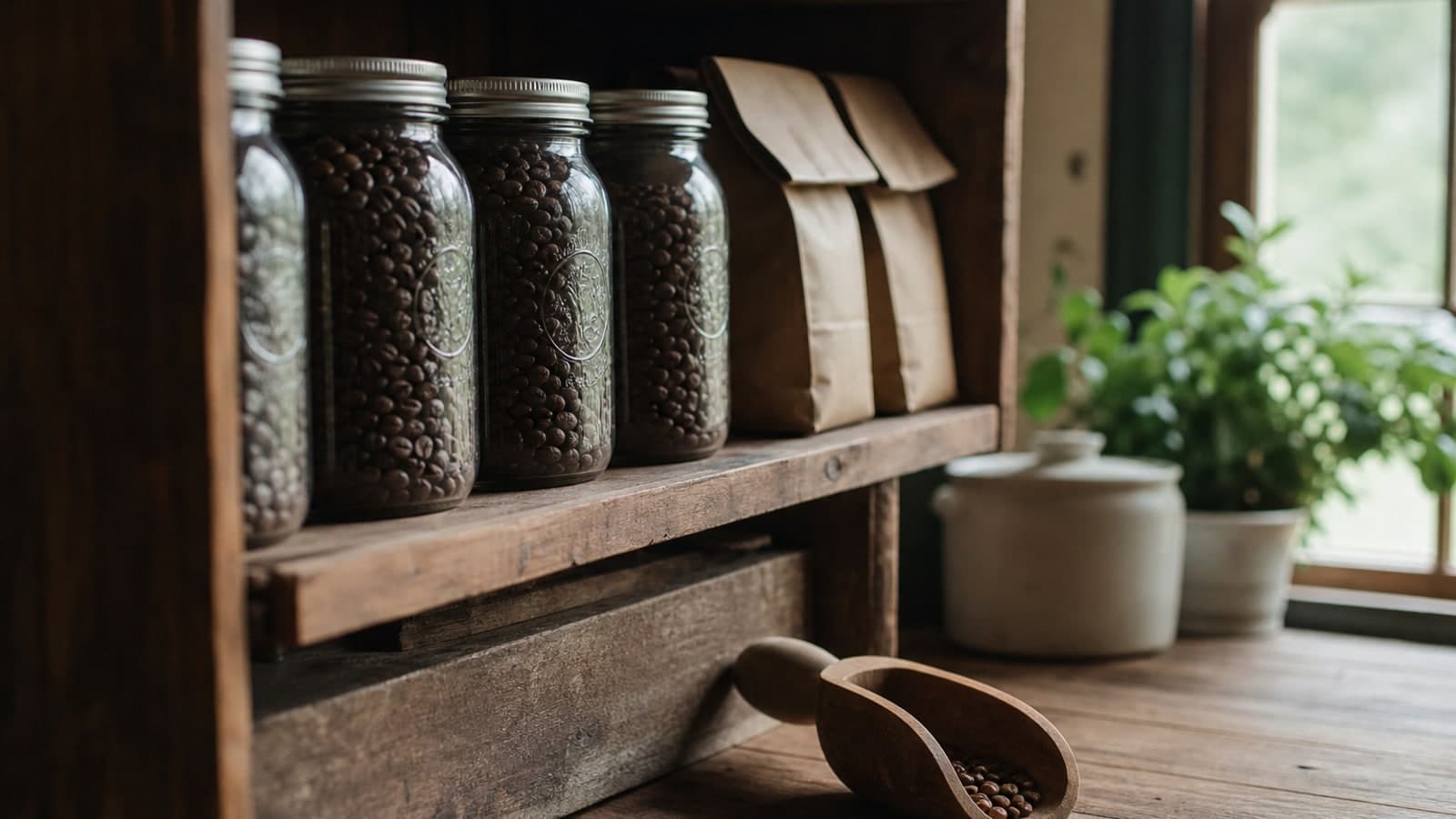
Clean gear matters, but so does fresh coffee. Store beans in an airtight container away from heat. See coffee storage on the homestead.
Fresh roasted coffee from Morning Blend or Beekeepers Roast will still taste flat if the machine has six months of oil buildup. Clean the gear, then taste the difference.
Frequently Asked Questions
How often should I descale a drip coffee maker?
Monthly on hard well water, every 2–3 months on softer water or if you use filtered water.
Can I clean a grinder with rice?
Some people run dry rice or grinder cleaning tablets through blade grinders. For burr grinders, stale coffee beans you will throw away work better than rice, which can leave starch dust.
Does vinegar leave a taste?
It can if you skip the rinse cycles. Always run at least two full water-only cycles after descaling.
Related: drip coffee at home, coffee storage.