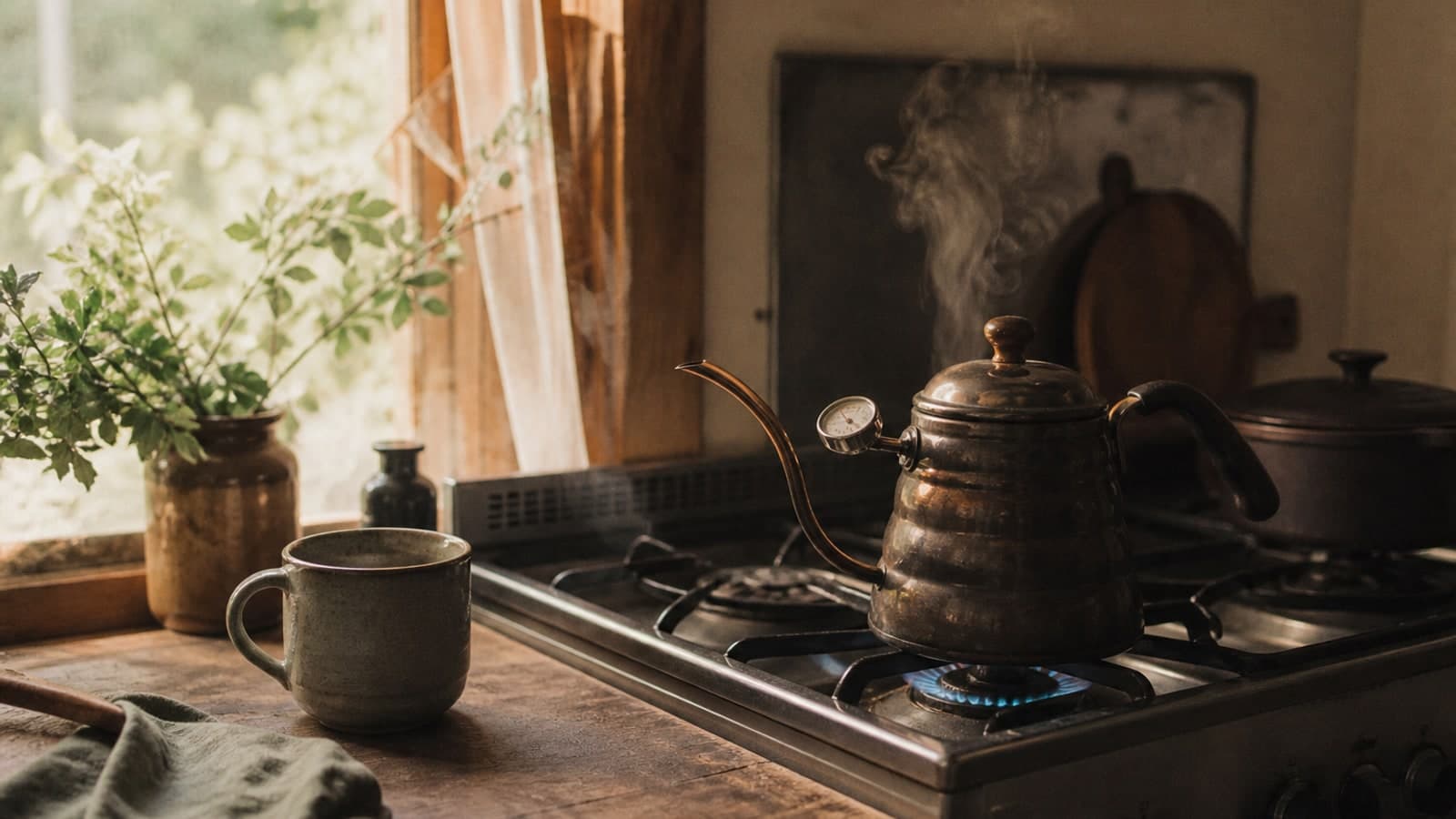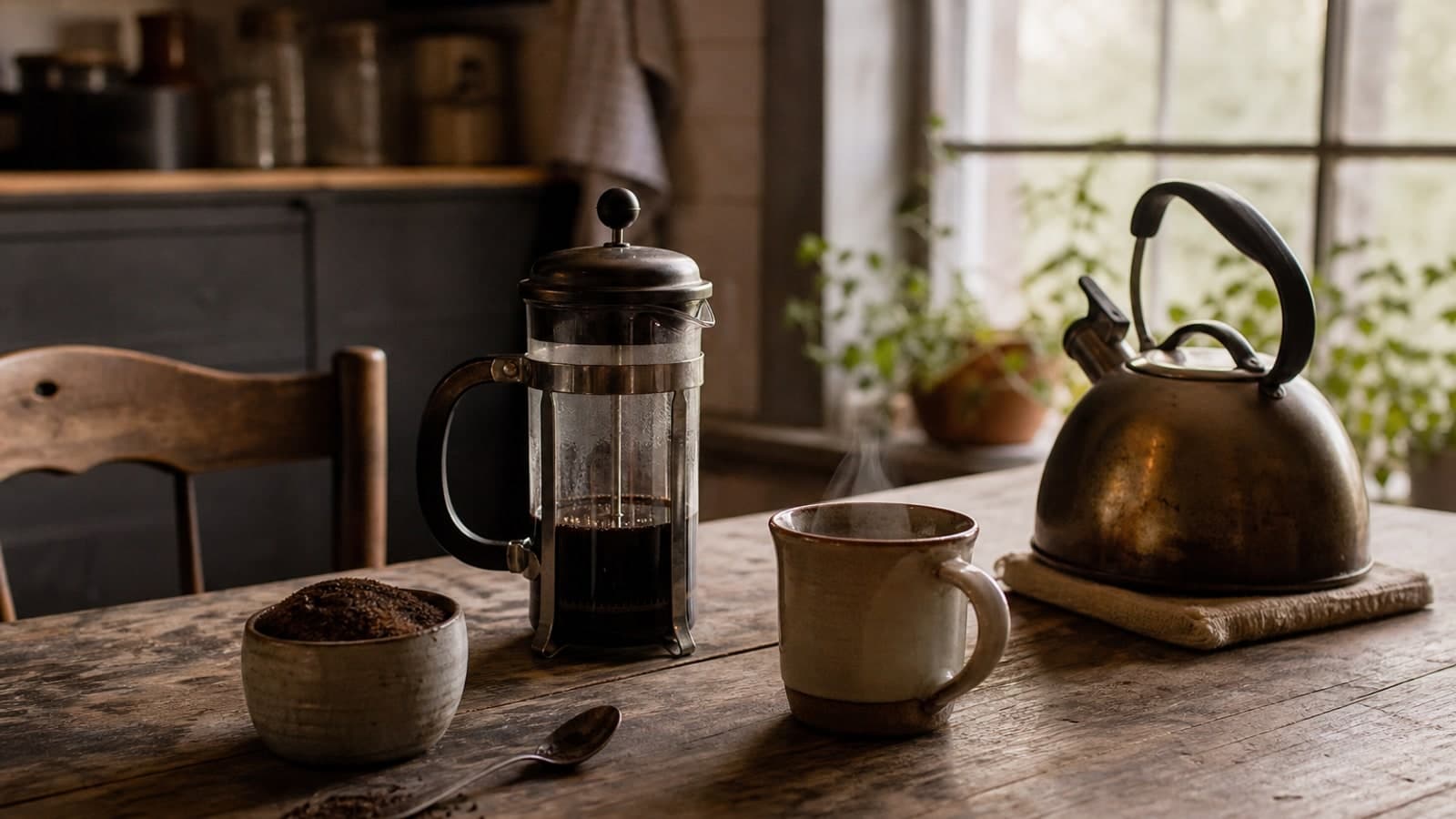
Preheating Your Brewer When the Kitchen Goes Cold
Cool September kitchens steal heat from coffee before you taste it. Learn what to preheat, how long to take, and which mistakes make even good beans taste dull.

Quick answer: In a cold kitchen, preheat the brewer, filter cone, carafe, and mug with hot water before brewing. Use water near 200°F for the brew itself, and do not let gear sit empty and cold while you multitask. Preheating is the cheapest upgrade you can make to fall coffee quality.
Most people blame beans when September coffee tastes flat. Sometimes the beans deserve it. Often the kitchen is simply colder than it was in July, and every ceramic and steel surface is acting like a heat sink.
Extraction chemistry cares about temperature at the grounds, not temperature at the kettle spout two minutes earlier. If your press is cold, a meaningful slice of brew heat disappears into the glass before flavor ever develops the way you expect.
This guide walks through preheating by method, with homestead-realistic timing.
Why Temperature Drops Matter
Coffee extraction is a race between solubles you want (sugars, acids in balance, aromatics) and harsh compounds you get when you chase bitterness with poor technique.
When brew temperature crashes mid-extraction:
- The cup can taste thin or sour
- Body feels weaker than the same recipe produced in summer
- People compensate by grinding finer or steeping longer, then overshoot into bitterness
Fix heat stability first. It is easier than redesigning your whole recipe.
The Universal Preheat Ritual (60–90 seconds)
- Heat brew water to a boil
- Pour hot water into empty brewer / cone / mug
- Swirl or fill fully for 20–30 seconds
- Dump the preheat water into the thermos (bonus: you just preheated the thermos too) or down the drain
- Add coffee and brew immediately with fresh hot water
That is the whole skill. Fancy kettles help. Attention helps more.
French Press
Cold borosilicate glass is a heat thief.
Do this:
- Preheat the empty press with hot water while the kettle finishes
- Optional: warm the plunger assembly under hot tap water so you are not plunging a fridge-cold mesh into the brew
- After pressing, pour into a preheated mug or thermos right away
Do not do this:
- Add grounds to a stone-cold press and hope the pour fixes it
- Preheat, then wander off for five minutes while the press cools again
Full method refresher: French press on the homestead.
Pour-Over
Preheat the cone and the server.
If you use paper filters, rinse the filter with hot water during preheat. That heats the cone and reduces papery taste. Cloth filters should already be clean and wet with hot water: cloth filters.
Keep the kettle close. Long walks across a cold kitchen between pours cool both water and ceramic.
Automatic Drip
You cannot easily preheat the internal boiler, but you can:
- Run a hot-water-only cycle into the carafe and dump it before the coffee cycle (if your machine allows and manufacturer guidance permits)
- Preheat the carafe with kettle water
- Avoid starting a brew into a refrigerator-cold glass pot
Programmable timers are still excellent for dark mornings. Just give the carafe a warm start when you can. Related: drip without the bitter cup.
Moka Pot and Metal Brewers
Metal heats fast on a burner, but a cold kitchen still cools the finished coffee in the cup. Preheat mugs. If brewing on a wood stove as nights cool, remember metal can spike hotter than you expect: respect the pot and do not walk away. Seasonal note: wood stove winter coffee.
Mug and Thermos Discipline
A perfect brew poured into a cold mug becomes an average cup.
Mug: fill with hot water while coffee brews, dump, then pour coffee.
Thermos: fill with boiling water for at least 60 seconds, dump, then fill with coffee to the top. Air space cools faster than a full bottle.
Water Temperature Targets
| Method | Working target |
|---|---|
| French press / pour-over / drip | About 200°F / just off boil |
| Delicate light roasts | Sometimes slightly cooler, ~195°F |
| Dark roasts | Still near 200°F; bitterness is usually grind/time, not "needs boiling wrath" |
Deep dive: water temperature guide.
Homestead Multitasking Reality
You will not always get a perfect lab preheat when a goat is stuck or a child cannot find shoes. Use a minimum viable version:
- At least warm the mug
- Do not use lukewarm kettle water
- Keep the recipe simple so you can execute it half-awake
Consistency beats perfection across a chore season.
Beans That Show the Difference
Preheat upgrades are most obvious with fresh medium and medium-dark coffee where sweetness should show:
Stale coffee still tastes stale after preheating. Check dates: why roast date matters.
Frequently Asked Questions
How long should I preheat?
20–45 seconds of contact with hot water is enough for most ceramic and glass. Longer is fine if you are also warming a thermos.
Can I preheat with tap water?
Hot tap water is better than nothing for a mug. For brew temperature, still use kettle water near target.
Does preheating waste water?
Use preheat water to start washing dishes, warm a thermos, or water plants once cooled. Or keep a basin and reuse for cleaning.
Why does cafe coffee taste hotter and sweeter?
Busy cafes run hot water through gear constantly. Your home gear starts cold. Preheat narrows that gap.
Will a thicker mug fix this without preheating?
A thick mug slows cooling after the pour. It does not fix under-heated extraction inside a cold press.
Make the next bag worth the heat you protect: Morning Blend or browse the shop.