Water Temperature for Coffee: What Homestead Brewers Should Know
Too hot scorches the cup. Too cool tastes flat. Here's the simple temperature guide for French press, drip, pour-over, and cold brew.
Quick answer: For most hot brewing methods, aim for 195–205°F (about 90–96°C). Boil water, then let it sit 30–60 seconds off the heat before pouring. French press and drip: ~200°F. Pour-over: 195–205°F depending on roast. Cold brew uses cold water only.
Water temperature is one of the easiest variables to ignore and one of the fastest ways to fix a bitter or weak cup without changing beans or grind.
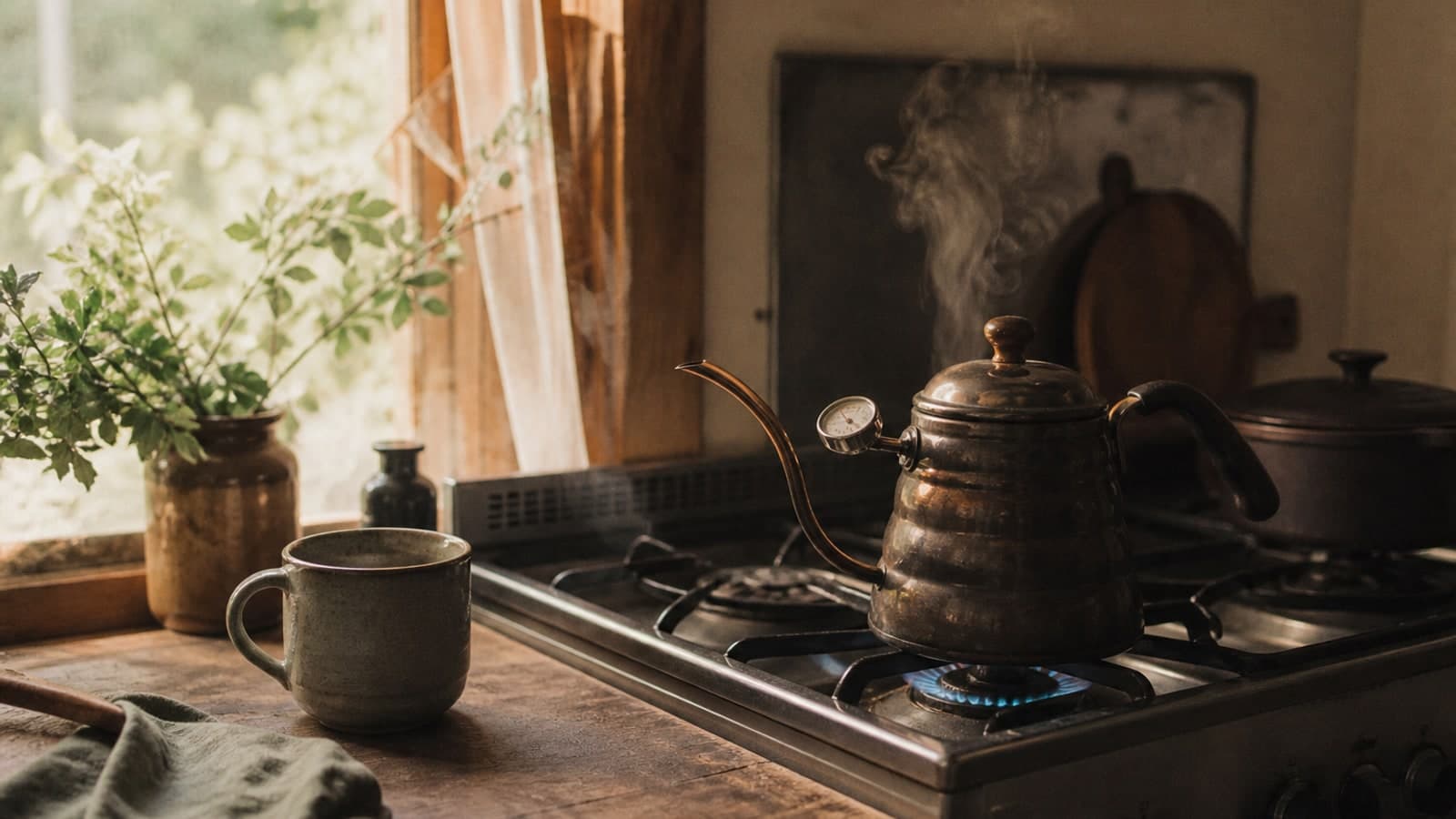
On a homestead you might boil water on a wood stove, an electric kettle, or a camp burner. The target is the same: hot enough to extract flavor, cool enough to avoid burning lighter compounds into harsh bitterness.
The Target Range
| Method | Water temp | Notes |
|---|---|---|
| French press | ~200°F | Just off the boil |
| Drip machine | 195–205°F | Good machines regulate this |
| Pour-over | 195–205°F | Lighter roasts: slightly cooler |
| AeroPress | ~200°F | Short contact time |
| Moka pot | Boiling in chamber | Steam pressure does the work |
| Cold brew | Cold / fridge | 12–24 hour steep |
Step by Step
- Bring water to a full rolling boil.
- Remove the kettle from heat.
- Wait 30 seconds for a standard kettle (45–60 seconds for a large pot).
- Pour onto the grounds for French press, pour-over, or AeroPress at about 200°F.
- Adjust for roast: wait a full minute after boiling for lighter roasts; darker roasts tolerate hotter water.
That gets you close enough for daily brewing without a thermometer. A simple kettle thermometer is worth buying if you chase pour-over clarity.
Roast Level Matters
Light and medium roasts can taste sharper and more bitter with boiling water poured directly on the grounds. Let the kettle rest a full minute.
Medium-dark and dark roasts (like Homestead Dark) tolerate hotter water well. They are already developed for body and lower acidity.
Altitude and Wood Stoves
At higher elevation, water boils at a lower temperature, which can actually help avoid over-extraction with delicate roasts. On a wood stove, water may sit at a simmer longer. Pour when you see a full boil, then rest the kettle off the heat before brewing.
Water Quality Still Comes First
Temperature cannot fix bad water. Hard well water, iron, or sulfur affect taste before heat ever touches the grounds. Start with brewing coffee with well water if your cup tastes off no matter what you do.
Frequently Asked Questions
Is boiling water too hot for coffee?
Pouring actively boiling water (212°F at sea level) directly onto grounds can over-extract and taste harsh. Resting 30–60 seconds after boiling is the simple fix.
Does a drip machine get hot enough?
Most decent drip brewers heat to the right range. Cheap machines that brew lukewarm coffee are a common source of weak cups. If the coffee is not hot out of the machine, the heating element may be failing.
What about reheating coffee in the microwave?
Reheating changes flavor. It does not ruin the coffee for a second cup during chores, but it will not taste like a fresh brew. Better to use a thermos from the start.
Related: French press brewing, pour-over guide.