Why Your Grinder Settings Drift (And How to Recalibrate)
A grind that worked in June can taste wrong in September. Humidity, burr wear, bean density, and accidental dial bumps all shift extraction. Here is how to recalibrate without guesswork.
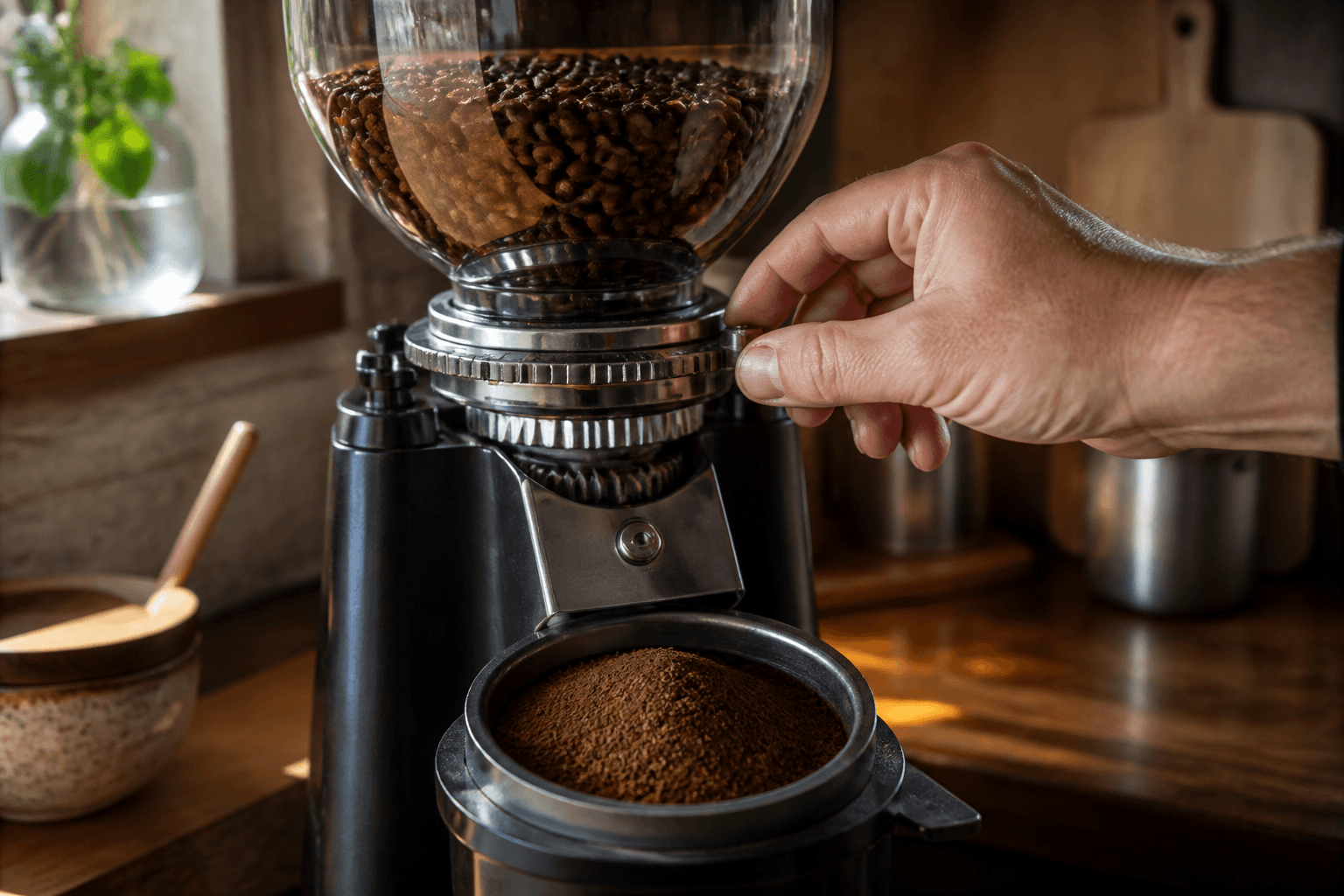
Quick answer: When coffee suddenly tastes sour, bitter, or muddy, treat grind size as a prime suspect. Clean the grinder, return to a known baseline for your brew method, then change grind in small steps while keeping dose and time fixed. Seasonal humidity and new beans are common reasons last month's dial position stops working.
Home grinders feel like set-and-forget tools. They are not. Burrs wear. Retention changes. A sleeve brushes the dial. A new bag is denser. September humidity swings after a dry spell. Suddenly your "usual" French press cup is silty, or your drip basket is choking.
This is normal. Recalibration is part of owning a grinder, not a sign you failed.
What "Drift" Actually Means
Your dial number is not a universal unit. It is a relative position on your machine. Drift means the particle size distribution you are actually producing no longer matches what that number produced before.
Causes include:
- Accidental bumps to the collar or dial
- Burr wear over months and years of daily grinding
- Cleaning that reseated parts slightly differently
- Bean changes (different origin, process, roast level, age)
- Environment (beans absorb moisture; feed rate through burrs can change)
Taste Symptoms and Likely Grind Direction
| Taste / behavior | Often means | Try |
|---|---|---|
| Sour, thin, tea-like | Under-extracted (grind too coarse or dose low) | Slightly finer |
| Bitter, drying, hollow dark | Over-extracted (grind too fine or too long) | Slightly coarser |
| Muddy press, hard plunge | Too many fines / too fine for press | Coarser |
| Drip machine stalls or overflows | Too fine for basket flow | Coarser |
| Weak drip that finishes too fast | Too coarse | Finer |
Always confirm dose and water temperature are not the real villains first. See water temperature and your method guide.
A Clean Recalibration Protocol
Step 1: Clean
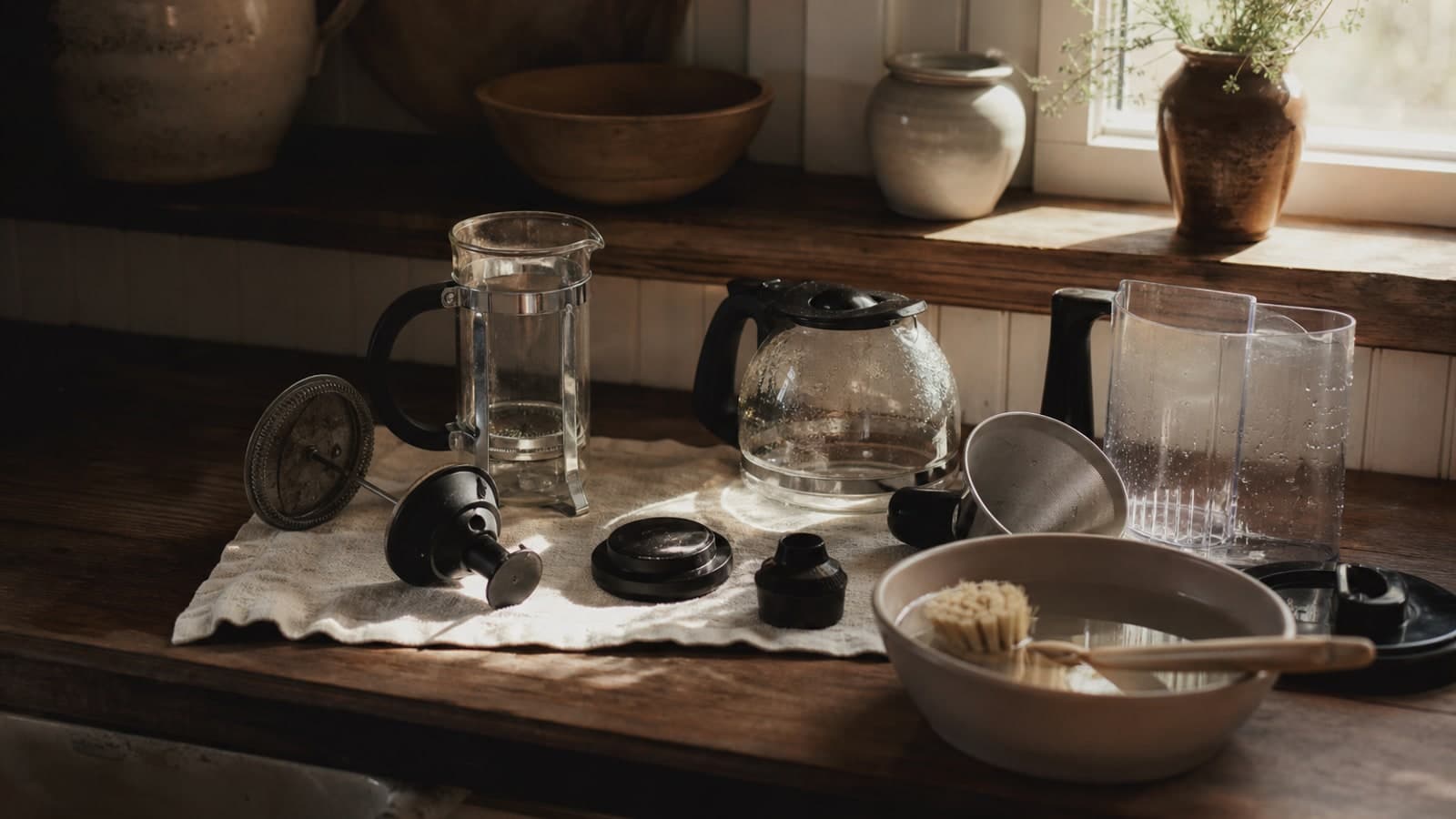
Old oils and jammed fines make grind quality worse and hide what the dial is doing. Brush burrs, clear the chute, and follow your grinder manual. Broader cleaning habits: how to clean coffee equipment.
Step 2: Pick one brew method for the test week
Do not recalibrate press, drip, and pour-over on the same morning. Choose the method you use most on chore days.
Step 3: Lock dose and brew time
Example for French press: 30g coffee, 450g water, 4:00 steep. Only grind changes.
Step 4: Find a baseline zone
Use the ranges from choosing your coffee grind as a starting region, not a promise.
Step 5: Move in small clicks
Change one or two notches, brew, taste, note. Giant swings teach you less and waste more beans.
Step 6: Write it down
A strip of tape on the grinder with "press 6.5 / drip 4" beats memory at 5:10am.
Method Targets (Starting Zones)
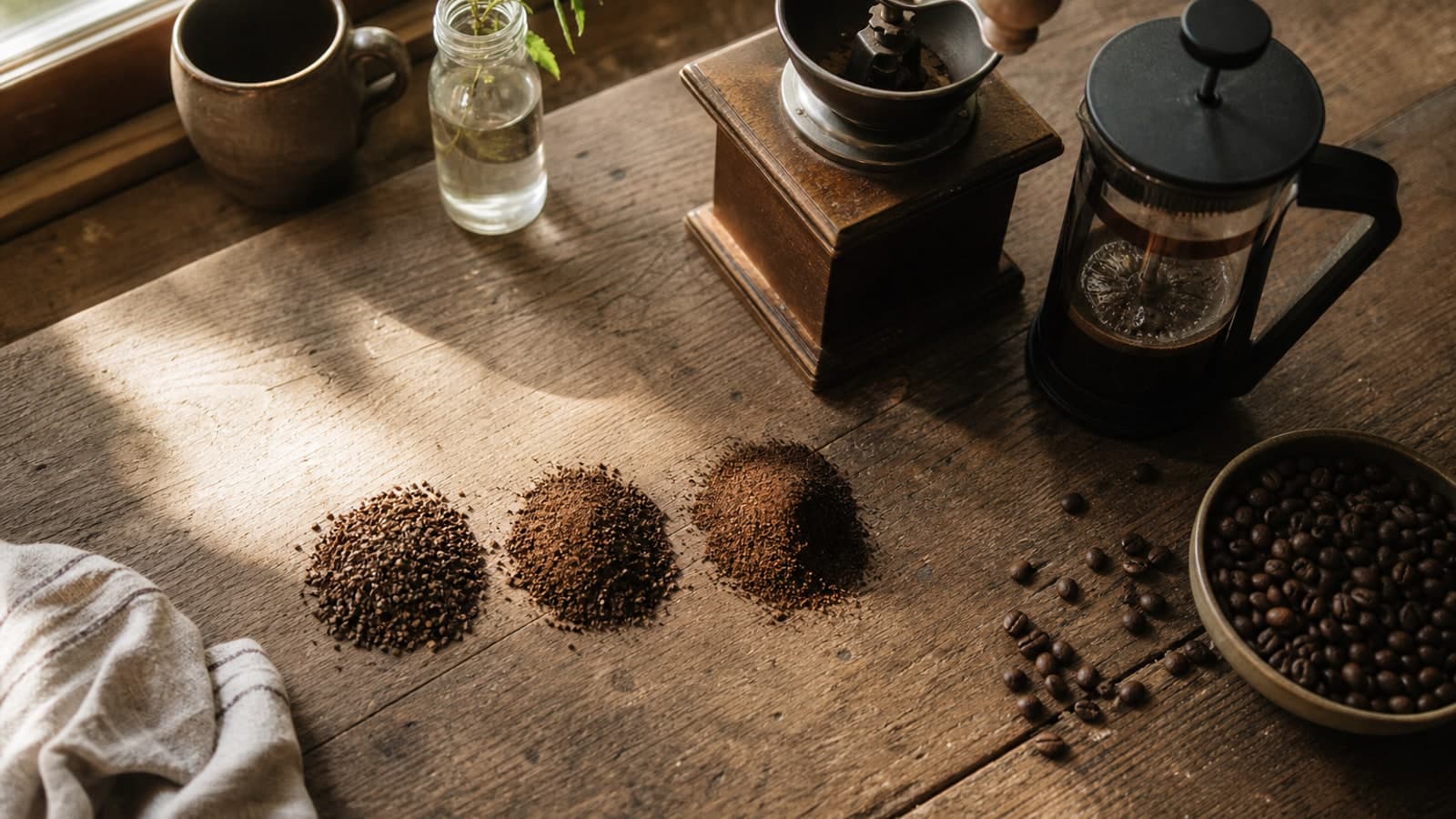
French press: coarse, visually like rough sea salt. Plunge should take gentle pressure, not a gym set.
Drip: medium. Basket should drain on a normal cycle without flooding.
Pour-over: medium to medium-fine depending on brewer and filter. Aim for a controlled flow, not a stall.
Moka pot: finer than drip, coarser than true espresso for most home pots.
Cold brew: coarse, long steep. Do not use your espresso setting and hope.
New Crop Beans and Fall Restocking
When you open a new bag in September, expect to tweak. Fresh roast-to-order coffee can bloom more aggressively and extract differently than a stale supermarket bag you previously "dialed in" by accident.
If the new bag tastes wild on day one, also consider resting: some coffees calm down a few days after roast. Still, grind is usually the fastest lever. Freshness primer: roast date matters.
Blade Grinders and Reality
If you use a blade grinder, "settings" are time-based chaos. You will get mixed fines and boulders. Recalibration is limited. A decent burr grinder is one of the highest-leverage homestead coffee upgrades you can make, especially once cool-weather brewing gets more serious.
Homestead Scheduling Tip
Recalibrate on a weekend morning or a lighter chore day. Do not debug grind while late for milking. Keep a known "good enough" tape mark for rushed weekdays.
Beans Worth Dialing In
Consistent medium blends make calibration easier because they forgive small errors:
Save hyper-delicate light roasting experiments for after your weekday grind is stable.
Frequently Asked Questions
How often should I recalibrate?
When taste changes, when you change beans, after deep cleaning, or every couple of months as a checkup. Daily obsession is unnecessary.
Why did my grind get finer without touching the dial?
Possible burr wear patterns, settling of an adjustable collar, or beans feeding differently. Clean and re-find baseline.
Should I weigh every dose?
If you can, yes. Volume scoops vary with grind size and bean shape. Weight removes a confusing variable.
Can humidity alone ruin coffee?
It can stale unprotected grounds and change grinding behavior. Store whole bean airtight: storage guide.
Is pre-ground immune to this?
Pre-ground skips dial drift and replaces it with faster staleness and a grind you cannot fix. Whole bean still wins for most people: whole bean vs pre-ground.
Dial in a fresh bag: Morning Blend or explore the shop.