Honey Process Coffee Explained Without the Hype
Honey process sits between washed and natural. Here is what producers actually do, what it tastes like in the cup, and how to brew it on a homestead schedule.
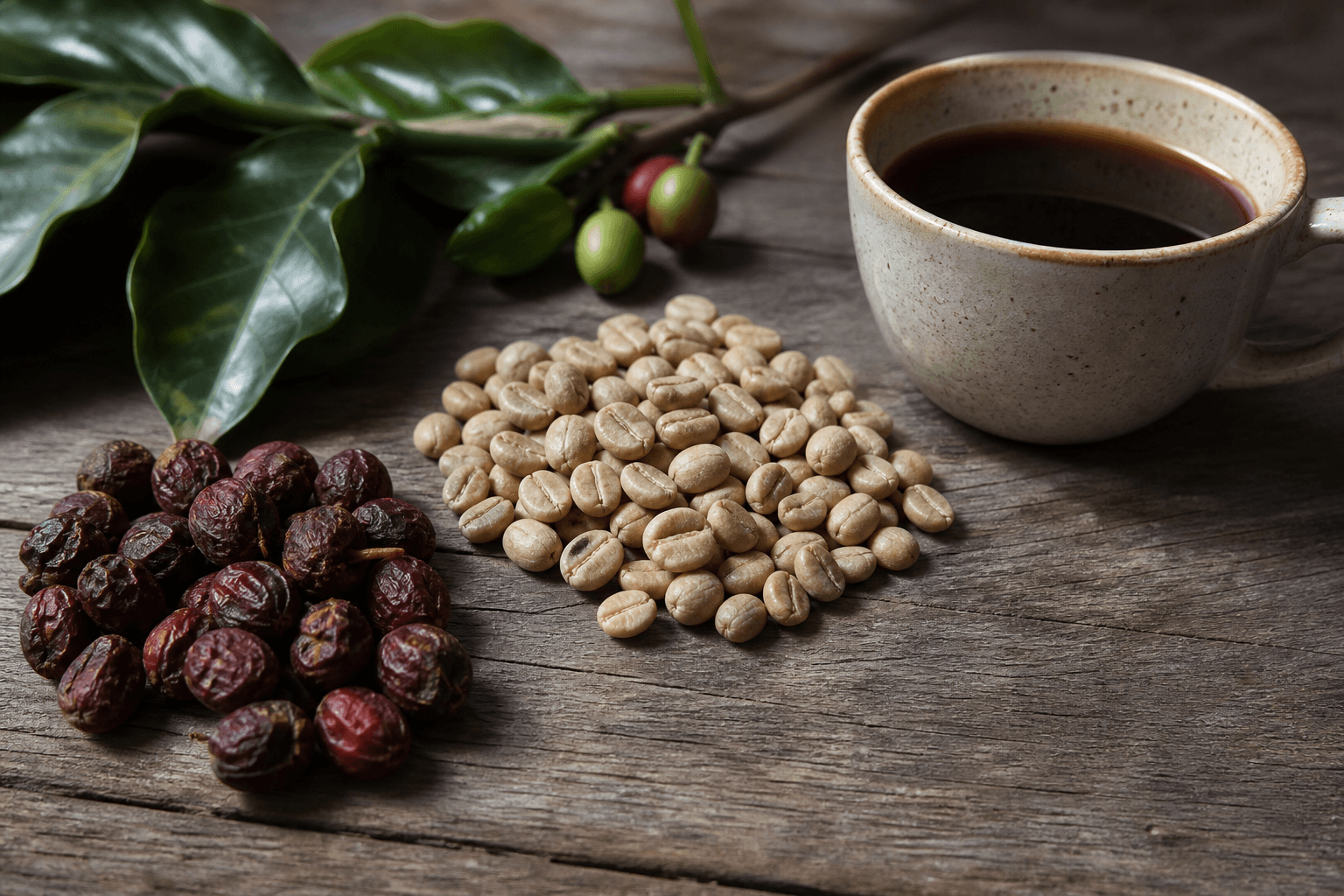
Quick answer: In honey process, producers remove the skin of the coffee cherry but leave some or all of the sticky mucilage on the bean while it dries. That often yields a cup with more body and fruit than a fully washed coffee, and usually more clarity than a full natural. It is not flavored with honey. The name refers to the sticky "honey" mucilage.
Coffee labels love process words: washed, natural, honey, anaerobic, and more. If you already compared washed vs natural, honey process is the middle path that confuses people most, partly because the name sounds like a latte syrup.
It is not a flavor additive. It is a post-harvest choice that changes fermentation, drying, and ultimately the cup.
The Processing Spectrum in Plain Language
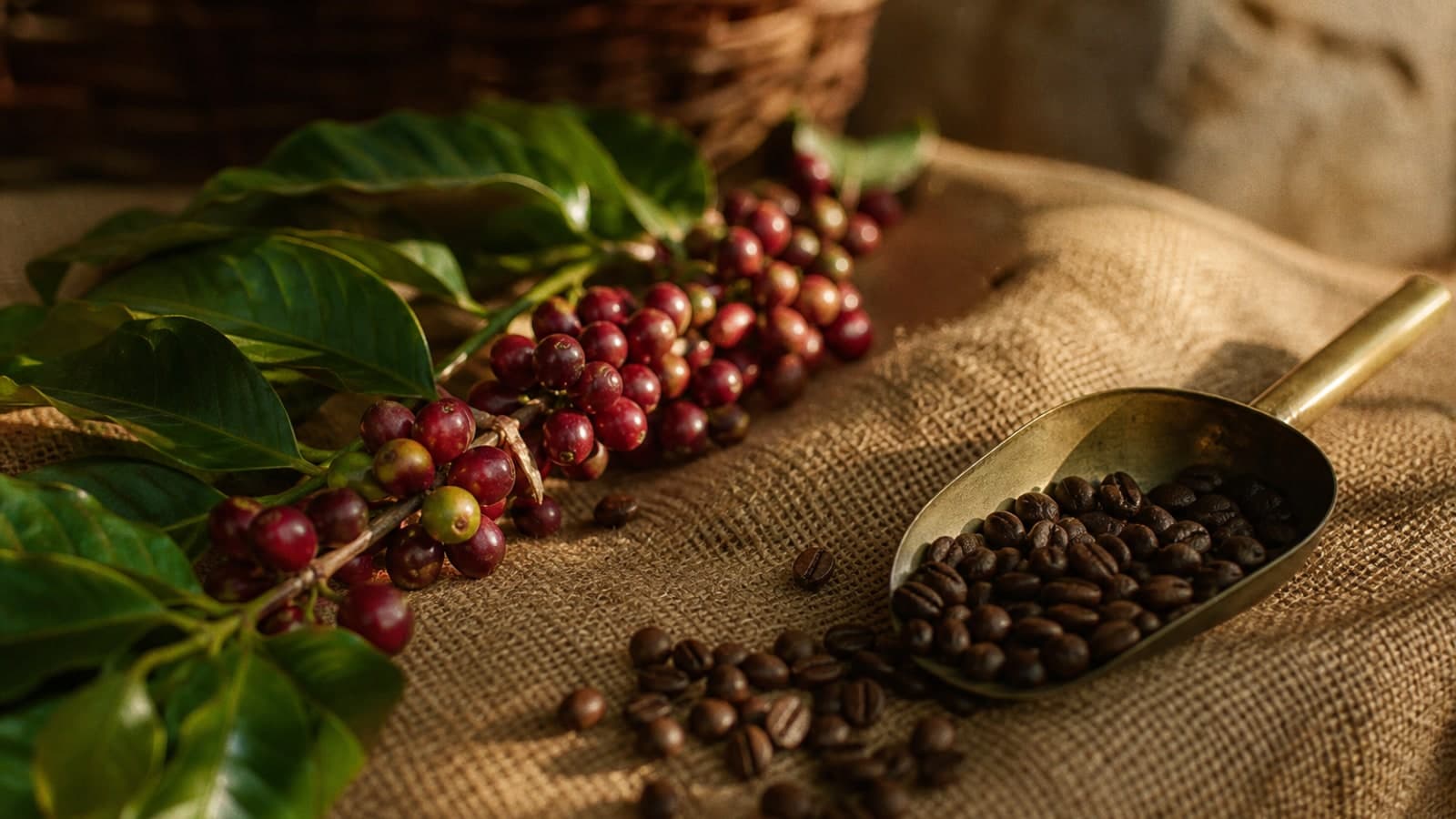
Coffee fruit has layers. Simplifying:
- Outer skin
- Sticky mucilage (the "honey")
- Parchment
- Seed (what we roast)
Washed: skin and mucilage removed with water and fermentation/mechanical help before drying. Often cleaner, brighter.
Natural: whole cherry dried with fruit still on. Often fruitier, heavier, more variable.
Honey: skin removed, some mucilage left on during drying. A family of styles rather than one recipe.
Yellow, Red, Black Honey (What Those Words Suggest)
Producers sometimes label honey lots by how much mucilage remains or how drying is managed. Naming is not perfectly standardized worldwide, but a common marketing shorthand is:
| Label | Rough idea | Cup tendency |
|---|---|---|
| Yellow honey | Less mucilage left / faster drying | Closer to washed clarity |
| Red honey | More mucilage | More fruit and body |
| Black honey | Most mucilage / slower drying | Closest to natural richness |
Treat these as clues, not laws. Farm elevation, variety, and drying weather still dominate.
Why Producers Choose Honey Process
Reasons vary by region and year:
- Water availability (honey can use less water than fully washed)
- Desired flavor profile for buyers
- Equipment and labor patterns
- Weather risk during drying (mucilage-covered parchment needs careful turning)
For drinkers, the "why" matters less than honesty: good honey process tastes intentional, not accidental fermentation gone weird.
What You Might Taste
Common honey-process impressions:
- Stone fruit or ripe fruit tones
- Syrupy body compared with a washed lot of the same variety
- Sweetness that shows up even in simple drip
- Less wild funk than some naturals (when well done)
If a honey process cup tastes vinegary, moldy, or weirdly boozy in an unpleasant way, that can be a processing or storage defect, not your moral failing as a brewer.
How to Brew Honey Process at Home
Start with your normal method
You do not need special gear. Use the method you already trust.
Keep ratios calm
Start at your normal ratio. People sometimes over-dose because the coffee smells sweet and fruity. Taste first.
Watch grind if body feels muddy
Honey lots can taste heavy. If the cup is thick in a dull way, coarsen slightly or shorten contact time.
Temperature
Standard hot-brew temps still apply: water temperature guide. Do not panic-boil.
Milk
Try black first. Then add dairy if that is your life. Some honey process coffees stay charming with cream; some get muddy.
Where Honey Process Fits Fall Drinking
September tasting weekends are a good time to put a honey process beside a washed coffee and a blend. You will learn preference fast: home tasting format.
If you want everyday consistency more than adventure, keep a blend as the weekday driver and use honey process as the weekend cup: blends vs single origin.
Specialty Context
Honey process shows up often in specialty offerings because it can create distinctive cups when producers have drying space and skill. It is one more reason "specialty" is about care across the chain, not a single buzzword: what specialty coffee means.
Saltbox Buying Note
Our core lineup emphasizes dependable everyday roasting through Temecula Coffee Roasters. When you explore process-driven single origins elsewhere or as rotating features, use this article as your decoder ring. For daily drivers, these remain easy baselines:
Frequently Asked Questions
Does honey process contain honey?
No. The name refers to sticky mucilage texture during drying.
Is honey process sweeter because of sugar left on the bean?
Mucilage affects fermentation and drying chemistry. You are not drinking table sugar glued to the seed. Perceived sweetness is cup character.
Is honey process always better than washed?
No. Better means what you enjoy and what the producer executed well.
Why did my honey process bag taste fermented in a bad way?
Possible processing or storage issues, stale coffee, or brew over-extraction amplifying defects. Check roast date and grind before abandoning the whole category.
Can I use honey process for cold brew?
Yes. Expect a heavier, fruit-leaning concentrate. Dilute carefully.
Decode the bag, then brew with intention. Everyday cups start in the shop.